
By eleven on a July morning the stone between the Duomo and Piazza della Signoria holds heat you can feel through the sole of a shoe, and the queues have settled into the shape they will keep until six. A family carrying four ticketed sights into that day will spend most of it standing still, negotiating. A family carrying two is in the shade of a garden by noon and back out at five, when the light goes long across the Arno and the coaches have gone.
Two fixed points a day and nothing else booked
The historic centre is small enough to cross on foot in about twenty-five minutes, which is why families overload it. The distances look trivial on a map, and they are, until you add cobbles, a pushchair, a three o'clock in August and a nine-year-old who has already queued twice. The working shape of a Florence day with children is one ticketed thing in the morning, one open-air or free thing in the afternoon, and a long gap in the middle that belongs to nobody's schedule.
That gap is not wasted. It is what lets the morning's museum survive in memory instead of being rinsed out by the next one. Book the ticketed half early (most of the places below sell timed entry, and several cannot be joined on the day) and leave the second half of every day genuinely unplanned. Two fixed points across three days is six sights. That is more of Florence than most adults manage on a first visit.
If you are choosing where to sleep, the quiet calculation is walking distance to a garden or a market rather than to the Duomo; a Florence hotel search filtered for the streets north of the cathedral or the Oltrarno tends to put you within ten minutes of both.
Objects children can read without a label
Paintings ask a child to take an adult's word for it. Instruments, machines and animals do not, which is why the three museums below buy more goodwill per euro than anything else in the city.
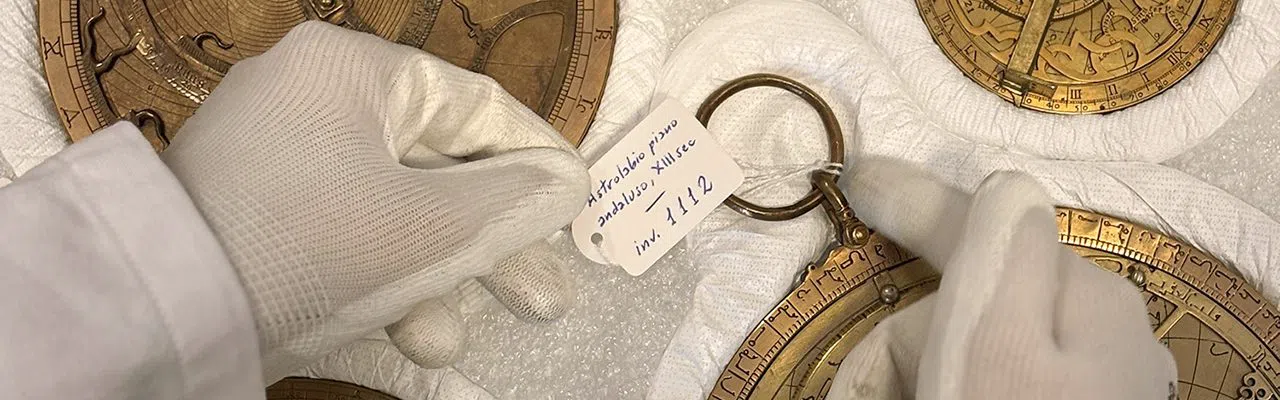
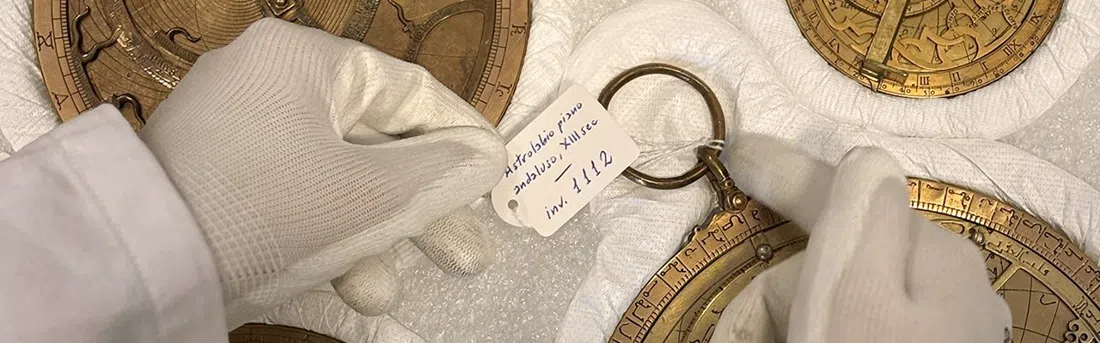
Museo Galileo (Piazza dei Giudici, on the river beside the Uffizi) is the museum in Florence that best holds a child who has run out of patience with pictures. Everything in it is an object: armillary spheres, telescopes, globes the size of a small car. The interactive stations are genuinely hands-on rather than a screen bolted to a wall. Entry is €14 for adults, €7 for ages 6 to 18, free under six, and there is a family ticket at €32 covering two adults and up to two children. An hour here on a first morning makes the Accademia possible on the second. Groups of fifteen or more must book ahead through [email protected] and pay €1 extra per ticket; parties over thirty get split into sub-groups on arrival, and school groups have their own rate.
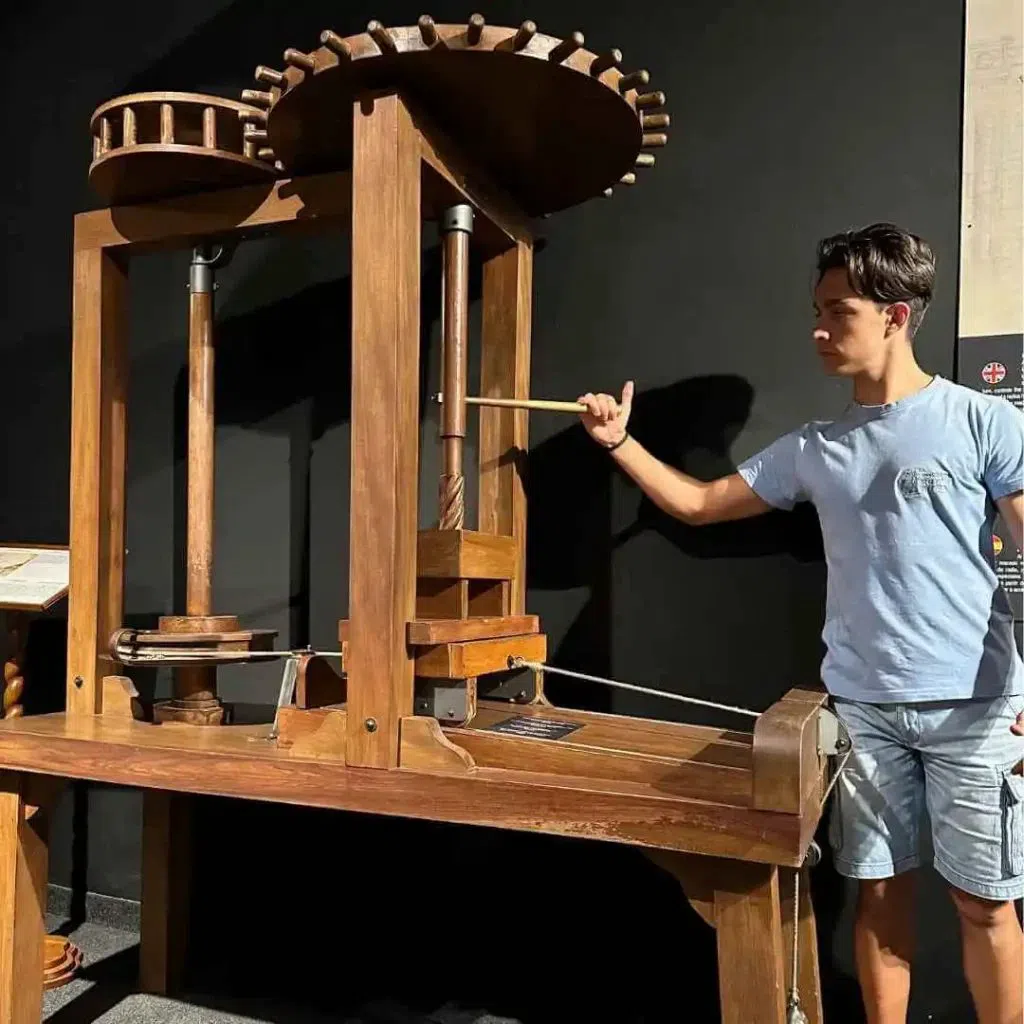
Leonardo Interactive Museum (Via dei Servi, a few minutes north of the Duomo) works on the same principle and goes further: every machine is built to be turned, cranked or pulled by hand, and the included workshops have children building bridges, domes and polyhedrons rather than watching someone else do it. Tickets run roughly €10 to €13 for adults with child and family reductions, and under-sixes go free. It lands best from about age seven; below that the workshops are beyond them and the machines become a climbing frame. Organised groups and schools book through the School Groups desk, and guided visits have to be bought in advance for a set day and time.
Museo di Storia Naturale — La Specola (Oltrarno, on Via Romana behind the Pitti) reopened after a full restoration and is now one of the strongest wet-afternoon options in the city. Entry is €10 full, €5 for ages 6 to 19, free under six. Before you buy, know that the museum's famous 18th-century anatomical waxes are flayed human figures, life-size and startlingly good. The standard zoology route avoids them entirely. The €3 supplement tour of the waxes, the tower and the Tribuna does not. Groups of more than nine need to contact the education office in advance, and school parties get a reduced rate.
The palace that lets them behind the walls
Museo di Palazzo Vecchio (Piazza della Signoria) is the one marquee sight that rewards a child as much as the adult paying for it, because it is a building with secrets rather than a hang of masterpieces: concealed staircases, a painted ceiling that weighs several tonnes, and a tower at the end of it. MUS.E runs permanent family and themed tours, including a guide in Vasari's costume and a narrated route built around the story of the turtle and the sail; book those on +39 055 0541450, with a separate line for class groups. The museum ticket plus the Torre di Arnolfo is €20 full and €13 reduced, and the MUS.E family activities are €4 to €8 per person on top.
The tower rules matter and are enforced. No under-sixes at all. Anyone under eighteen must climb with an adult. Booking is compulsory, and the tower closes in rain, which in November is not a remote possibility, so keep the afternoon loose behind it.
Climbing, and when not to
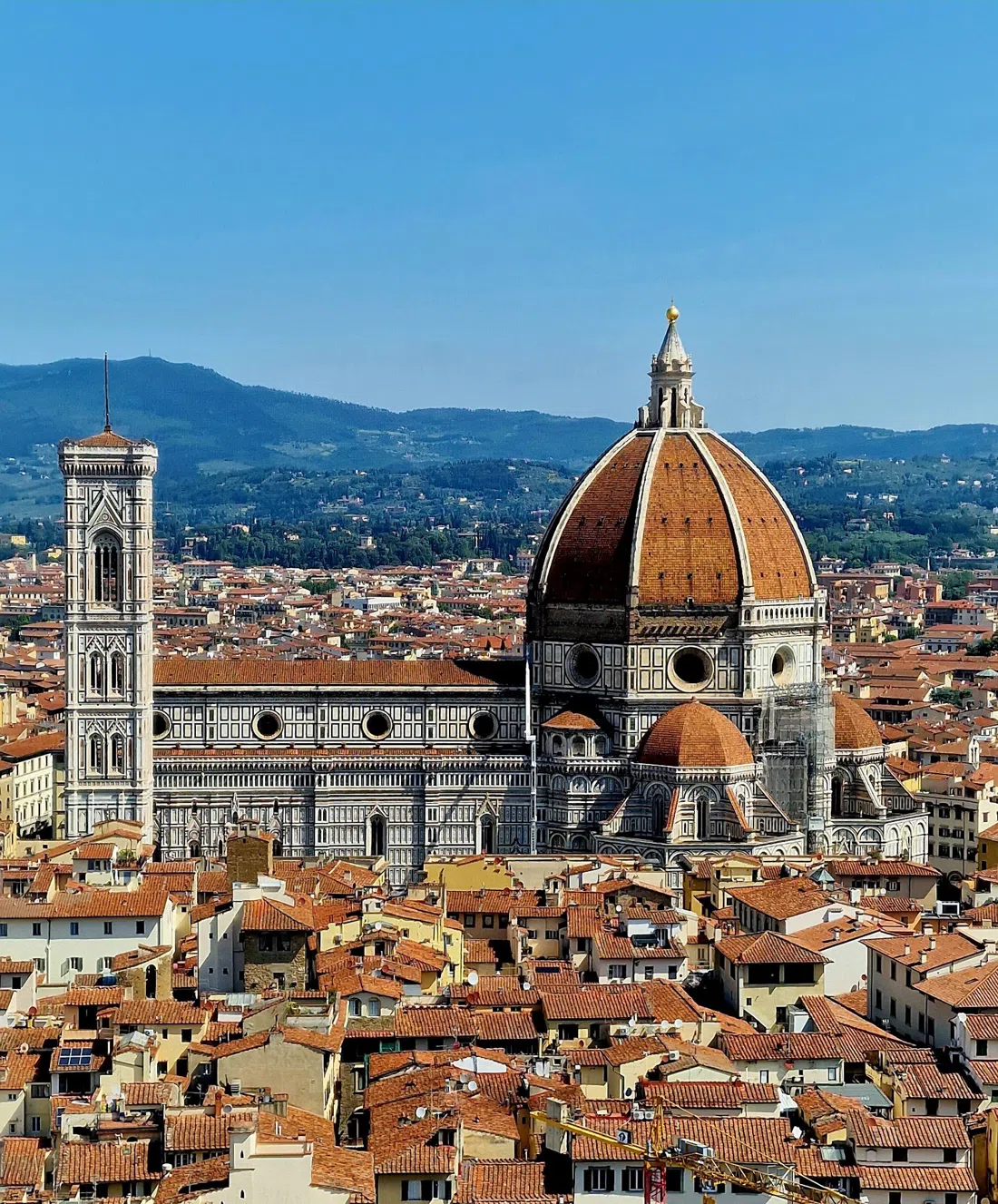
Brunelleschi's Dome (Piazza del Duomo) is 463 steps with no lift, and for a stretch of the ascent you are between the two shells of the cupola in a space narrow enough that adults go quiet. For a confident nine or ten-year-old it is the best thing they will do all week. For a toddler being carried, or anyone who dislikes enclosed spaces, it is a mistake you cannot reverse halfway up. Entry is timed-slot and pre-booked only; the Brunelleschi Pass is €30 from fifteen upwards, €12 for ages 7 to 14, and free under seven, though a free child still needs a reservation. Large groups are split across slots.
Giotto's Bell Tower is the substitute nobody regrets. It is 414 steps, the stages are open to the air with landings to stop on, and the view includes the dome itself, which the dome's own view obviously cannot. It sits on the Giotto Pass.
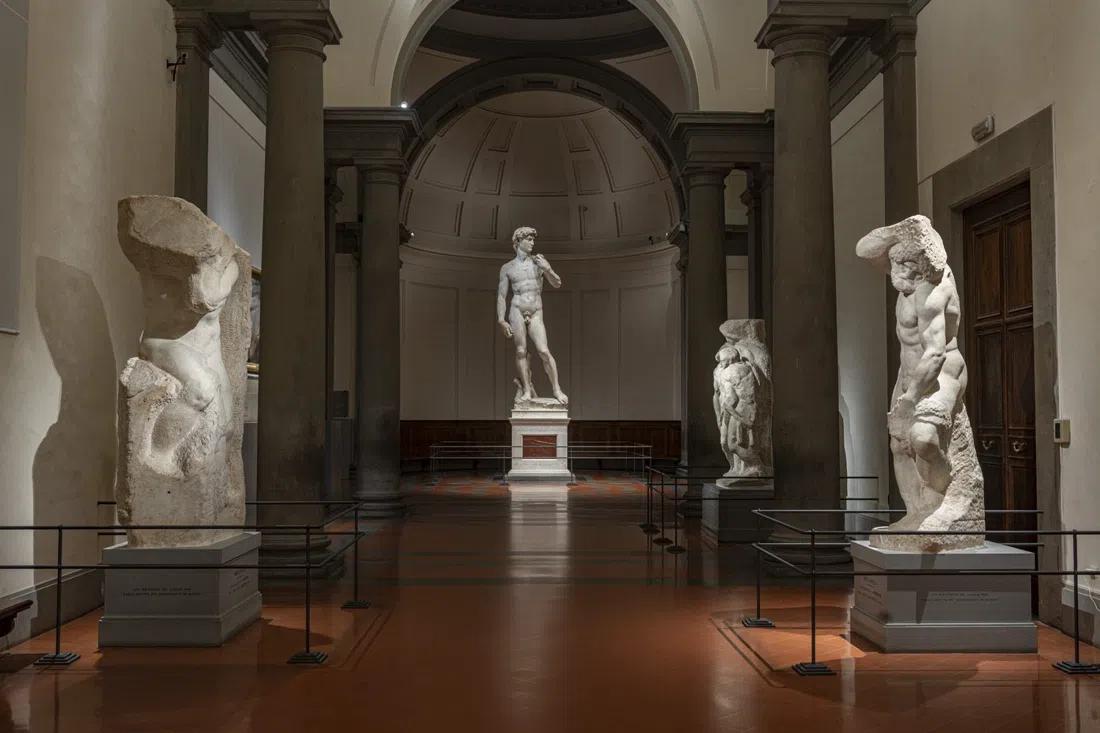
Galleria dell'Accademia di Firenze (San Marco, on Via Ricasoli) is the gallery you will not skip, and it is mercifully short: forty-five minutes covers it honestly. The unfinished Prisoners, half-emerged from their blocks, explain what sculpture actually is to a child faster than any wall text, and the walk down the corridor to the David gives even a bored eight-year-old a sense of arrival. It is €16 full in high season plus a booking fee; reservations are strongly advised on +39 055 294883 with a €4 fee, and Firenze Musei handles group and school slots. It closes Mondays. Go at the 8.15 opening or in the last ninety minutes, never at midday. From 15 March 2026 there is a €26 combined 48-hour ticket with the Bargello and a €38 72-hour ticket covering six museums, which pays for itself only if you were already planning three of them; with children, you probably were not.
Where they run
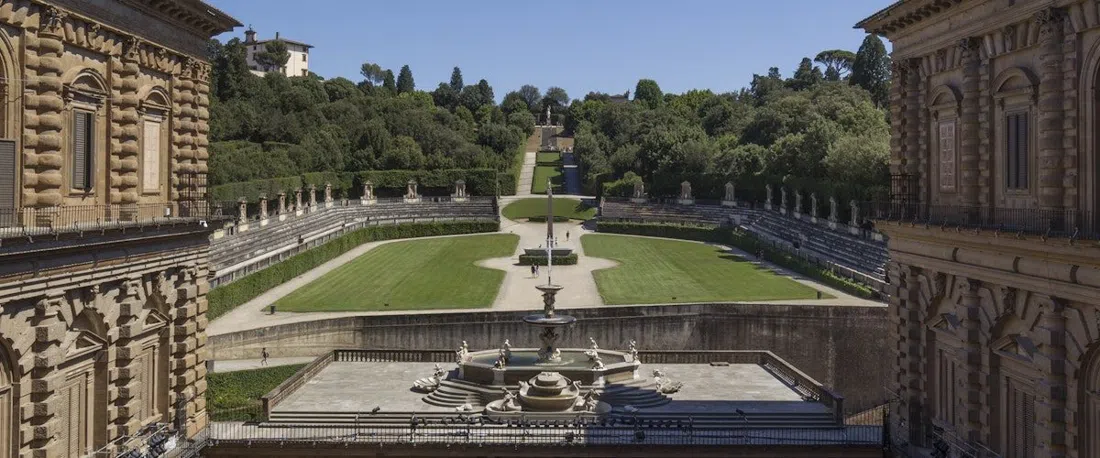
Giardino di Boboli (Oltrarno, rising behind Palazzo Pitti) is the pressure valve. It is the answer to an over-museumed morning: gravel avenues long enough to sprint down, deep shade by late June, and a grotto that a seven-year-old reads straightforwardly as a cave. Tickets are €10 on the day or €13 in advance, €3 reduced, with free categories, and €22 to €25 combined with Palazzo Pitti. It closes the first and last Monday of each month, and the Porcelain Museum inside is shut for refurbishment.
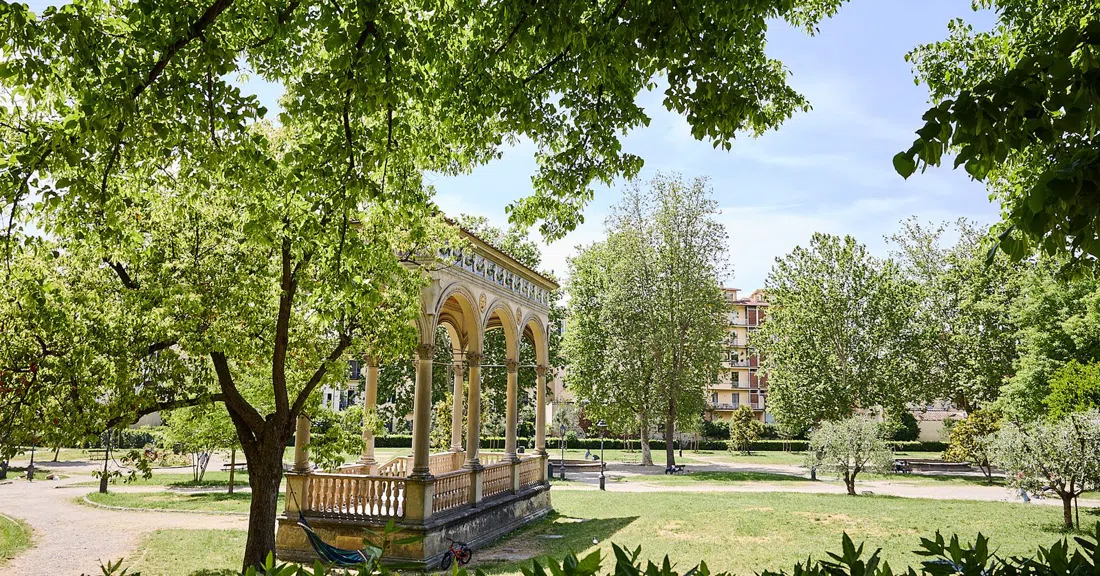
Giardino dell'Orticoltura (north of the centre, up beyond Piazza della Libertà) is where they can simply play. It is a free public park with a proper playground and a spectacular 19th-century glasshouse, and it is almost entirely local: you will hear more Florentine here in an hour than in three days on Via dei Calzaiuoli. There is no door policy and no ticket. The play area is small, so a large party spreads out onto the lawns instead. It also bakes in full sun on summer mornings; go after five.
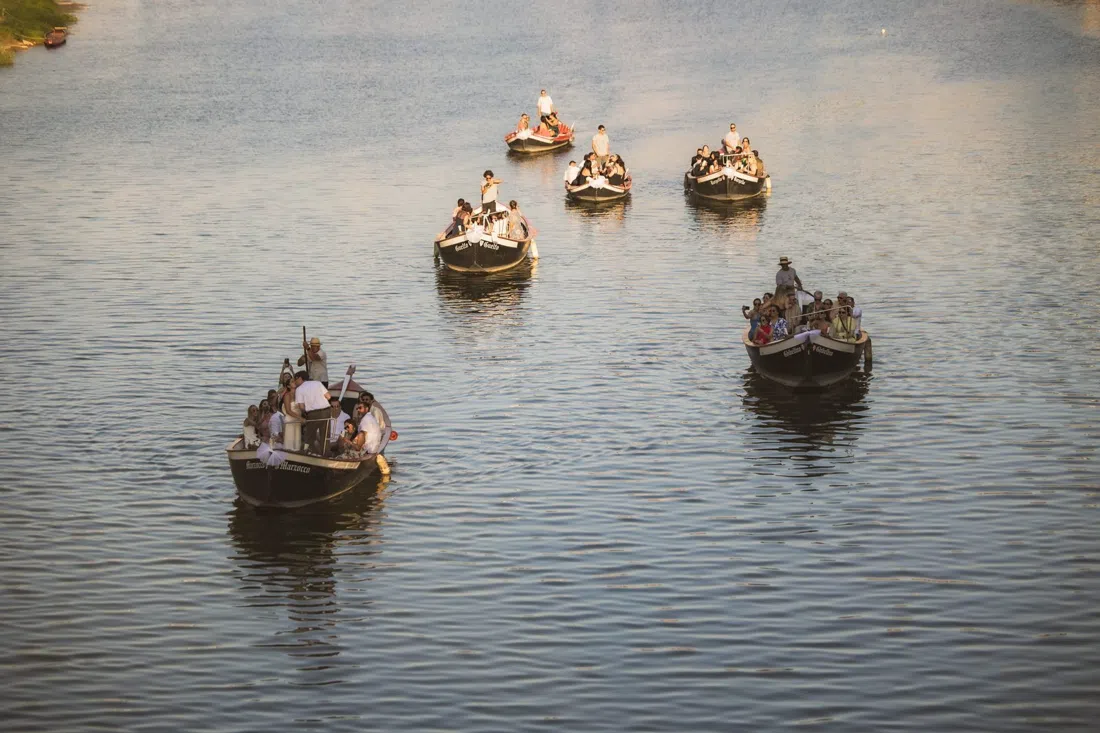
I Renaioli (on the Arno, in the centre) run flat-bottomed boats of the kind that once carried sand off the riverbed. Forty-five minutes on the water resets a tired child more reliably than another church, and it gives you the one view of the city that nobody else on your street will have: bridges from underneath, the Oltrarno walls at eye level, swifts working the surface at dusk. Small boats take eight and large boats fourteen; private and group bookings are taken, and for bigger parties several boats run side by side on a custom route. Expect a mid-range per-person price for the one-hour slot, booked through renaioli.it, [email protected] or +39 347 798 2356. It is strictly seasonal: 1 May to 30 September, morning and evening slots only.
Meals where nobody has to agree
The family dinner problem in Italy is not the food, it is the committee. Mercato Centrale Firenze (San Lorenzo) removes the committee entirely. Nobody books, there is no door policy, everyone orders separately from whichever counter they want and meets at a shared table: pizza for one child, tripe or truffle pasta for the adults, gelato for the other, no set menu and no waiting to be seated. Budget €8 to €20 a head depending on what each person picks. It is busiest from 13.00 to 14.30 and again from 20.00; the first floor runs daily until midnight, which matters when a delayed train lands you in the city at half past nine.
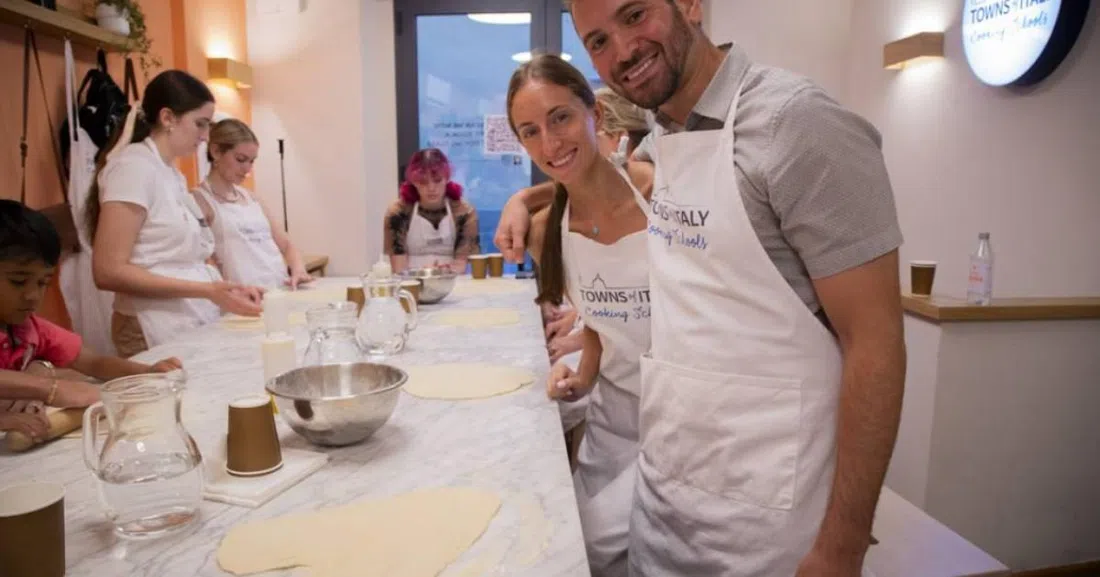
Florencetown Pizza & Gelato Class (Via Panicale 43r, two minutes' walk from the market) earns a whole evening back. Children make the dough, work it, eat what they made, and dinner is dealt with in the same three to three and a half hours. It runs from €69 per person in a small-group format of up to twenty, private family bookings are available, under-eighteens must be accompanied by an adult, and the cancellation window is eight days, worth noting if your plans are still soft. Suitable from about age six.
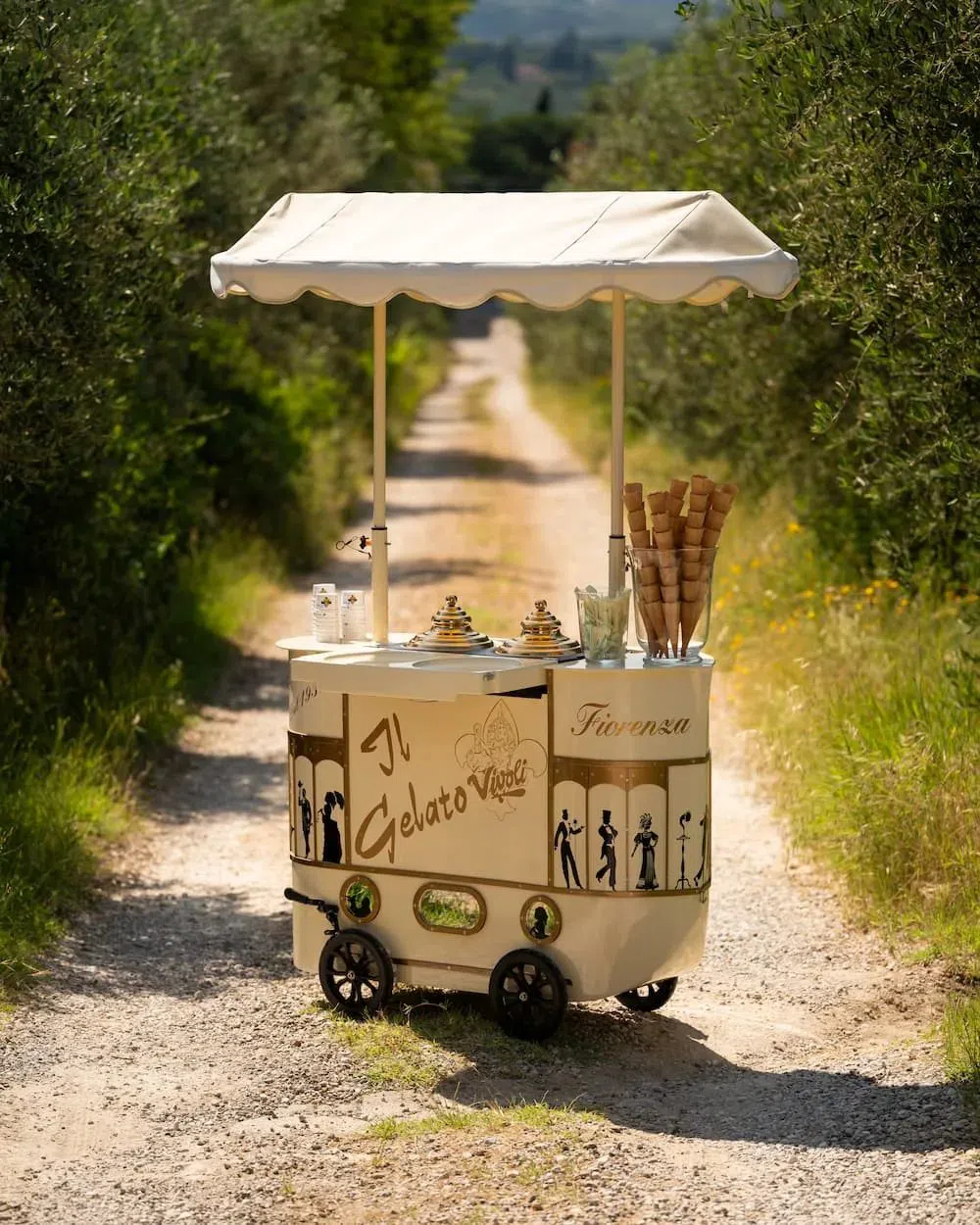
Vivoli (Santa Croce, on Via dell'Isola delle Stinche) has been open since 1930 and still serves cups only. No cones: tell a child that before you reach the counter, not after. A cup is €3 to €6. The shop is tiny, so any group larger than about five ends up eating on the street outside, which is fine in September and less fine in a February drizzle. Closed Mondays.
Rain, and the long afternoon
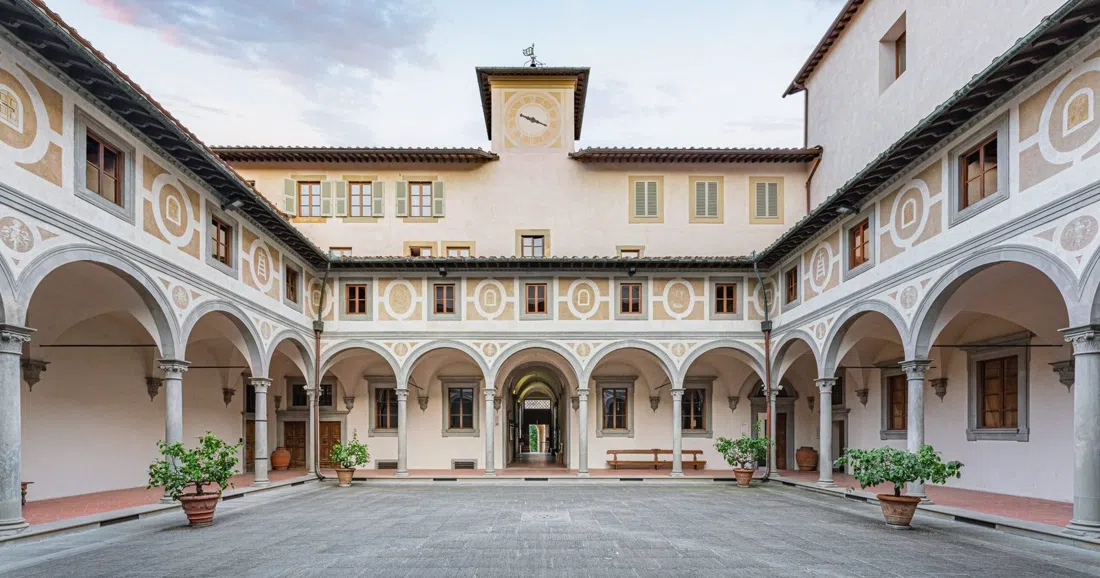
Palazzo Strozzi (Via Tornabuoni) runs the most child-literate programme in the city. Its family workshops are properly age-banded ('All in One' for ages 3 to 6, 'Make and Remix' for 7 to 12) and run alongside the autumn 2026 exhibition. They must be reserved, on +39 055 26 45 155 or [email protected], Monday to Friday between 9 and 18. Exhibition tickets are mid-range, and the vast courtyard costs nothing at all if what you need is ten dry minutes and a bench.
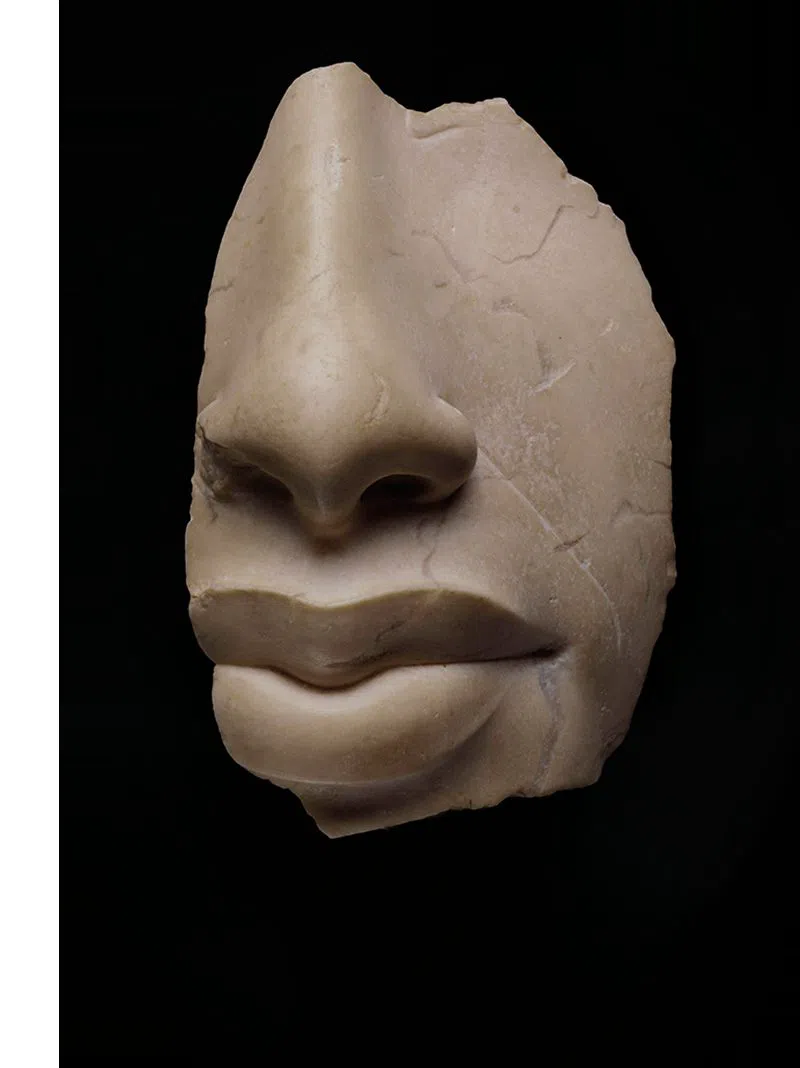
Museo degli Innocenti (Piazza Santissima Annunziata) is a 600-year-old institution built for abandoned children, and it tells that story through objects a child grasps immediately: the tokens left with infants so a mother might one day identify them. La Bottega dei Ragazzi runs hands-on workshops for children and teenagers through the 2026-27 season, priced separately from entry, which sits in the low teens of euros with child and family reductions. Its rooftop café hands you the Duomo across the rooftops without a queue, a climb or a ticket for the view. Open daily 9.30 to 19.00, booked through [email protected] or +39 055 20 37 122.
Twenty minutes out and the crush stops
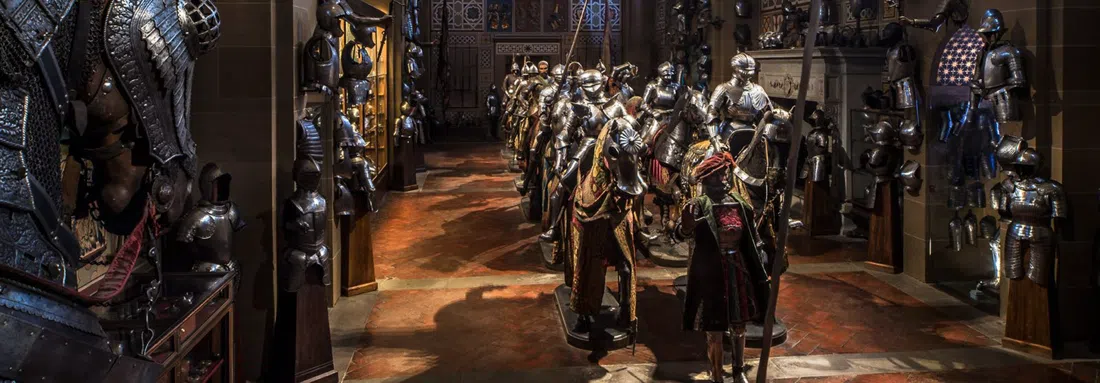
Museo Stibbert (Montughi, twenty minutes north by bus) is the most reliable child-pleaser in Florence and barely features on anyone's list. A single hall holds European knights, Japanese samurai and Ottoman cavalry mounted as if mid-parade, and the house sits in its own park. Entry is €10 full, €7 reduced; visits to the house follow a timed route, and booked groups and schools go through the ticket office on 055 475520 or [email protected]. Check the days carefully, because they catch people out: Monday to Wednesday mornings only, and closed Thursdays.
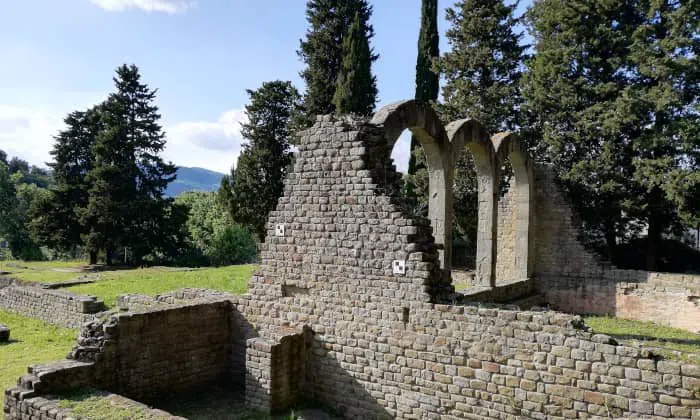
Area Archeologica e Museo Civico Archeologico di Fiesole is twenty minutes on the number 7 bus from the city and the best escape when nobody can face another queue. Children walk on the Roman theatre and the Etruscan walls rather than past them behind a rope, and the hillside site is open air, so a school party or a family of six causes no friction at all. It is €7 full, €5 for ages 7 to 18 and for groups, with a reduced rate for groups over ten, and €12 or €8 combined with the Museo Bandini. From November to February the hours shorten to 11.00 to 14.00, so it becomes a midday plan rather than an afternoon one.
The practical part
Walk everything inside the centre; it is faster than anything with wheels. Buses cover the two trips that matter, the number 7 to the hillside site and the twenty-minute run north to Stibbert, and tickets are cheaper bought before boarding at a tobacconist or on the transport app than from the driver. Cobbles are hard on pushchairs and worse on wheeled suitcases; a carrier is the better call for anyone under three.
Cards work almost everywhere, including the market counters, but keep €30 or so in coins and small notes for the gelato counter, bus tickets and the odd workshop materials fee. Mondays need planning around: the Accademia and Vivoli both close, Boboli shuts on the first and last Monday of the month, and Stibbert is one of the few things reliably open, on a Monday morning only.
For budget, a family of four doing one ticketed sight a day lands somewhere around €40 to €60 daily on entry, plus €8 to €20 a head for a market meal, before you add a cookery class or a boat. Book the Dome, the Arnolfo tower, the Accademia and any workshop before you leave home; everything else on this list can be decided over breakfast. More on seasons, districts and where the city empties out sits in the Florence guide.