The Florence issue
Taking Florence Slowly on a First Visit
The afternoon tickets, the lifts, the bus up the hill and the flat museums that let you see Florence properly without walking yourself into the ground.

By Élodie FournierFlorence beyond the Uffizi queue
The Arno runs the colour of weak tea in the hour before sunset, and that is when Florence turns easy. The coach parties have gone back to their hotels, the stone of Piazza della Signoria is still holding the day's heat, and the line that wrapped around the Accademia at ten in the morning has thinned to a dozen people. A first visit here is usually sold as a forced march between four famous objects. It does not have to be. Most of the city's finest rooms are flat, most of its crowds are morning crowds, and nearly every staircase in Florence has a lift or a bus that makes it optional.
Two tickets to book before you leave home
Almost everything in this city can be improvised on the day. Two things cannot.
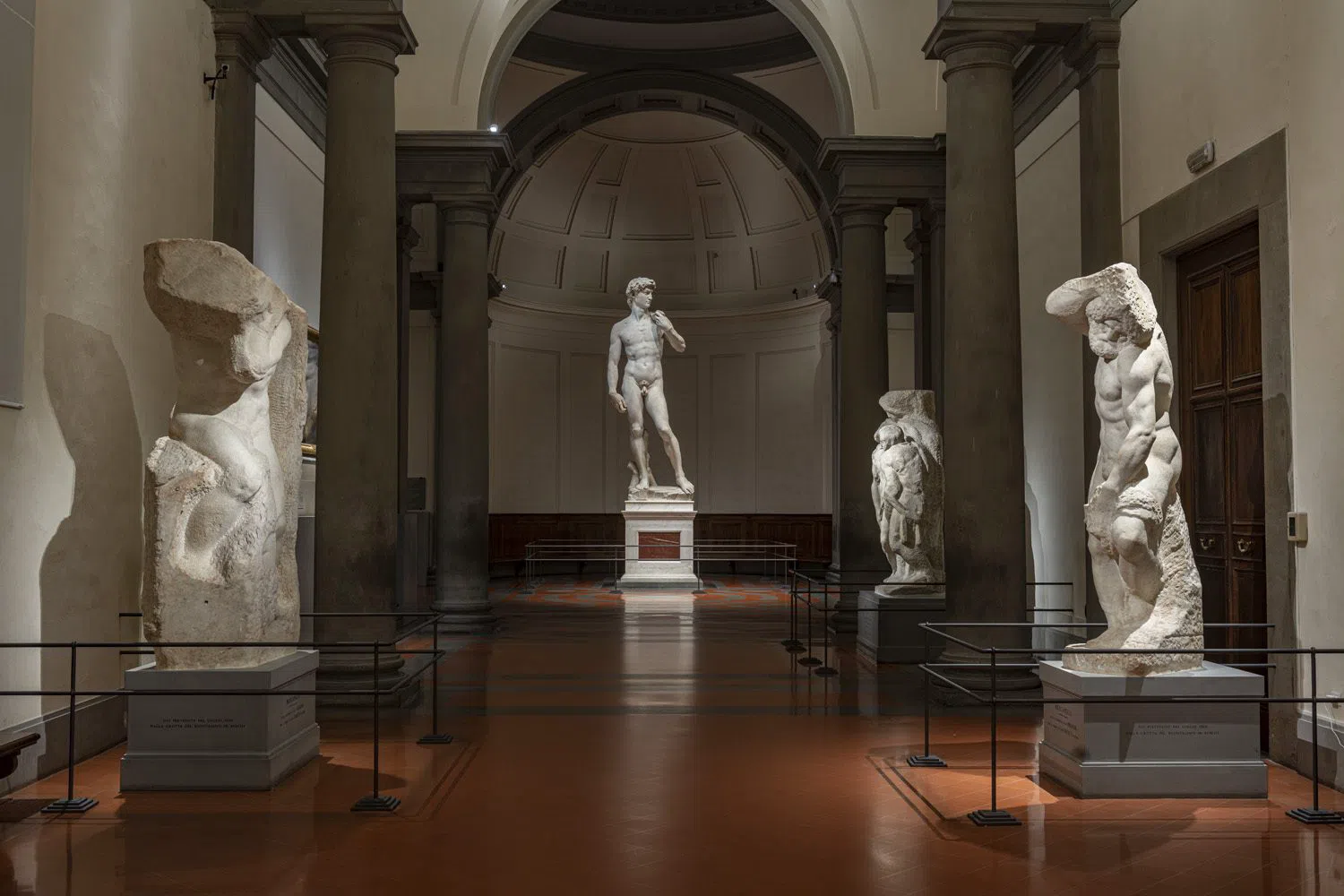
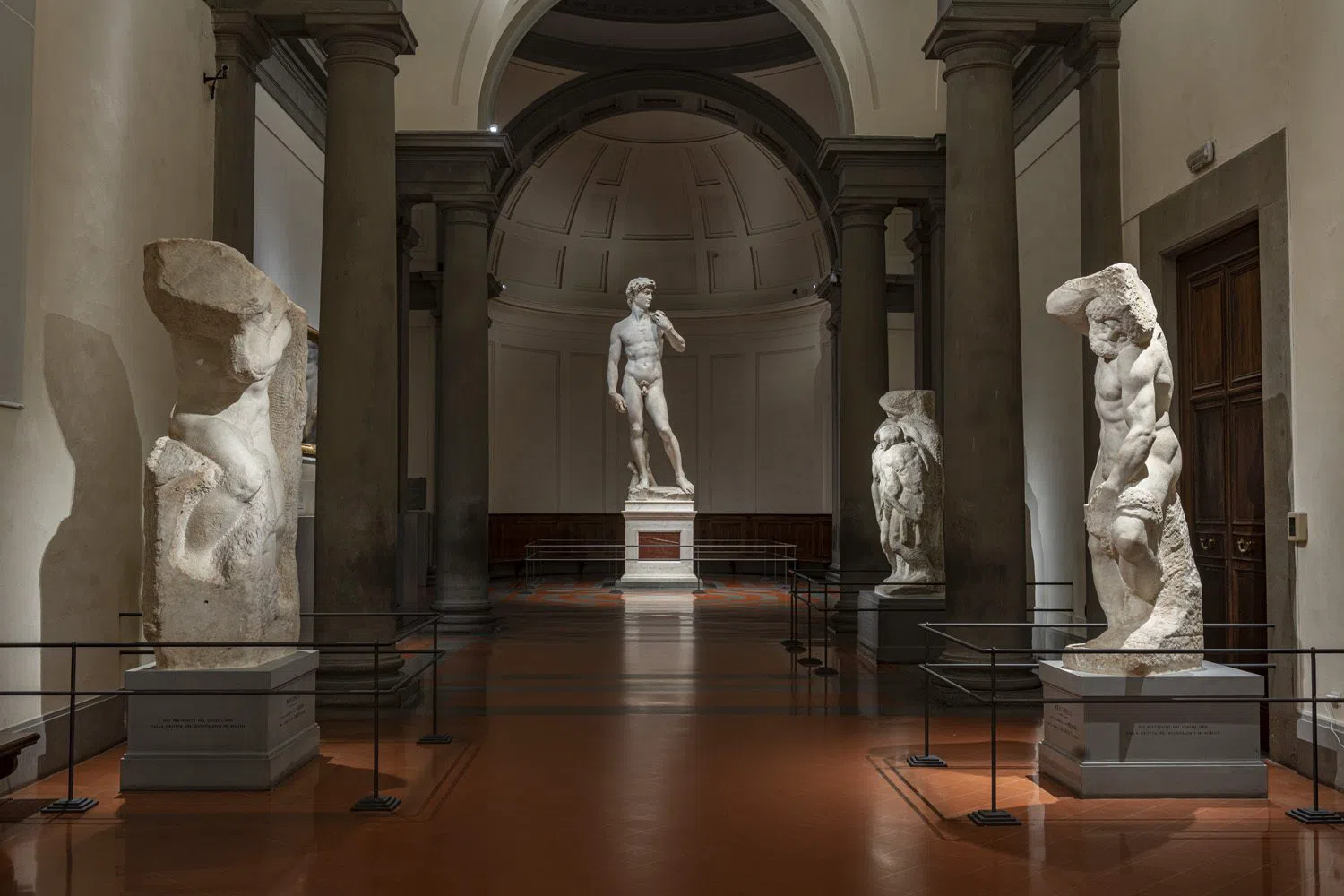
Galleria dell'Accademia di Firenze (San Marco, five minutes north of the Duomo) is the one museum where arriving without a reservation means a long wait, often an hour on the pavement of Via Ricasoli with no shade in September. Entry is €16 at the door and €20 booked online; the €4 difference buys back the hour, which is the whole argument. It is also the right single museum for a gentle day, small enough to see properly in an hour and leave with your legs intact. From 15 March 2026 a €26 ticket covers the Accademia and the Bargello over 48 hours, and €38 opens six museums across 72, worth the arithmetic if you are staying four days or more. Parties of nine or more book through Opera Laboratori (+39 055 294883); the Tribuna where the David stands is capacity-managed, so group slots go early. Closed Mondays.
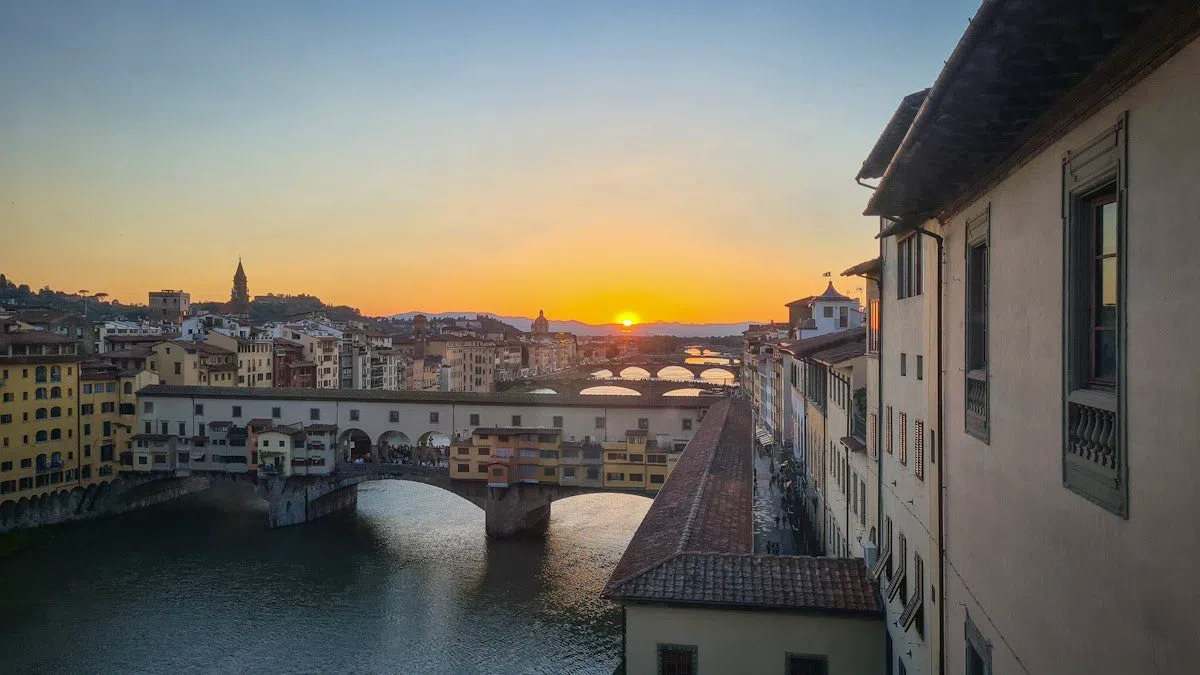
Galleria degli Uffizi (Piazza della Signoria, on the river side of the square) has given slower travellers their best lever in years. Alongside the standard €25 on the day and €29 online including the €4 booking fee, 2026 brought an afternoon ticket: €16 on-site, €20 online, valid for entry from 16:00. You arrive at four, spend two unhurried hours in the corridors, and pay two-thirds of the price for a fraction of the morning crush. That is the version of the Uffizi to take on a first visit: one long room at a time, a bench when you need one, and the Arno going gold through the windows on the way out. Guided parties are routed through a dedicated Guides and Groups booking channel on timed slots, so a group books that entry rather than turning up. Closed Mondays, like the Accademia, which shapes the whole week and is dealt with below.
Plan your Florence trip
Live prices from our booking partners.
Free cancellation on many rooms. We may earn a commission when you book.
The museums that never make you queue
Florence's reputation for crowds comes from three or four addresses. Step past them and the city is remarkably calm.
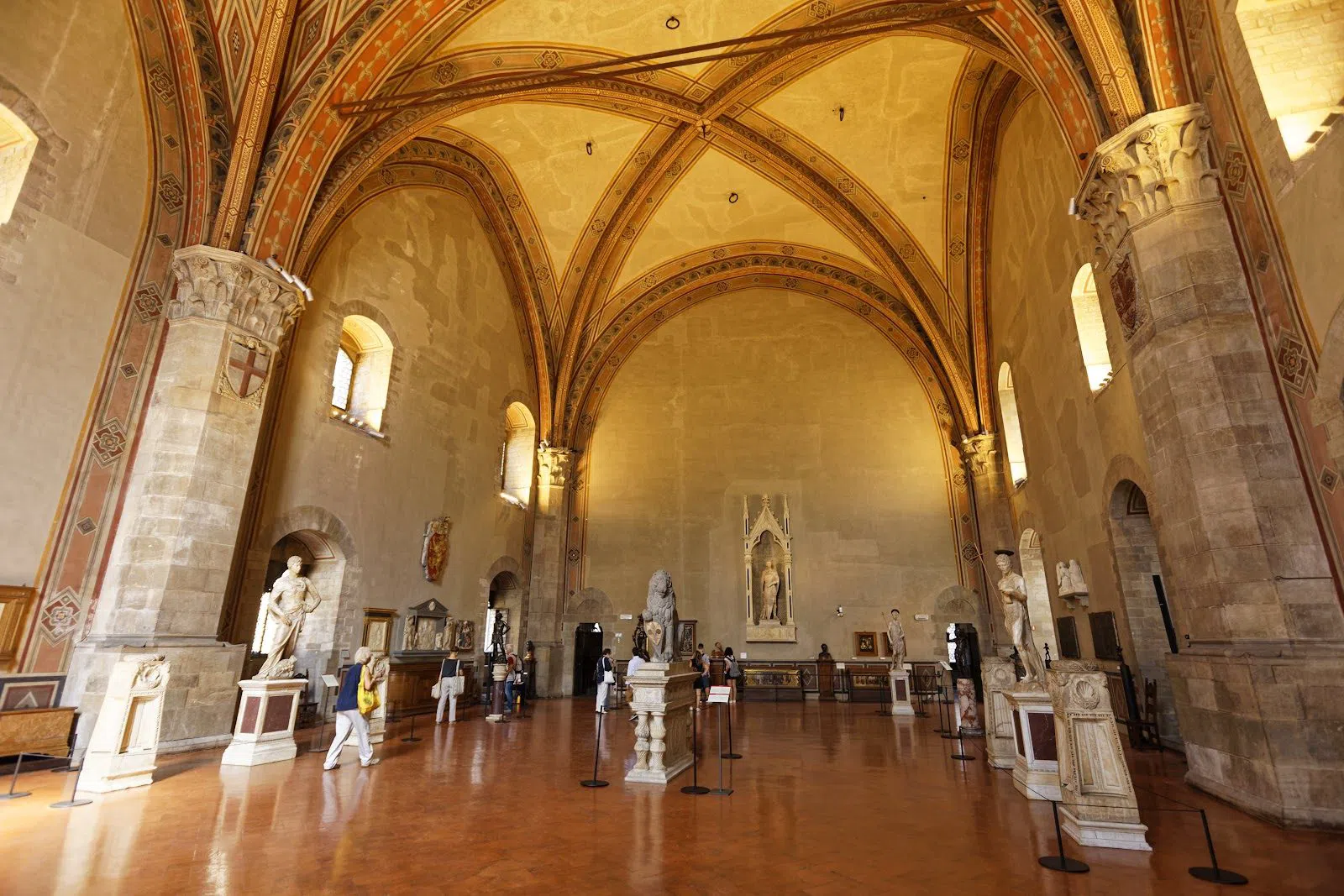
Museo Nazionale del Bargello (between the Duomo and Santa Croce) is the sane answer to the David queues. Donatello, Michelangelo's early Bacchus and Brutus, and, more to the point, room to stand back and look at them without a shoulder in your view. Entry rose from €10 to €12 on 1 February 2026, and since the group's hours were unified in March it opens Tuesday to Sunday, 08:15 to 18:50. There is far more space per visitor here than at the Accademia, so a party of ten moves through it comfortably rather than shuffling.
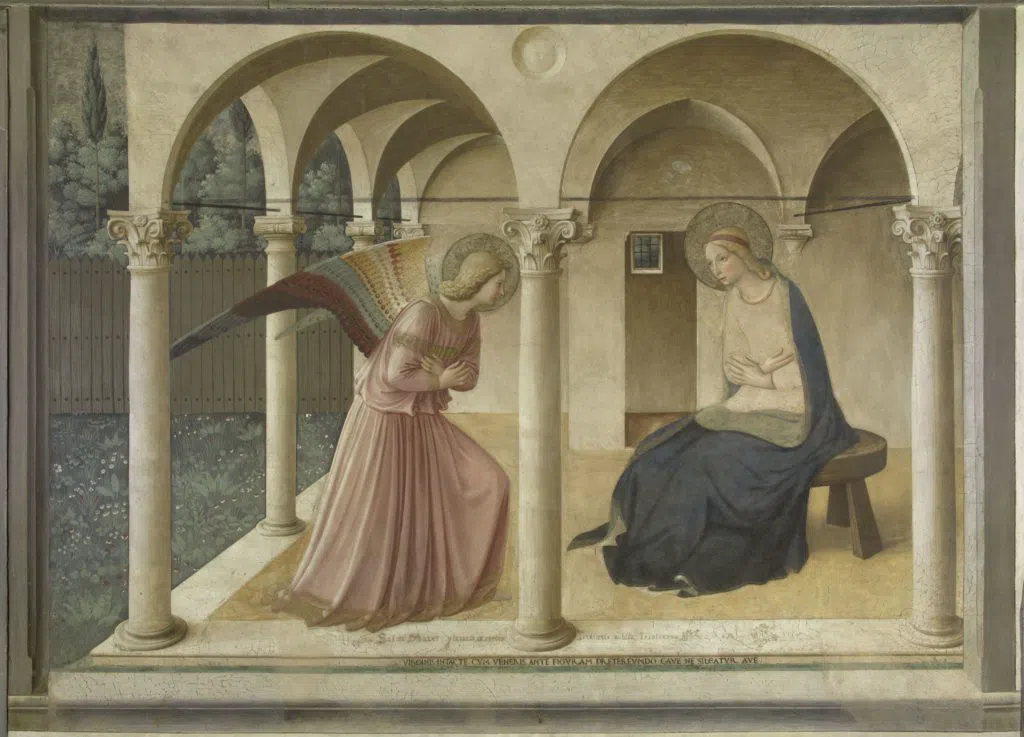
Museo di San Marco (San Marco, next door to the Accademia) is the quietest major collection in the city, spread over two flat floors of a Renaissance convent, with Fra Angelico's frescoes painted straight onto the walls of the friars' cells. Entry is €11, free under 18. The catch is the timetable, not the crowds: mornings only, roughly 08:15 to 13:50, with an awkward rota governing which Sundays and Mondays it opens. Check your actual date before building a morning around it. The building is a sequence of narrow cells and corridors, which makes it a fine hour for a couple and a poor choice for a large party.
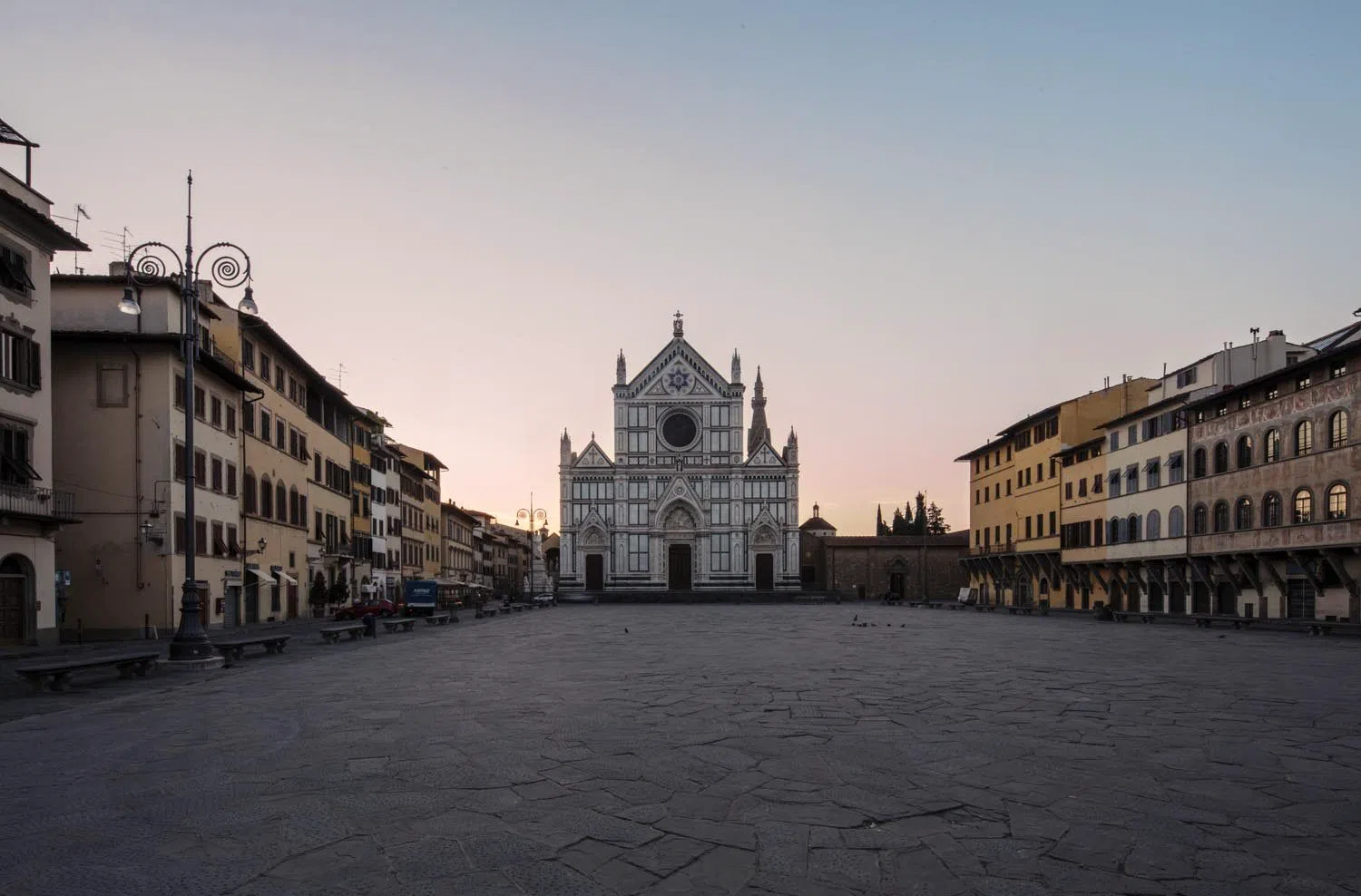
Basilica di Santa Croce (Santa Croce, ten flat minutes east of the Uffizi) is the most restful of the big sights and, for €10, one of the best value: basilica, cloisters, Pazzi Chapel and museum on one ticket. It is vast, level, rarely crowded and benched throughout, and the cloister is a place to sit rather than a place to file past. Giotto's frescoes in the Bardi Chapel return from a four-year restoration in September 2026. Sunday opening is afternoon only. Groups go through the booking office ([email protected], +39 055 2466105).
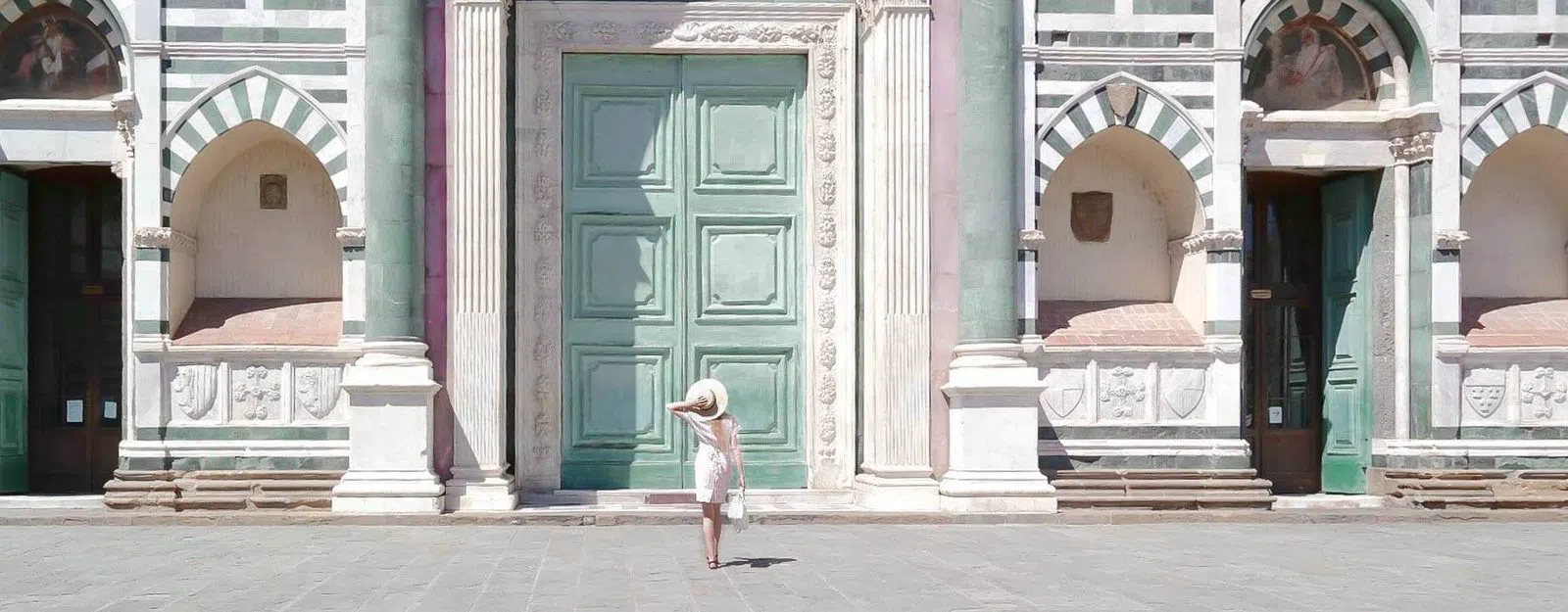
Basilica di Santa Maria Novella (two minutes from the station) earns its place by geography. Basilica, museum and cloisters together come to somewhere around €10, tickets are sold at the office on the day, and because it sits at the mouth of the station it works as an arrival-day or departure-day sight with no extra walking built into the trip: bags in the hotel, an hour of green-and-white marble, done. Advance online booking is advisable for parties. Friday and Sunday openings run late, so check before setting out.
The Duomo without a single stair
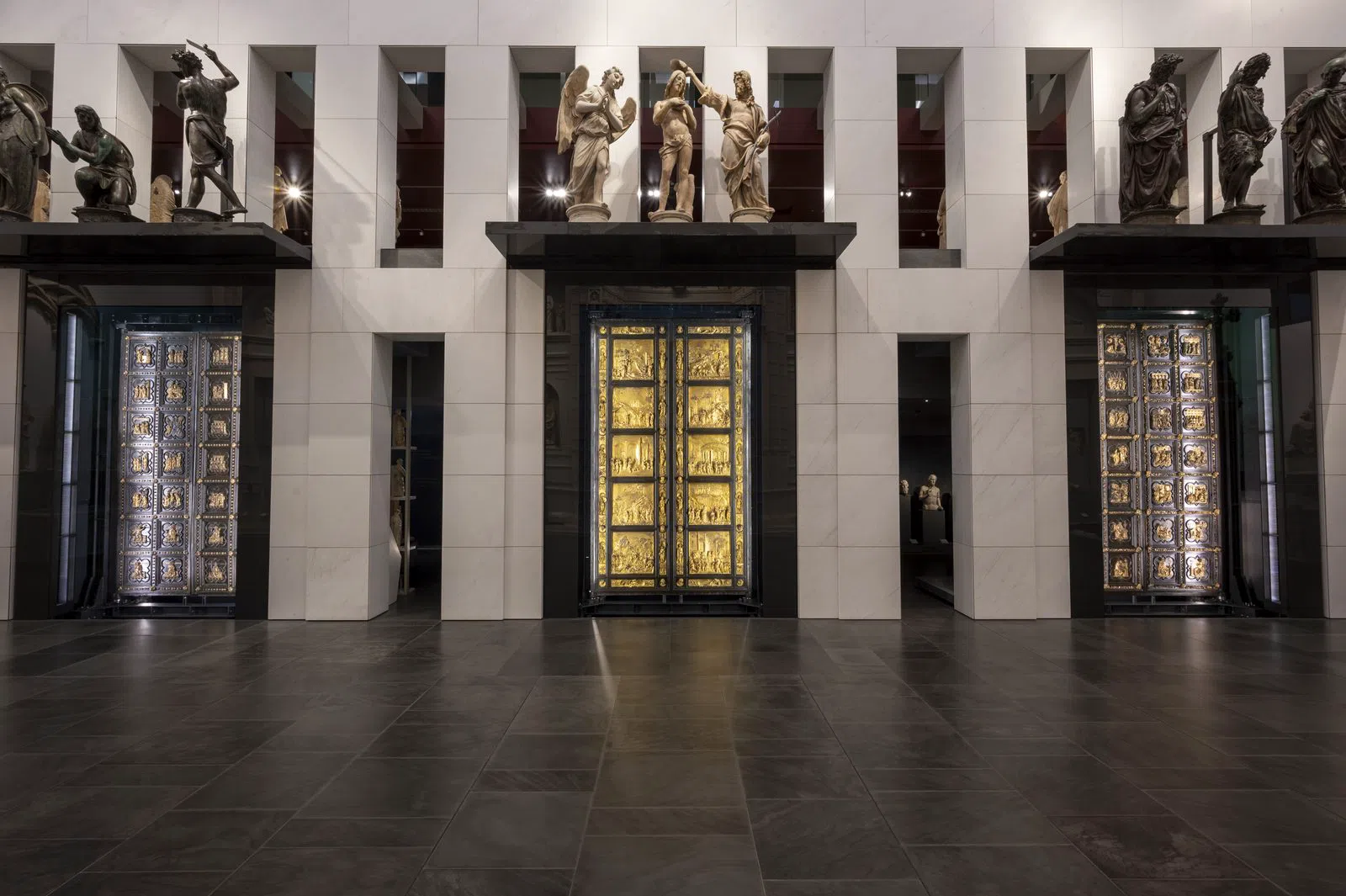
The dome is 463 steps and the bell tower is 414, and neither has a lift. Skipping both costs you almost nothing, because the sculpture that made the cathedral is not up there. It is in Museo dell'Opera del Duomo (Piazza del Duomo, behind the apse), where lifts serve all three floors and the panoramic terrace. Buy the Ghiberti Pass at €15, which covers the museum, the Baptistery and the Santa Reparata crypt; the Giotto Pass at €20 adds the bell tower and the Brunelleschi at €30 adds the dome climb, so they are money spent on stairs you have decided not to do. Entry is free for disabled visitors plus a carer. Two housekeeping notes: the Baptistery's vault mosaics are under restoration, and the museum closes the first Tuesday of each month. Online orders cap at ten passes per transaction, so a larger party emails the Opera directly.
Palaces you can cross on the flat
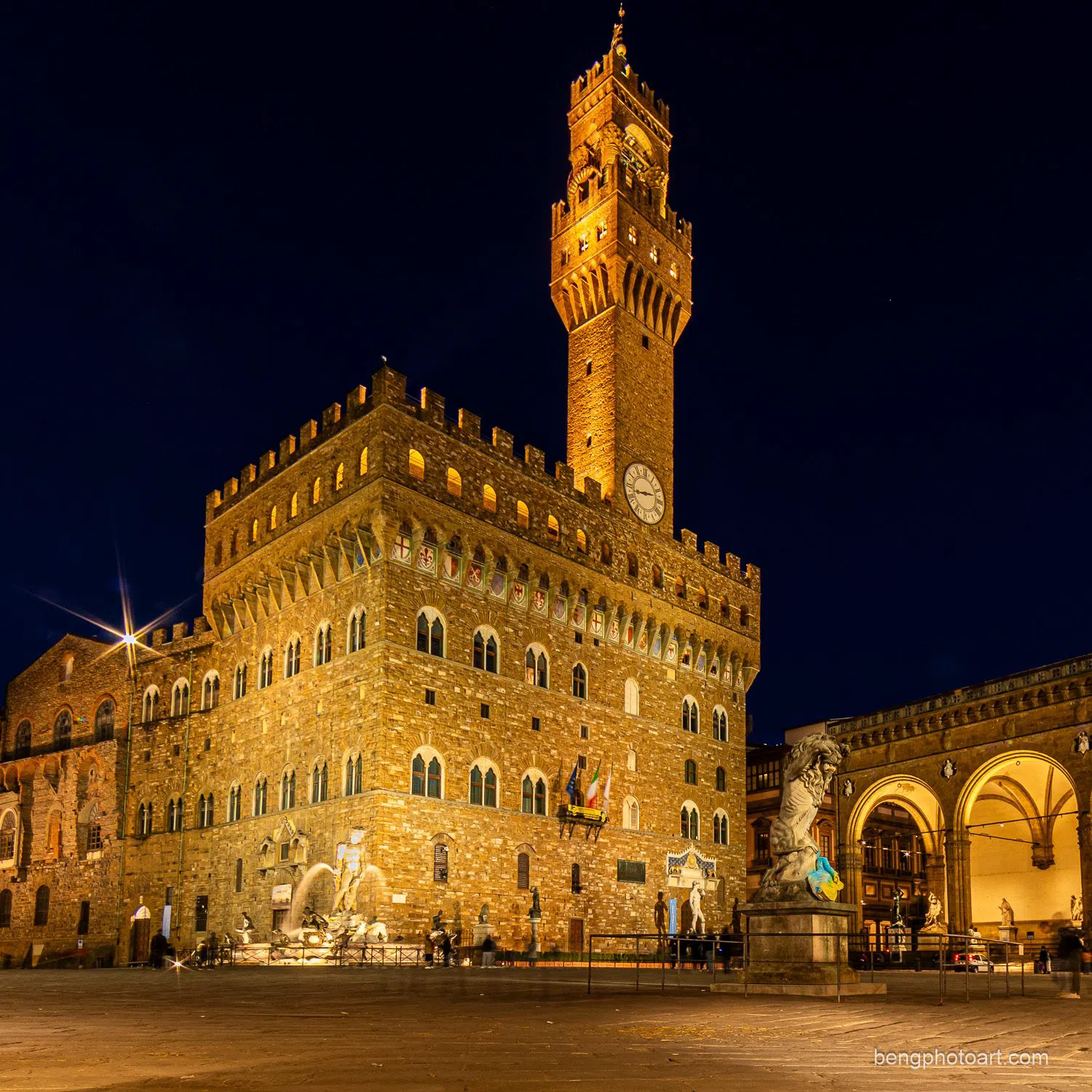
Palazzo Vecchio (Piazza della Signoria) is step-free where it counts. Lifts reach the upper museum floors, so the Salone dei Cinquecento, that startling barn of a room, is available to anyone. Take the museum-only ticket at €13.50 rather than the €22 that adds the Arnolfo Tower: the tower is 223 narrow steps, unsuitable for reduced mobility, and it closes in rain. Free under 18. On Thursdays the palace shuts at 14:00, which catches people out.
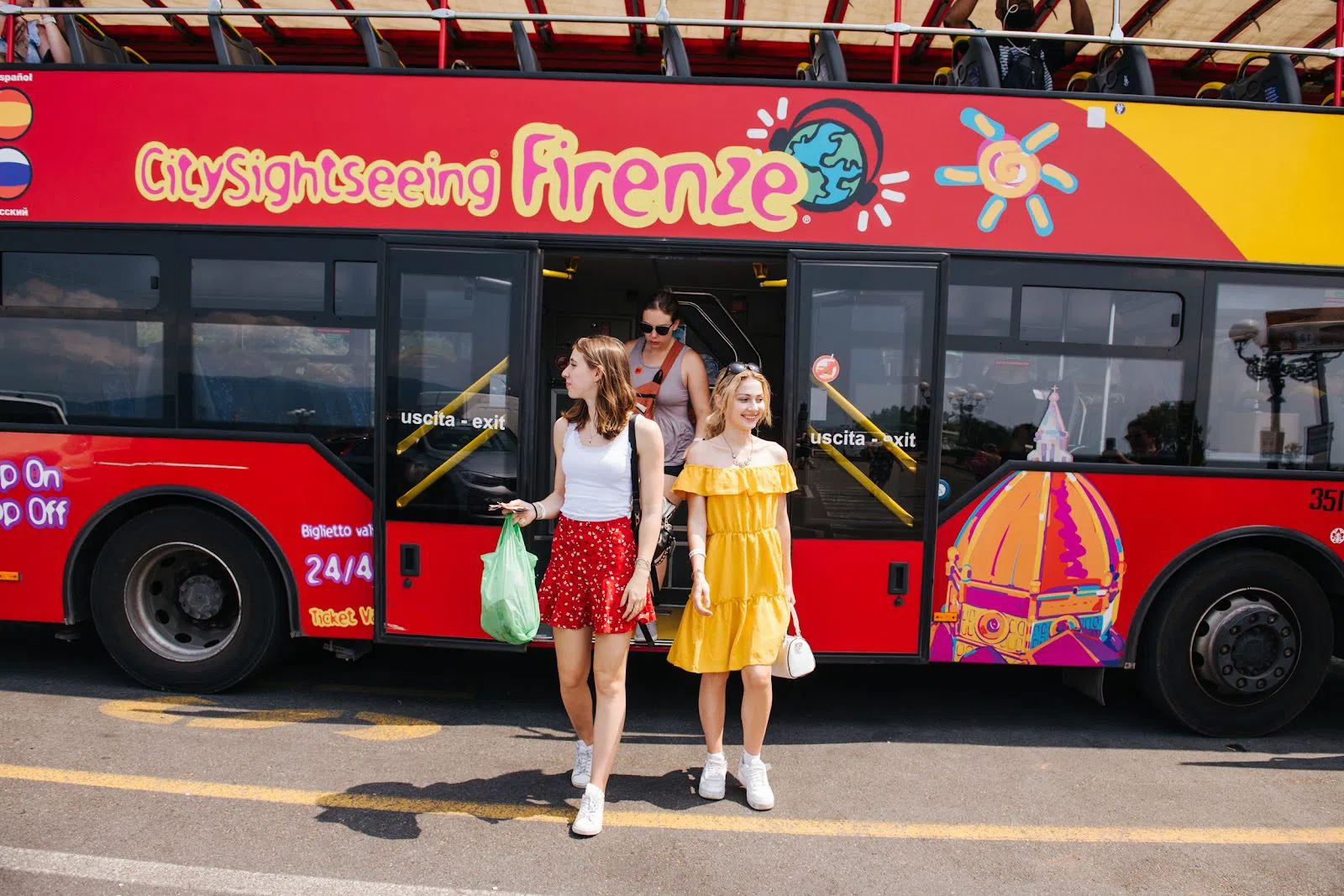
Across the river, Palazzo Pitti e Giardino di Boboli (Oltrarno, over the Ponte Vecchio) is a flat sequence of grand rooms and the natural pairing with the Uffizi. €22 covers palace and gardens in peak season, while the €38 PassePartout adds the Uffizi across five consecutive days and is the best-value ticket in the city for a slow week. Treat Boboli itself as optional. It is a steep hillside on gravel, and in July or August it will undo a gentle itinerary in forty minutes. The palace galleries suit larger parties; the garden paths do not. Closed Mondays, and Boboli is free the first Sunday of the month.
One hill, taken sitting down
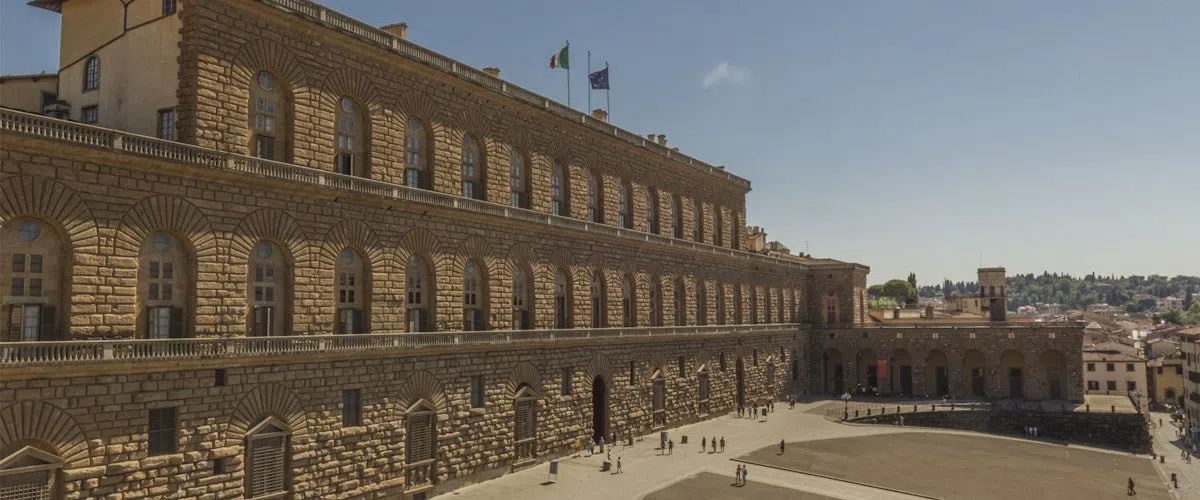
The view over Florence is worth having and there is no reason to earn it on foot. City Sightseeing Firenze (boarding points around the station and Piazza San Marco) is the honest fix for tired legs: the blue line loops the centre in about an hour and climbs to Piazzale Michelangelo, so the panorama arrives while you are seated. A 24-hour pass is around €25 and the 48- and 72-hour versions are better value; buses run every 15 minutes from April to November with commentary in eight languages. Large parties can board together without booking, though seats fill in high season.
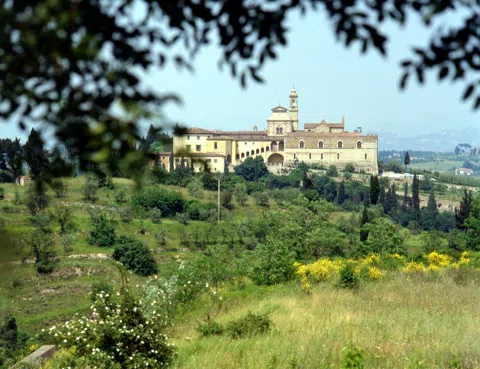
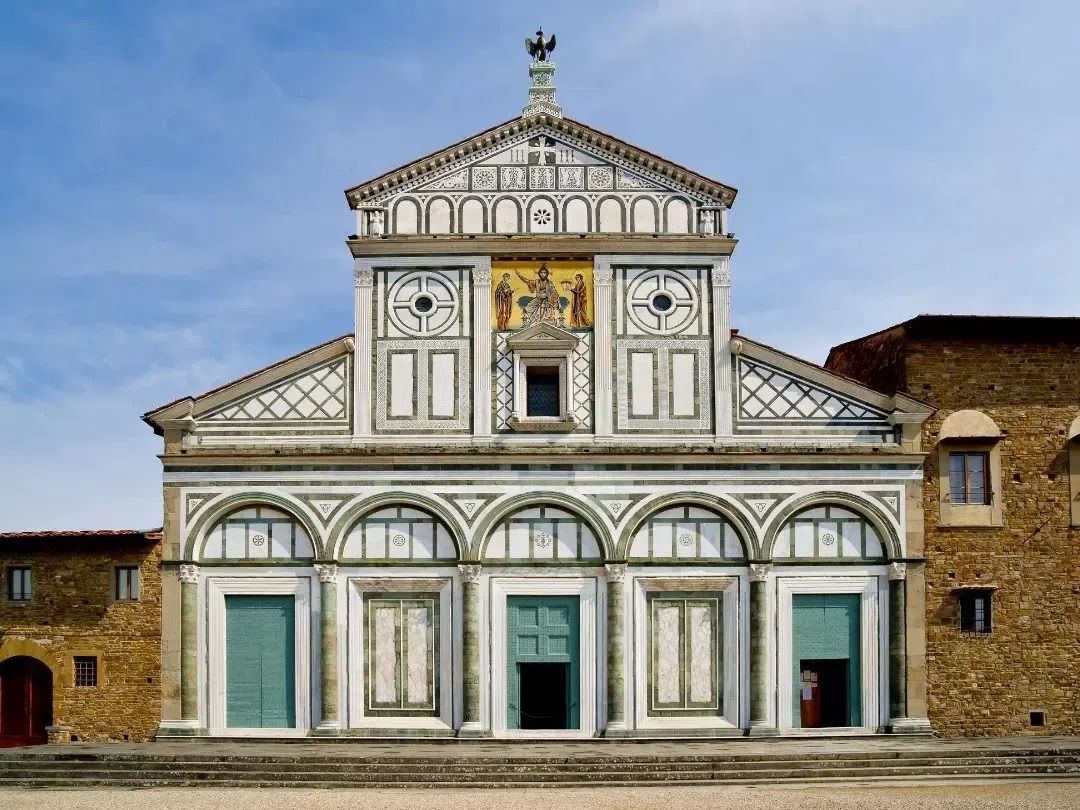
Better still, take city bus 12 or 13 up and walk down. That puts you at Basilica di San Miniato al Monte (on the hill above Piazzale Michelangelo), which is free, needs no booking, and stands higher and quieter than the terrace everyone photographs. Time it for the 18:00 Latin Mass and the 18:30 vespers sung in Gregorian chant, when the green-and-white facade is taking the last of the light and the chant comes up out of the crypt. It is a working monastery: groups keep quiet and cannot visit during Mass, and the church closes roughly 13:00 to 15:00. The walk back down through the cypresses is all descent.
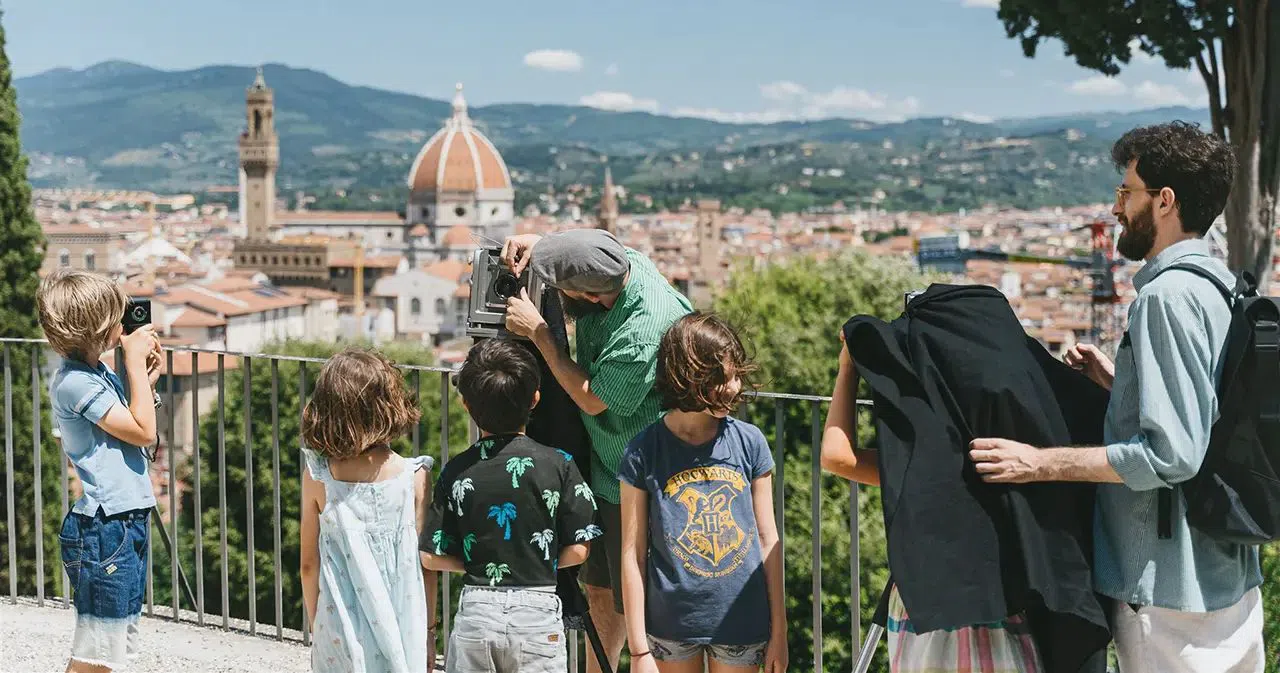
On the same slope, Villa e Giardino Bardini (Oltrarno hillside, above the Ponte alle Grazie) gives you the terraced-garden version of that view with a café at the top and a small fraction of the crowd: €10, free under 18, free the first Sunday of the month, open 10:00 to 19:30 in season and closed the first and last Monday of each month. Be clear-eyed about the paths, which are uneven gravel with rises and drops. Visitors needing step-free access can enter by the vehicle ramp at Costa San Giorgio 4, but you must call ahead on +39 055 2638599. A party of ten does not swamp it the way it would swamp Boboli.
Where to sit down properly
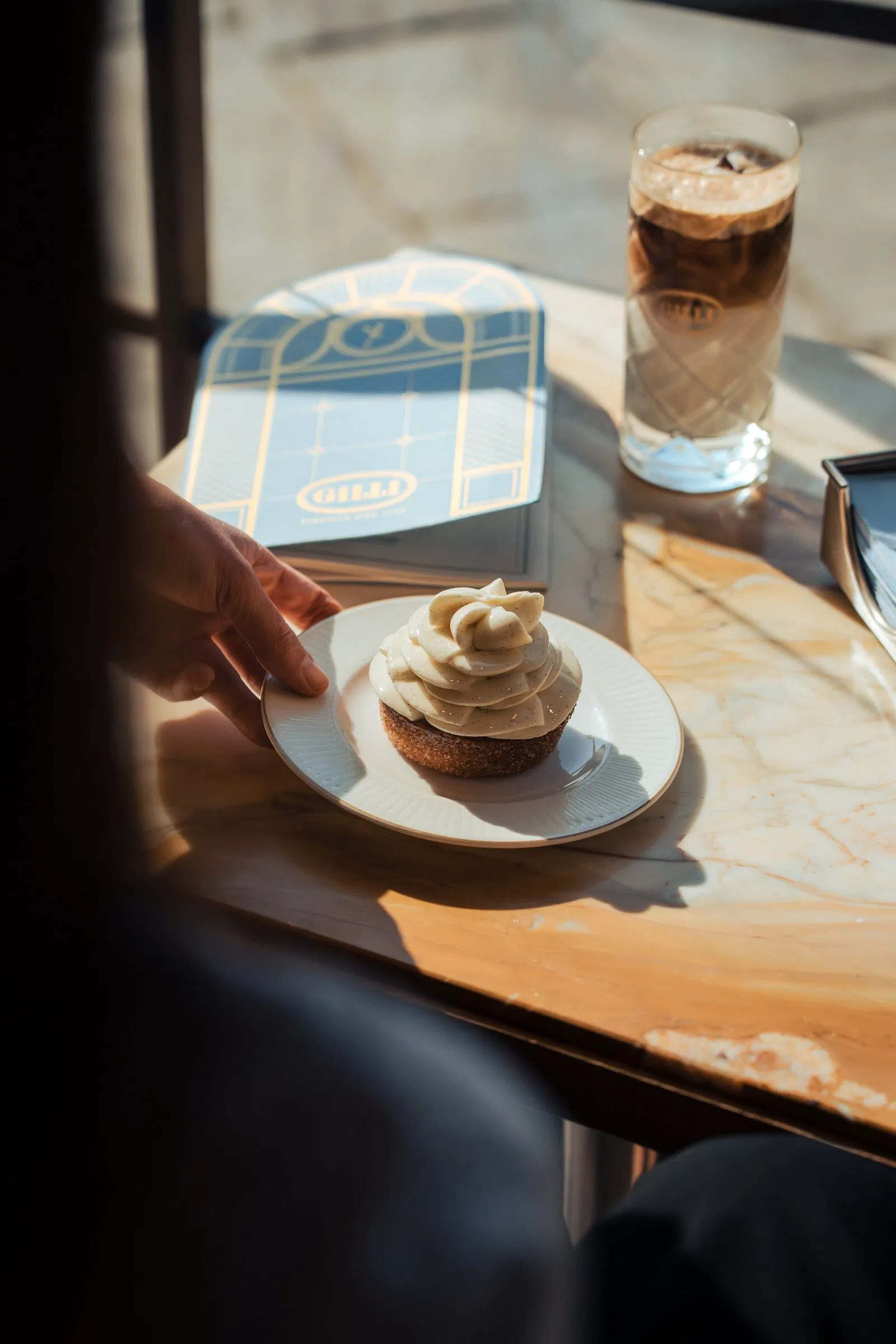
A gentle trip is built around its rest stops, not its sights. Caffè Gilli (Piazza della Repubblica) has been trading since 1733 and is the city's one true Art Nouveau room, reopened in spring 2026 after a heritage-approved refurbishment and serving from 07:30 to midnight. Take a table rather than standing at the bar and accept that table service costs noticeably more. You are buying forty minutes off your feet in a room with carved wood and glass cases of pastry, which is a fair trade at eleven in the morning. It seats a party comfortably and handles private events.
Mercato Centrale Firenze (San Lorenzo, under the iron-and-glass roof of the old market) solves the problem of feeding people who want different things. The first floor runs daily from 10:00 to midnight, dishes are roughly €8 to €15, nobody reserves, everyone orders from a different counter and meets at a shared table, and there is always somewhere to sit. For a mixed group with mixed appetites it is the least stressful meal in Florence; for a couple after a quiet dinner, it is not.
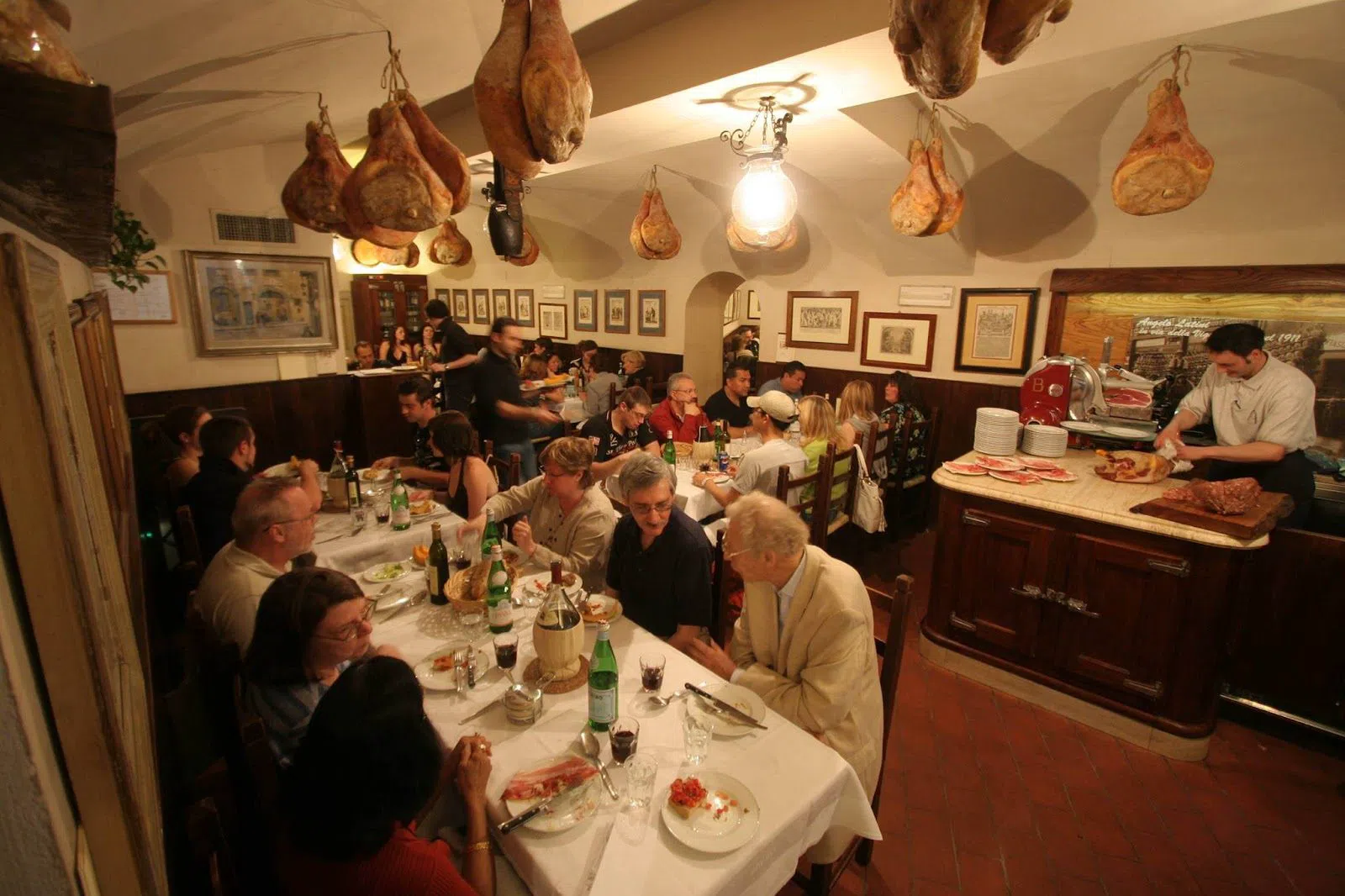
For that quiet dinner, or rather for its loud and excellent opposite, Il Latini (a few streets behind Santa Maria Novella) is family-run since 1951, holds a Bib Gourmand in the 2026 Michelin Guide, and is built around communal tables: the best room in the city for a group of eight, and a room where two people will be elbow to elbow with strangers by design. Reservations are essential, by phone on +39 055 210916 or email to [email protected]. Dinner only Tuesday to Friday; lunch and dinner at weekends.
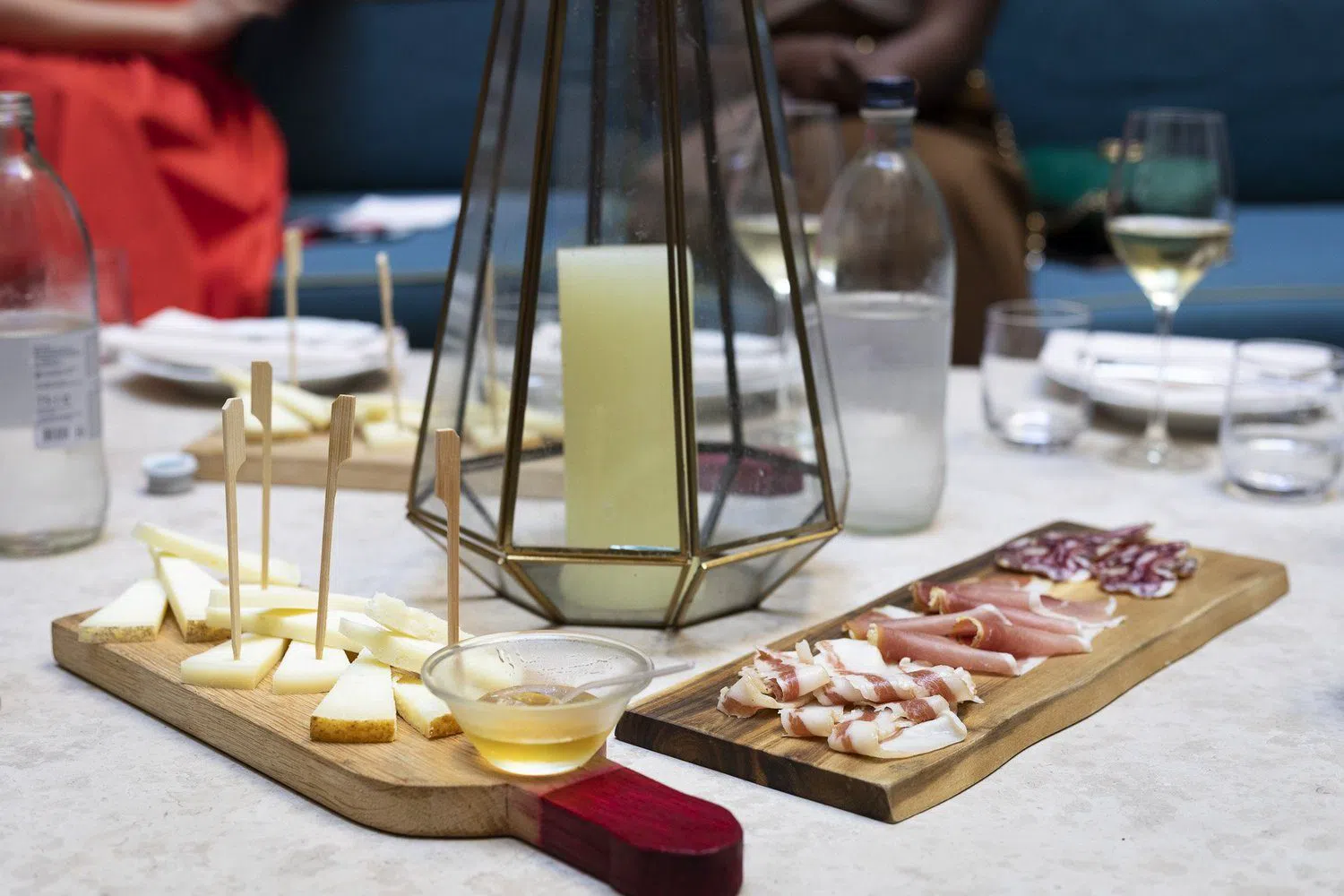
If you want one guided thing all week, make it Curious Appetite (small-group food and wine tours across the centre). The eight-person cap is the entire point: no radio headsets, no forced march, and guides who are sommeliers and food historians rather than script readers. Private departures are available for a party that wants its own guide. It is a premium rate, so confirm the current per-person price direct with the operator, and book well ahead because capacity is tiny.
A four-day shape that holds up
Stay in one place for the whole trip. The hour you save by not changing hotels is worth more than any address upgrade, and the centre is small enough that everything above is within twenty flat minutes of everywhere in it. See the Florence hotel search and pick something between Santa Maria Novella and the Duomo.
Arrive and do Santa Maria Novella, then Gilli. Day two, the Accademia at opening, San Marco next door before it closes at 13:50, a long lunch, then the 16:00 Uffizi ticket. Day three, Museo dell'Opera del Duomo in the morning and the Bargello after, with Santa Croce and its cloister for the late afternoon. Day four, Palazzo Vecchio or Pitti on the flat, then bus 12 up to San Miniato for vespers and the walk down. Keep Monday for arriving, eating, or the churches, because the Uffizi, the Accademia and Pitti are all shut. For everything not covered here, the wider Florence guide has the rest of the city.
Getting around, paying and timing it
The historic centre is roughly a mile across and almost entirely pedestrianised, so distances are short but the surface is not kind. Bring shoes that cope with cobbles, and plan on one sit-down for every two hours of walking. Taxis do not cruise; find a rank or book by phone. The hop-on bus and city buses 12 and 13 handle every hill worth going up.
Cards work almost everywhere, including museum ticket desks and the market counters, but carry €50 or so in cash for a coffee at the bar, church offerings and the odd small trattoria. Museums open early (08:15 at the Bargello and San Marco) and mornings before ten belong to organised tours; afternoons after four belong to you. Reckon on €90 to €120 per person for four days of entries at the prices above, less if the €26 and €38 combined tickets fit your dates. April, May, late September and October give you long light and bearable heat; in July and August, move the walking to before ten and after five and let the middle of the day happen indoors.
Before you go
How far ahead should I book the Uffizi and the Accademia?
Book both before you travel. A week ahead is usually enough outside July and August, longer for a party. The Accademia is the critical one: walk-up is €16 against €20 online, but without a reservation you can stand in Via Ricasoli for an hour. At the Uffizi, book the 2026 afternoon ticket (€20 online, entry from 16:00) rather than the €29 full-day one. Groups of nine or more at the Accademia go through Opera Laboratori on +39 055 294883.
Is Florence manageable with a bad knee or limited mobility?
More than its reputation suggests. Museo dell'Opera del Duomo has lifts to all three floors and the panoramic terrace, and is free for disabled visitors plus a carer. Palazzo Vecchio's upper museum floors are reached by lift, and Palazzo Pitti and Santa Croce are flat throughout. Avoid the dome (463 steps), the bell tower (414), the Arnolfo Tower (223) and the Boboli hillside. Giardino Bardini has a step-free vehicle entrance at Costa San Giorgio 4 if you call +39 055 2638599 ahead.
What is open on a Monday in Florence?
Not the Uffizi, the Accademia or Palazzo Pitti: all three close. Santa Croce, Santa Maria Novella, San Miniato al Monte, Palazzo Vecchio and Mercato Centrale carry a Monday. Giardino Bardini also shuts the first and last Monday of each month, and Museo dell'Opera del Duomo closes the first Tuesday. Monday is the day to arrive, eat well, and do churches.
How do I get the view over the city without climbing?
Take city bus 12 or 13 up to San Miniato al Monte and walk down: the hill is done for you and you arrive above Piazzale Michelangelo rather than climbing to it. Alternatively the City Sightseeing blue line runs to the Piazzale as part of a one-hour loop, roughly €25 for 24 hours, every 15 minutes from April to November. Giardino Bardini (€10) gives a similar view with a café, though its own paths are gravel and uneven.
How many days do I need, and should I move hotels?
Four nights in one hotel is the right shape for a first visit at a gentle pace: two museum days, one cathedral-and-Bargello day, one palace-and-hillside day, with a whole afternoon spare. Everything in this guide sits within about twenty level minutes of a base between Santa Maria Novella and the Duomo, so changing hotels buys you nothing and costs you a morning.