 In this area
The Florence issue
San Frediano, Florence: the Oltrarno’s Working Soul
Across the Arno, San Frediano trades postcard polish for workshop grit, serious trattorie and a night scene that feels gloriously, stubbornly local.
By Carlotta BenvenutiFresco by fresco, Uffizi to Oltrarno bottega
Cross the Ponte alla Carraia, walk two minutes west along the river, and Florence stops performing for you. San Frediano is the working end of the Oltrarno, where a gilder’s bench sits next to a whisky bar and the best bistecca in the city comes out of a former convent that has fed Arno boatmen since 1950. Lonely Planet has ranked it among the world’s coolest neighbourhoods; the people who live here mostly rolled their eyes and kept queueing for Sabatino.
What San Frediano is known for
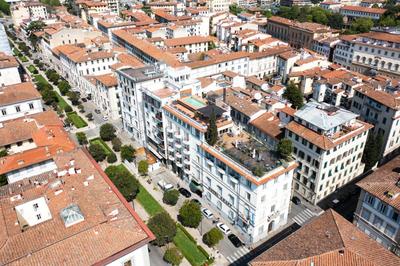
San Frediano runs low and unglamorous along the Arno’s south bank, boxed in by the 14th-century Porta San Frediano to the west and the leafy Piazza Tasso to the south. Its spine is Borgo San Frediano, a narrow street of shuttered bottegas, panifici and bars that only really wakes up after seven. By day the sound is a workshop one: a chisel, a sewing machine at the silk mill on Via Bartolini, a moped funnelling through streets barely wide enough for it. There are no marquee museums pulling coach parties, so the crowd is overwhelmingly local, plus the design-literate travellers and long-stay students who have worked out that this is where Florentines actually drink. The register is gritty rather than pretty: peeling ochre plaster, laundry over the lane, a Vespa parked against a Renaissance doorway. Then the light goes and the aperitivo hour tips the whole borgo into an easy, sociable buzz that lasts, unhurried, until well past midnight. It feels like a real neighbourhood that happens to be cool, not a cool neighbourhood pretending to be real.
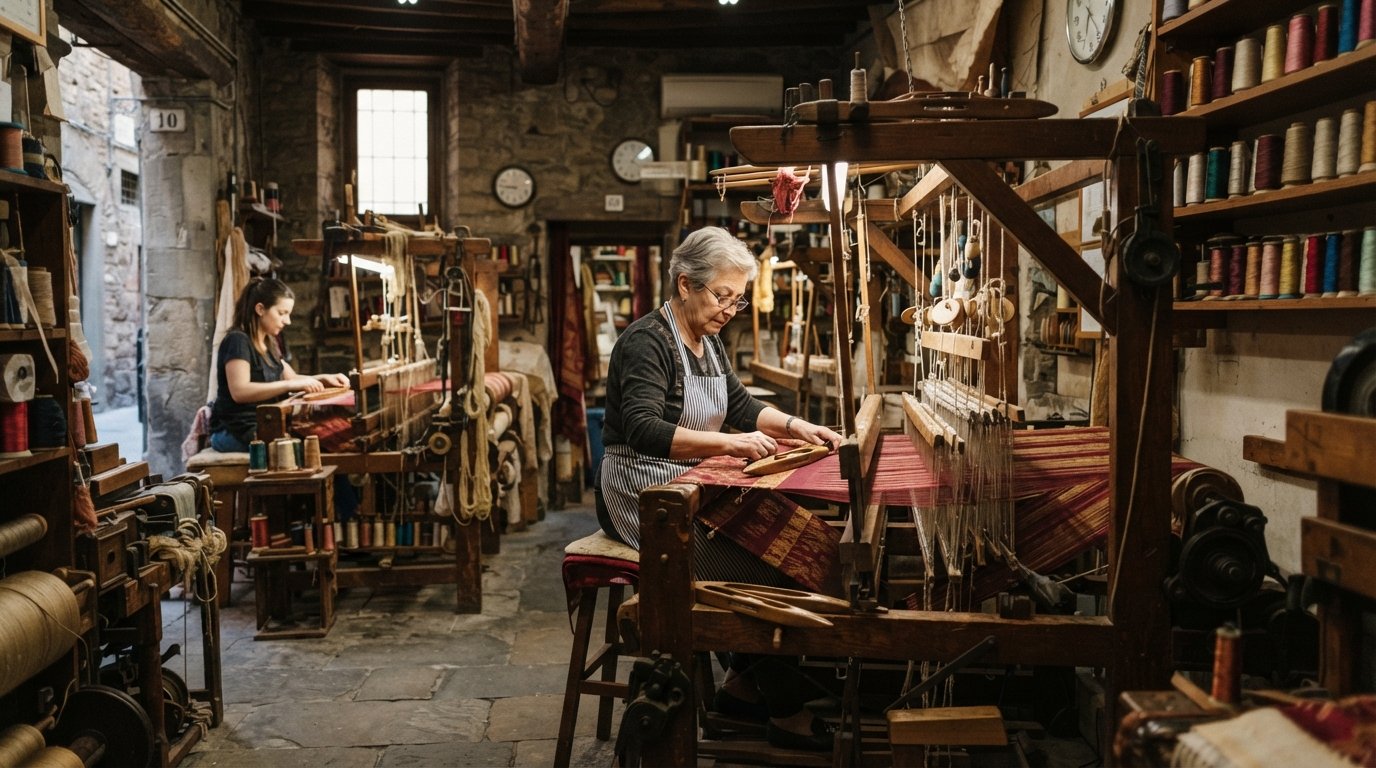
Two things, mostly: craft and authenticity, and it earns both. This is the heart of the Oltrarno artisan quarter, and San Frediano keeps the trades that made Florence rich long before it made it famous. On Via Bartolini the Antico Setificio Fiorentino, founded in 1786, is one of the last hand-weaving silk workshops in the world — its looms still run to 18th-century designs, one warping machine reputedly built to a Leonardo da Vinci drawing, and you can visit the atelier by appointment, Monday to Friday, mornings and afternoons.
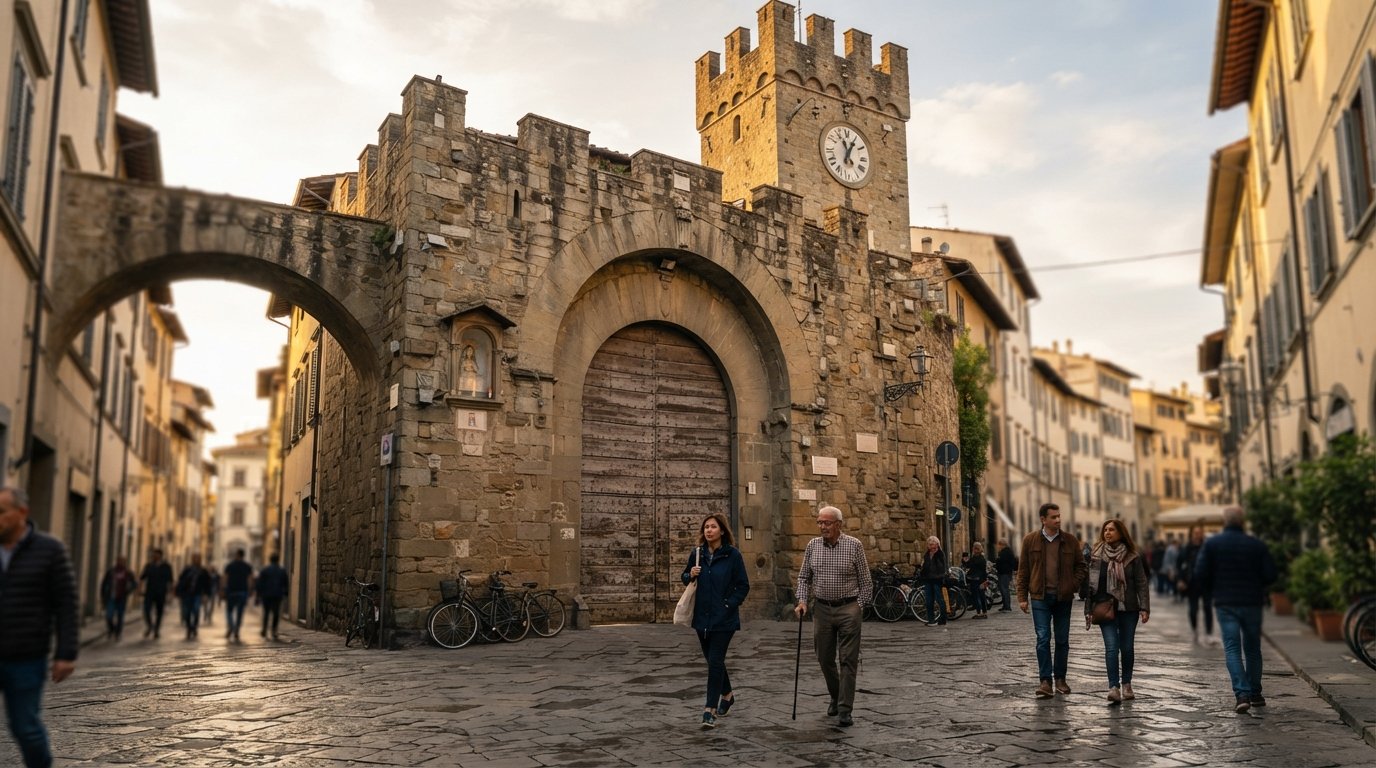
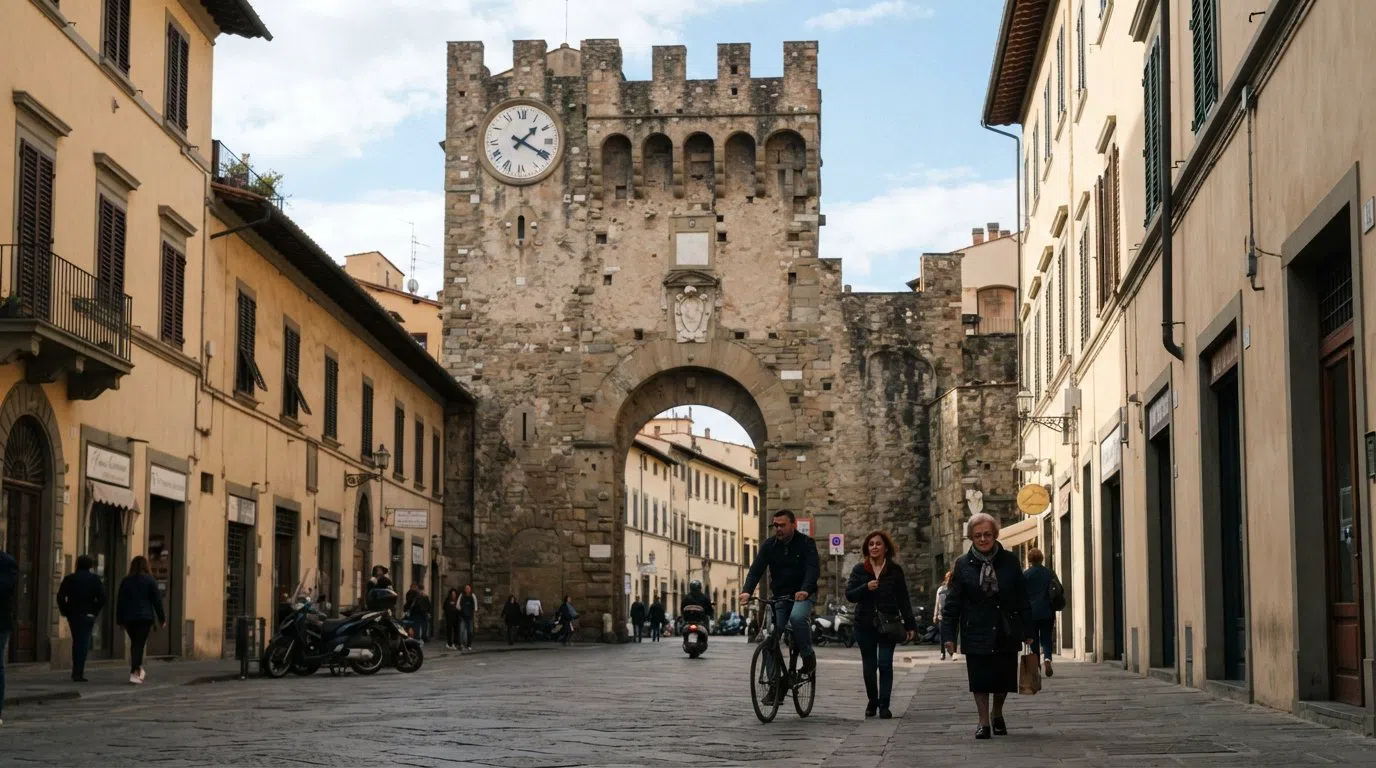
Around it, the side streets off Borgo San Frediano hide frame-gilders, restorers, bookbinders and leather-workers whose doors stand open on a weekday morning. That openness matters. Florence can be a city of finished surfaces, all façade and no fingermarks, but here you see the hands at work: the dust on the bench, the gold leaf waiting to be breathed onto, the paper cut to size. The neighbourhood’s other great emblem is the Porta San Frediano, the tall medieval gate finished in 1332 where Borgo San Frediano becomes Via Pisana; its wooden doors and portcullis are among the best-preserved of Florence’s old walls. It gives the whole district its name and its western full stop.
What makes the area so satisfying is that it never quite turns its trades into theatre. The silk workshop is still a workshop. The gate is still a gate. The neighbourhood’s coolness is almost accidental, and that is precisely why it has lasted.
Plan your Florence trip
Live prices from our booking partners.
Guests & rooms
Free cancellation on many rooms. We may earn a commission when you book.
Where to eat & drink
San Frediano is where you eat the Florence of the myth for the price of the reality. The institution is All’Antico Ristoro di’ Cambi on Via Sant’Onofrio 1r, open since 1950 in a vaulted 16th-century former convent; it started as a fiaschetteria pouring wine for Arno rowers and now grills one of the city’s most-praised bistecche alla fiorentina under those brick arches, alongside ribollita, pappa al pomodoro and tagliatelle al cinghiale.
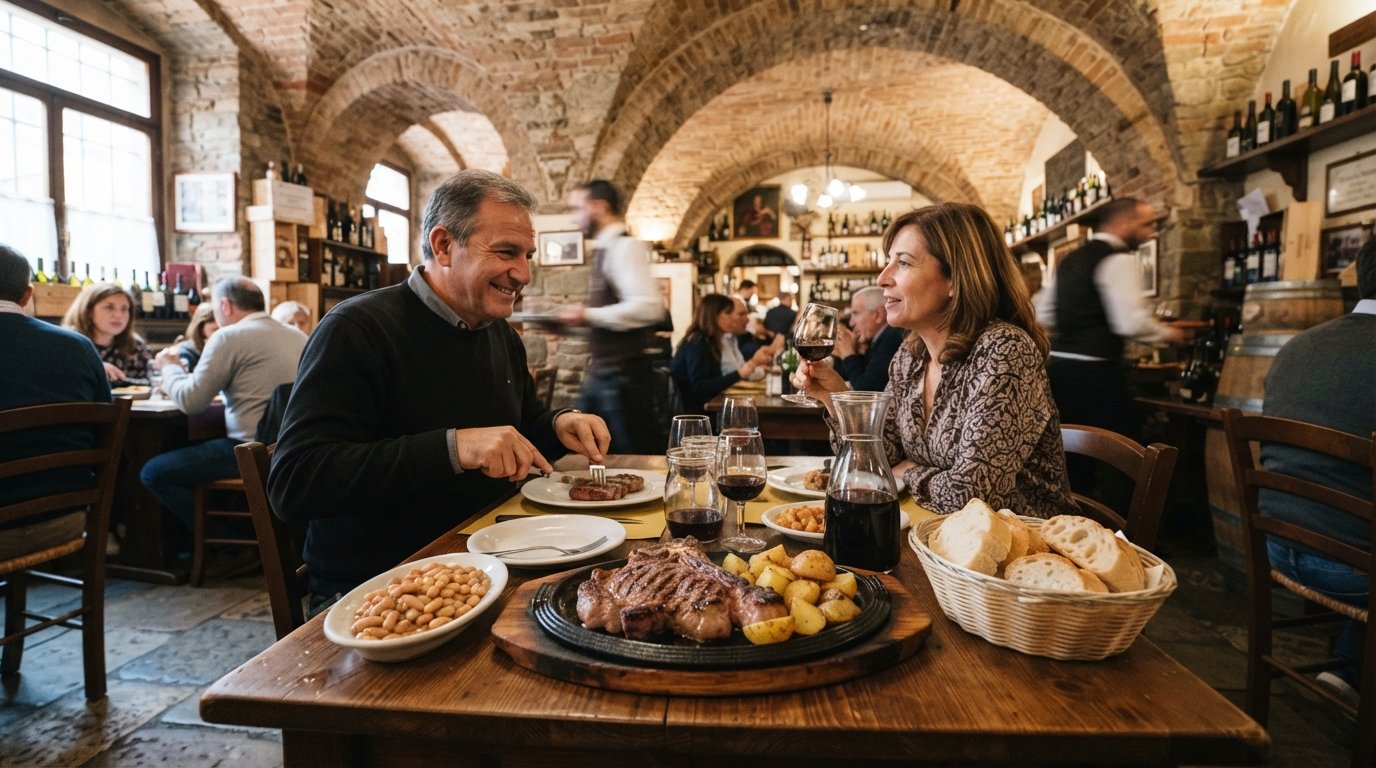
There is a particular pleasure in eating something so canonical in a room with the rough dignity of an old convent. No chandeliered opera of Tuscanity here; just meat, fire and the kind of brick vault that has seen worse things than a tourist appetite. It is one of those places that makes the city’s food legend feel less like marketing and more like inheritance.
For the cheapest honest lunch in the quarter, Trattoria Sabatino just outside the Porta San Frediano gate on Via Pisana has been run by the Buccioni family since the 1950s — terracotta floors, a daily typewritten menu, pastas around €5 and mains around €6, no bookings; get there fifteen minutes before opening or join the queue. Sabatino is the sort of place that reminds you Florence has always fed people who worked for a living. The room is plain, the menu is brief, and the queue is its own local census.
I’Brindellone on Piazza Piattellina 10 is the local pick for peposo dell’Impruneta, a slow beef-and-pepper stew, and another well-regarded bistecca; it’s tiny and busy, so book. On Via dell’Orto, Il Guscio at no. 49a has drawn a devoted local crowd since 1986 for daily-changing Tuscan and seafood cooking and a serious Italian wine list — reserve, it fills with regulars. These are not dining rooms that flatter you. They feed you, and then they expect you to understand the difference.
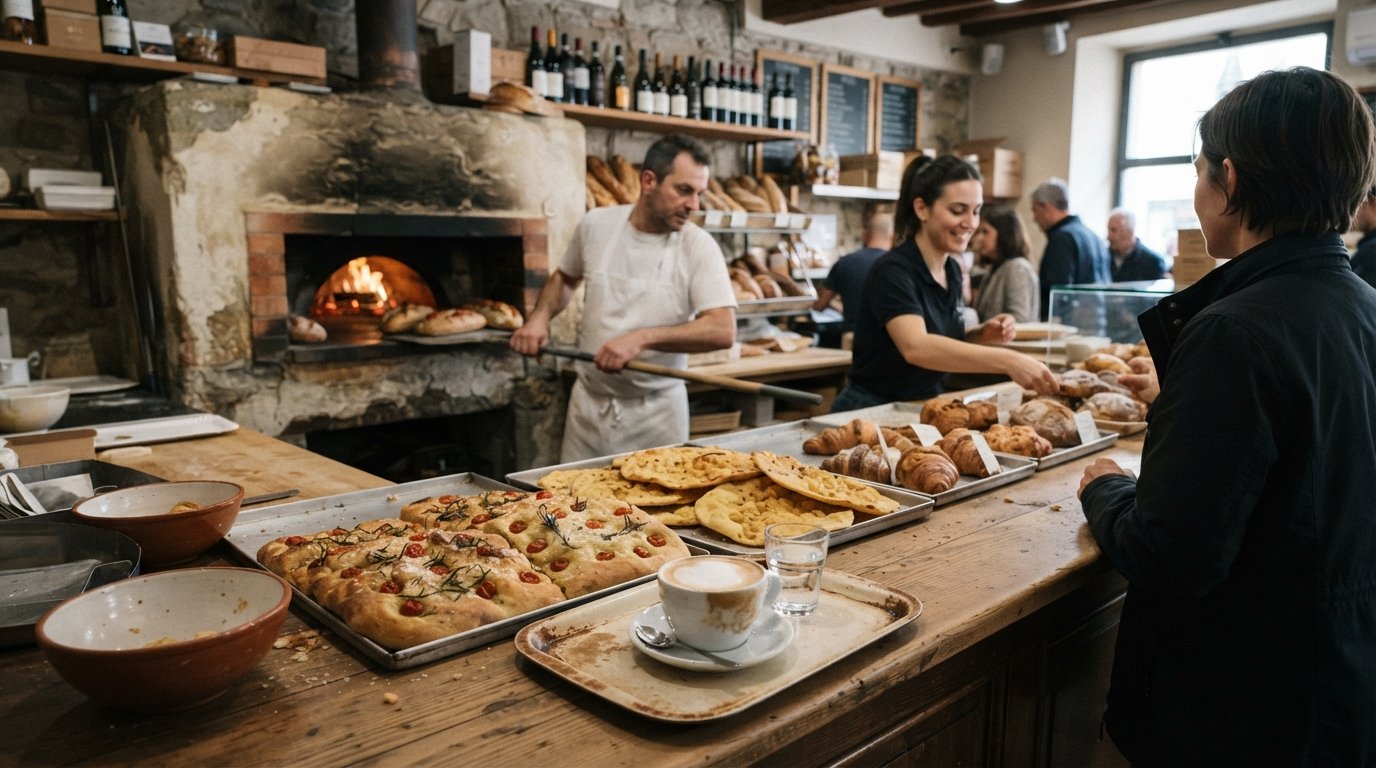
For something quicker: S.Forno on Via Santa Monaca 3r is a century-old bakery, now backed by the Il Santo Bevitore team but still baking in its original oven, good for focaccia, cecina and a morning coffee; Fermento 1889 on Borgo San Frediano 16 does Neapolitan-style pizza and a cult rum baba. Finish, always, with gelato from La Sorbettiera on Piazza Tasso 11r, where flavours like salted caramel and lime-and-basil are churned daily from market produce.
If San Frediano has a sweet tooth, it is not for show. The bakery’s bread, the pizza, the rum baba, the gelato — all of it sits comfortably inside the neighbourhood’s larger appetite for the real thing. And because the quarter is still residential, you eat alongside people who know exactly which trattoria does which dish best, which is the most reliable guide a city can offer.
Going out
San Frediano’s nightlife is bar-led, not club-led, and it clusters tightly along Borgo San Frediano. The name to know is Mad – Souls & Spirits on Borgo San Frediano 36r, a tiny, minimalist cocktail bar routinely called the best in the city — inventive drinks at fair prices, room for maybe two dozen people, so expect to spill onto the street. It is the kind of room that turns the pavement into a social annex, which is very Florentine in its own way: the city has always preferred conversation at the edge of the room to spectacle in the middle.
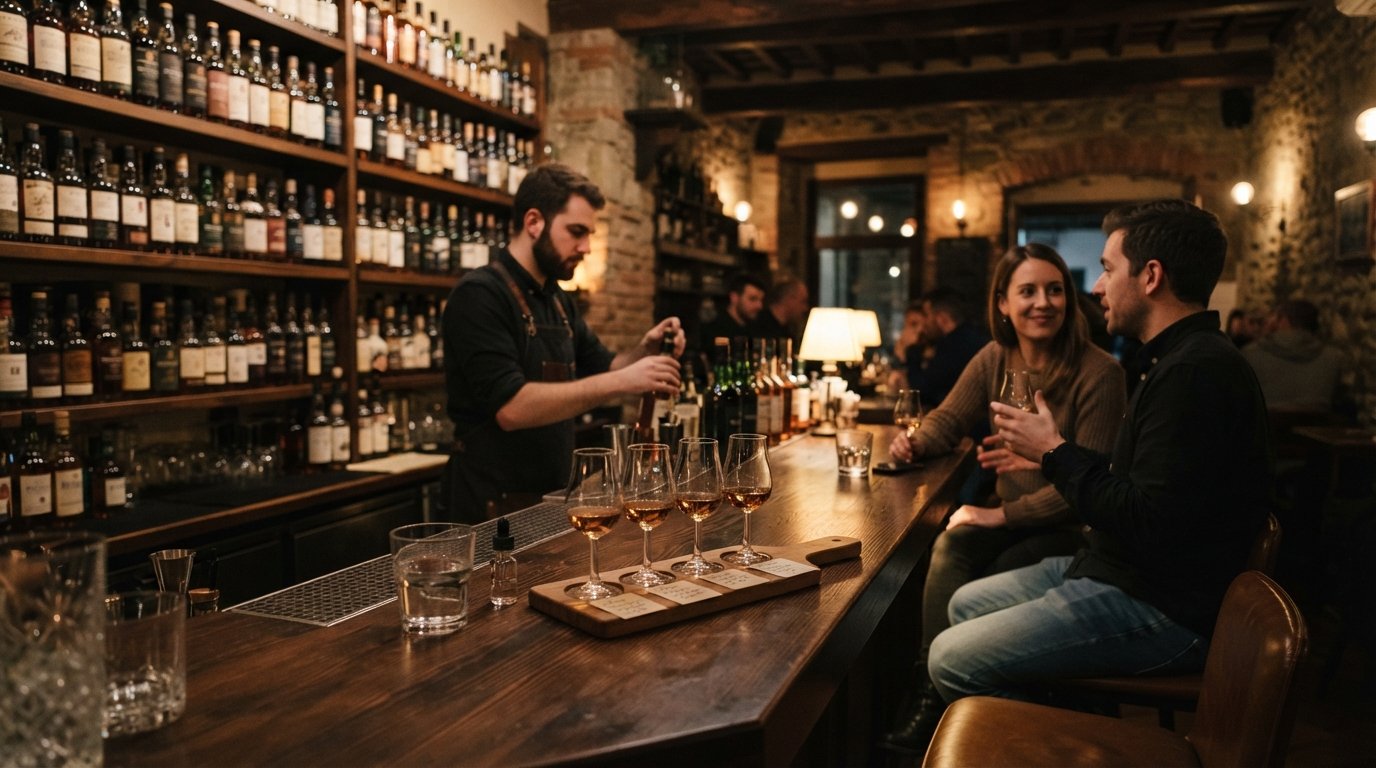
A few doors along, Love Craft on Borgo San Frediano 24r is Florence’s first whisky bar, opened in 2018 as a low-lit H.P. Lovecraft homage with 200-plus bottles, flights and whisky cocktails, open evenings until 2am. Gesto at Borgo San Frediano 27r is the casual all-rounder: you chalk your order onto a board, and it turns out cheap tapas-style small plates alongside cocktails, wine and beer. That chalkboard ritual keeps the place from getting too polished; it feels like a neighbourhood bar that happens to be good at staying open.
For a gentler evening, Santarosa Bistrot sits in a former guardhouse in the little park along the river wall at Lungarno di Santa Rosa 2 — a greenhouse-like bar with lawn chairs under the trees, ideal for an early aperitivo before the borgo gets loud. And La Cité on Borgo San Frediano 20 is a shabby-chic café-bookshop that turns into a low-key spot for a drink with occasional live music. It is a quarter for a long, drifting night on foot rather than a big night out, and that is part of the pleasure: no one is rushing to get you inside a velvet rope.
The rhythm here is simple. Start early by the river, drift to Borgo San Frediano after dark, and let the night assemble itself one bar at a time. If you are looking for Florence as a social city rather than a monument city, this is where it shows its hand.
Things to do / what to see
The signature San Frediano activity is simply walking the artisan streets on a weekday morning, when the workshops are open and working. Book ahead and the Antico Setificio Fiorentino on Via Bartolini will show you its 18th-century silk looms in action — some visits end with a hand-woven fringe you make yourself. Otherwise wander the lanes off Borgo San Frediano and look for open bottega doors; gilders and restorers here are used to curious passers-by, though many shut on Saturday afternoons and Sundays.
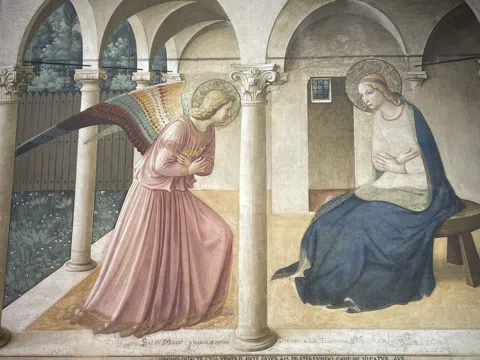
For art, the neighbourhood shades straight into two of the Oltrarno’s treasures. At Piazza del Carmine, the Brancacci Chapel inside Santa Maria del Carmine holds the fresco cycle Masaccio and Masolino began in the 1420s — the work Michelangelo and Leonardo came to study, and a hinge point of the Renaissance. Book a timed slot, because frescoes deserve silence and a little choreography. The chapel is one of those places that makes you understand why Florence still matters: not because it is preserved under glass, but because the city learned to think in pigment and plaster.
On the riverfront, the Baroque church of San Frediano in Cestello, with its bare stone façade and Antonio Ferri dome completed in 1689, gives the quarter its most photographed profile from across the Arno at sunset. And the Porta San Frediano itself rewards a proper look: it’s the best-surviving gate of the medieval city walls, tower, doors and all.
Don’t miss in San Frediano
The Brancacci Chapel with Masaccio's groundbreaking frescoes
The medieval Porta San Frediano gate
The craft cocktail bars along Via San Giovanni
Shopping
This isn’t a fashion-boutique quarter — the shopping is craft, antiques and provisions. The draw is the working ateliers themselves: the Antico Setificio Fiorentino sells its damasks and hand-made trimmings direct, and the streets around Borgo San Frediano and Via dei Serragli are dotted with frame-gilders, bookbinders, upholsterers and small antique dealers where a picture frame or a marbled-paper notebook is the real Florentine souvenir, not a stall handbag.
There is something deeply satisfying about buying an object that still carries the smell of the room it was made in. A notebook from a bookbinder, a frame from a gilder, a length of damask from the silk workshop — these are not impulse purchases so much as portable evidence. For edible souvenirs, S.Forno on Via Santa Monaca doubles as a small pantry of local pastas, pestos and jams alongside its bread. There’s no dedicated tourist market here; for food shopping proper, locals cross to the covered markets nearby, but the pleasure of San Frediano is buying something made a few metres from where you’re standing.
Where to stay in San Frediano
San Frediano suits travellers who want a resident’s Florence and don’t mind a short walk to the sights. Stay on or just off Borgo San Frediano and you’re in the thick of the bars and trattorias — brilliant for atmosphere, but book a room facing a courtyard rather than the street if you sleep lightly, because the aperitivo hum runs late. The blocks toward Piazza Tasso and around the quieter lanes off Via dei Serragli trade some buzz for calm and feel genuinely residential. The riverfront Lungarno di Santa Rosa and the streets by San Frediano in Cestello give you the loveliest walks and sunset light. Accommodation skews toward small guesthouses, apartments and design B&Bs rather than big hotels, and prices run noticeably below the Duomo side of the river for the same standard.
Hotels in San Frediano
Our best-rated stays in this neighbourhood. Prices are approximate “from” rates — confirmed at the provider when you continue. We may earn a commission if you book through our partners — at no extra cost to you.
In this area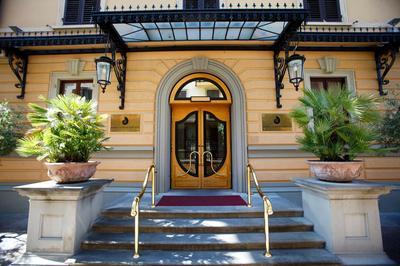 In this area
 In this area
 In this area
 In this area
San Frediano
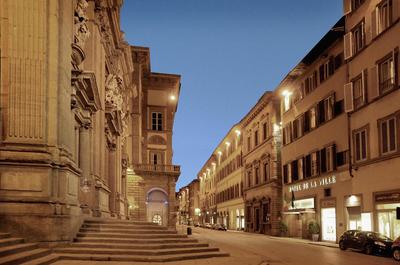
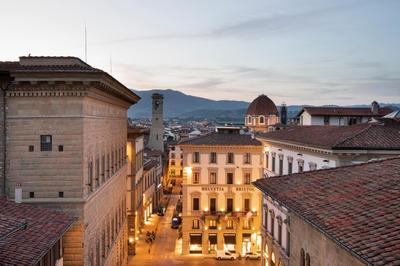
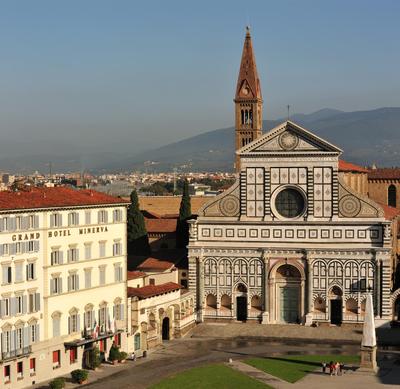
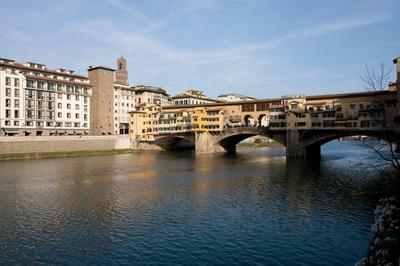
Helvetia&Bristol Firenze – Starhotels Collezione
9.3· 762 reviews
approx. from£869 / nightSee prices
 In this area
 In this area
San Frediano
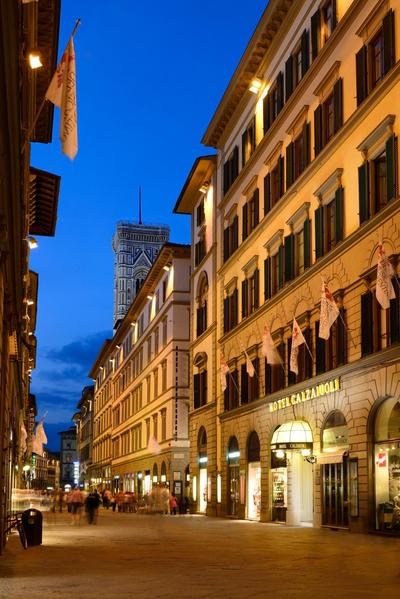
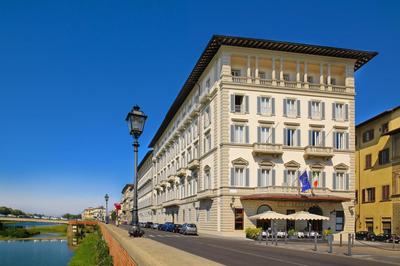
Hotel Lungarno - Lungarno Collection
9.6· 752 reviews
approx. from£1,066 / nightSee prices
 In this area
 In this area
 In this area
 In this area
 In this area
Getting around
San Frediano is compact and best done on foot. From the middle of the borgo it’s about a 10–15 minute walk across the Ponte alla Carraia to the Duomo, Ponte Vecchio and the Uffizi, and only a couple of minutes east into Santo Spirito for its piazza and wine bars. There’s no metro; the historic centre is a car-light ZTL, so you won’t want a car. Florence’s main train station, Santa Maria Novella (SMN), is a 15–20 minute walk north over the river and is the hub for regional trains and both tram lines. For the airport, the T2 tram runs from beside SMN out to Florence Peretola (Amerigo Vespucci) in about 20 minutes; walk or grab a short taxi to the station first. Within the quarter itself, expect narrow pavements, cobbles and a few steps — flat overall, but not a place for wheeled suitcases at speed.
San Frediano is safe at night in the ordinary sense of a lived-in city quarter: people are out, bars are open, and the streets are busy enough to feel watched over. Use the usual common sense on the quieter lanes and around the gate after midnight, and you’ll find the neighbourhood’s late hours more sociable than threatening.
It is, in the end, the Florence that keeps its apron on. Not a museum district, not a stage set, but a place where silk still gets warped, bread still comes out of an old oven, and dinner can still cost less than the taxi you didn’t need. That may be why San Frediano feels so modern: it has never stopped being itself.
Gallery
San Frediano in pictures
San Frediano — your questions
Is San Frediano a good area to stay in Florence?
Yes, if you want a lived-in local base rather than sights on your doorstep. It’s calmer and cheaper than the centre, full of trattorias and bars, and still only a 10–15 minute walk across the river to the Duomo and Uffizi. First-time visitors focused on maximum sightseeing may prefer the Centro Storico; repeat visitors and food-and-craft lovers tend to fall for San Frediano.
Is San Frediano safe at night?
It’s a residential neighbourhood and generally safe to walk in the evening. The borgo stays lively with people out at the bars until late. Take normal city care on the quieter side streets and around Porta San Frediano after midnight, but there isn’t a particular trouble spot.
How do I get from San Frediano to the Duomo and the main sights?
On foot in about 10–15 minutes. Cross Ponte alla Carraia or Ponte Vecchio and you’re straight into the historic centre — the Uffizi, Piazza della Signoria and the Duomo are all an easy walk. There’s no need for a bus or tram for the core sights.
What is San Frediano best for?
Artisan workshops, traditional trattorias, natural-wine and cocktail bars, and a local aperitivo scene. It’s the Oltrarno at its most working and least polished.