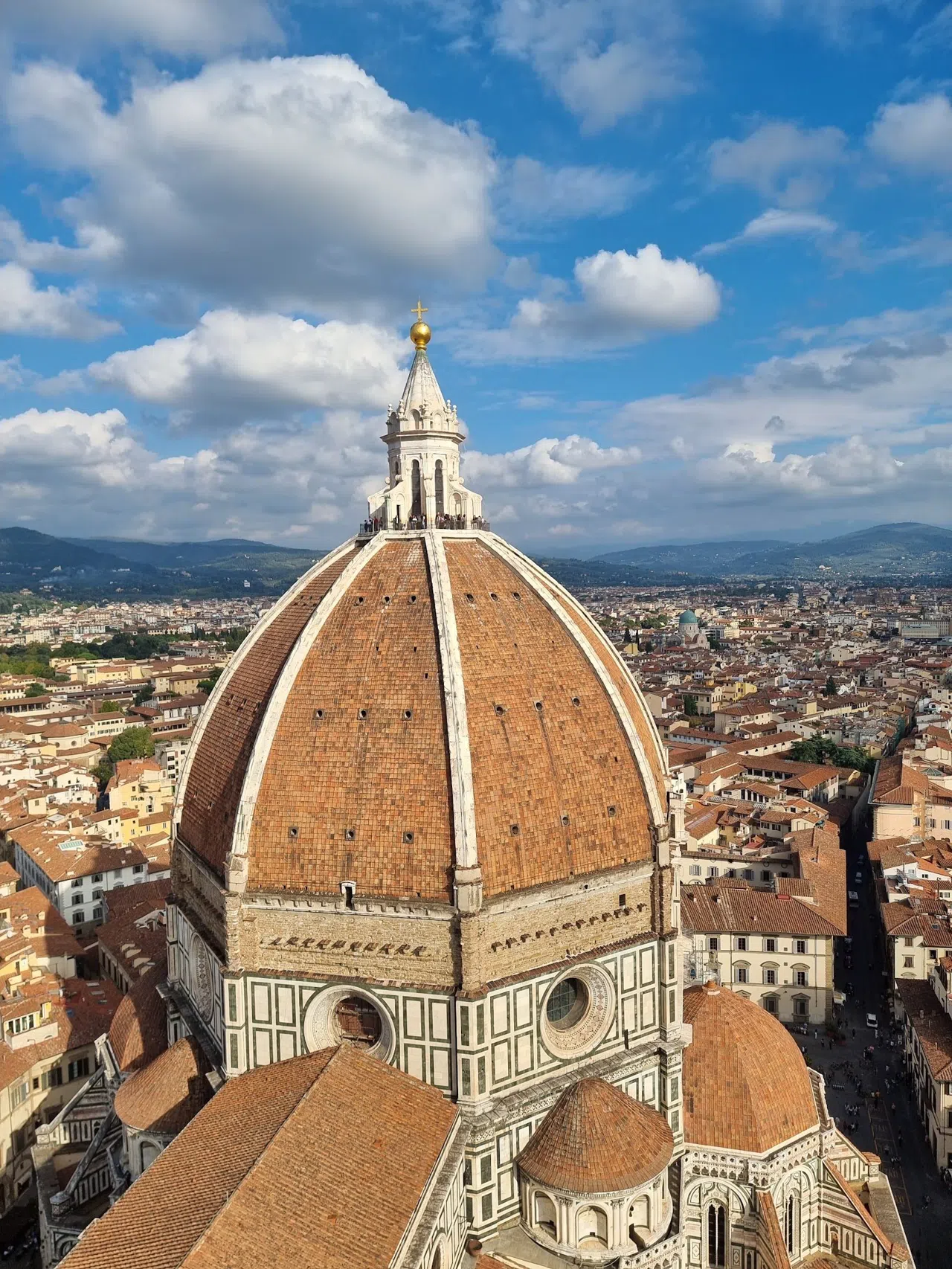

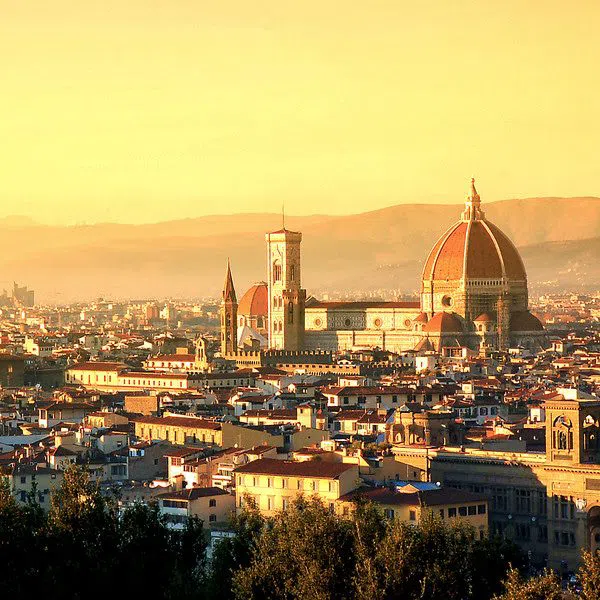
Stand under Filippo Brunelleschi's dome on an early October morning, and the cathedral asks you to accept something that shouldn't be possible: nearly four million bricks, laid in a spiral that climbs 45 metres across open air, with no wooden scaffold ever holding the shape up while it set. He built it between 1420 and 1436, he never fully explained how, and six centuries of engineers have been arguing about the mechanics ever since. The only way to take a side in that argument is to go and stand inside the gap between the two shells he built, one inside the other, and look.
The Riddle Inside the Shell
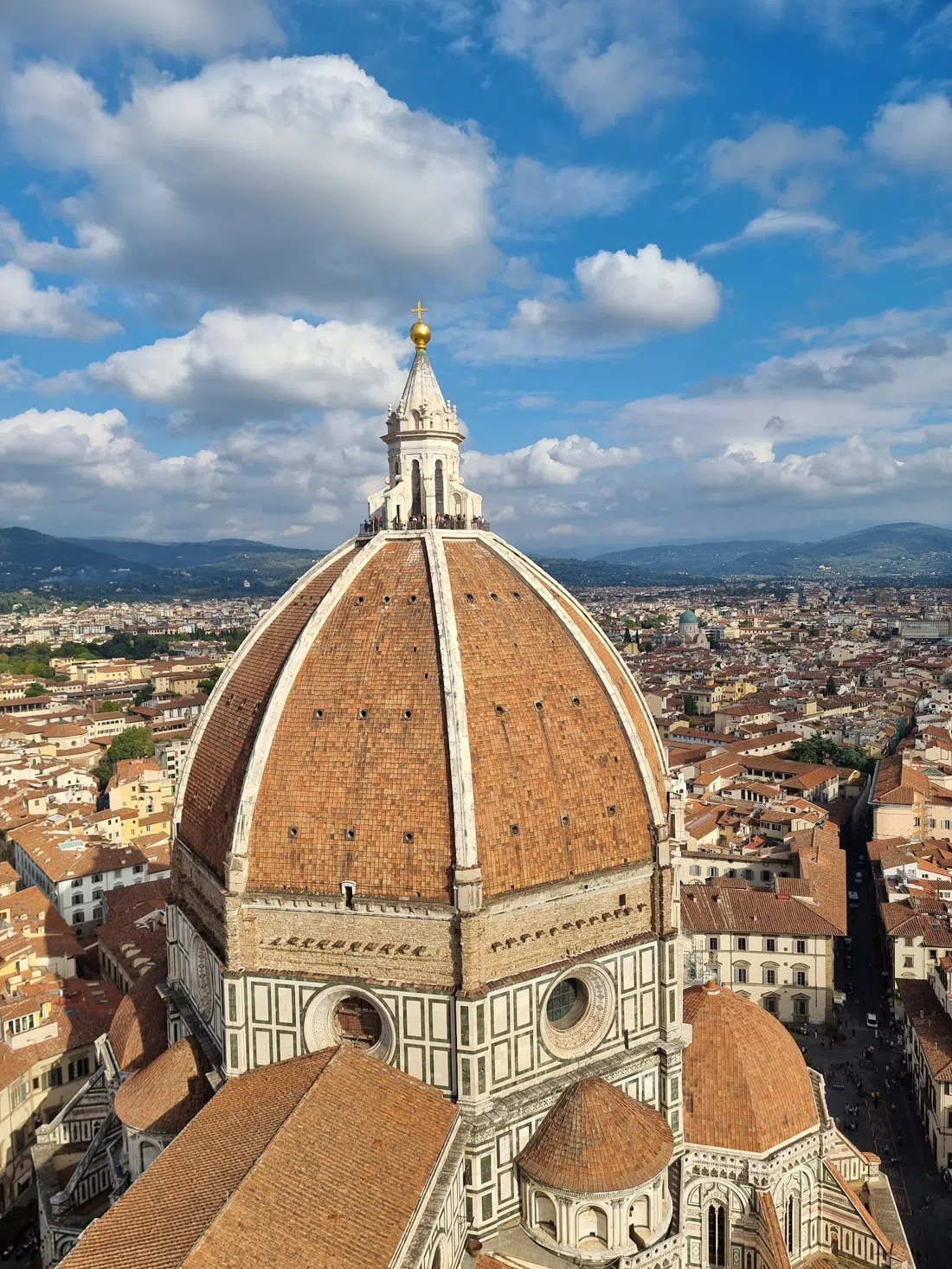
Brunelleschi's Dome (Cupola del Brunelleschi), rising over Piazza del Duomo at the heart of the city, is the reason every other stop on this list matters. Standard practice in 1420 was to build a dome over a wooden centering frame — a temporary skeleton that held the masonry in place until the mortar cured, then came down. No timber in the region could span the cathedral's 45-metre octagon, and even if it could, nobody had solved how to remove a centering frame that size afterward. Brunelleschi's answer was to build two domes, one nested inside the other, laid in a self-supporting herringbone brick pattern that locked each course against the next as it rose, so the structure held its own weight while it was still being built. It is, depending on which structural historian you ask, either a triumph of intuitive engineering or a lucky convergence of geometry and stubbornness — the debate has never fully closed, and that is precisely the appeal of climbing it.
The climb itself is unforgiving by design: 463 steps up a single-file spiral stair, no lift, and a mandatory timed-entry slot with an ID check at the door for every single person in your group. That last detail catches people out — if you're travelling with three friends, book all four tickets for the identical slot, because staff will not let latecomers or mismatched bookings through together. It is not workable for anyone with a mobility restriction, and claustrophobia is a real consideration on the narrower stretches between the shells. The dome climb is sold only inside the Brunelleschi Pass, around €30 with three days of validity across the whole cathedral complex, which is useful because you'll want more than one visit to take it all in. The best few minutes of the entire climb come partway up, in the gap between the inner and outer shell, where the brick spiral is close enough to touch and the whole improvised logic of the structure — no scaffolding, no formwork, just interlocking geometry — is right there under your hand.
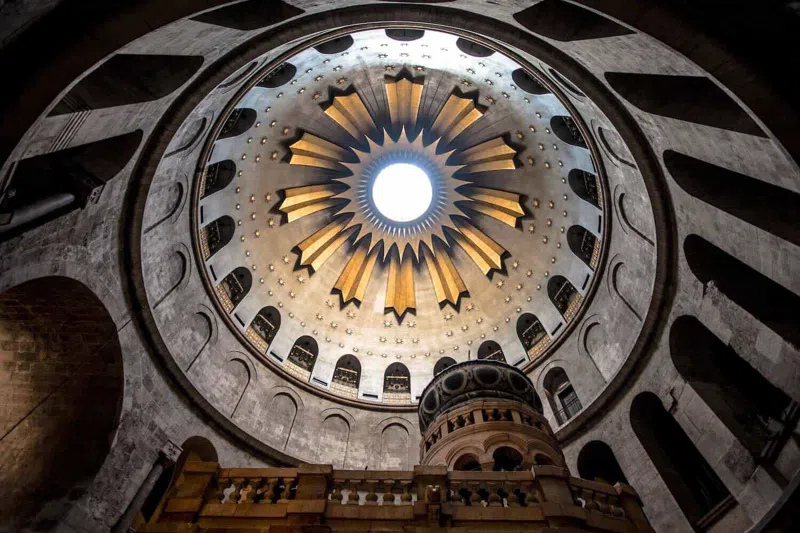
Before or instead of the climb, the Cathedral of Santa Maria del Fiore interior, entered from the same Piazza del Duomo, is free to enter, and it's where the scale of Brunelleschi's problem actually registers. Standing at the crossing and looking straight up at the frescoed underside of the cupola, 45 metres of open span with nothing visibly holding it there, does more to explain the engineering riddle than any amount of reading. Entry is free and groups are welcome, but the cathedral asks for silence and won't admit large guided groups during Mass, so check the schedule if you're travelling with a tour.
Proof in the Model Room
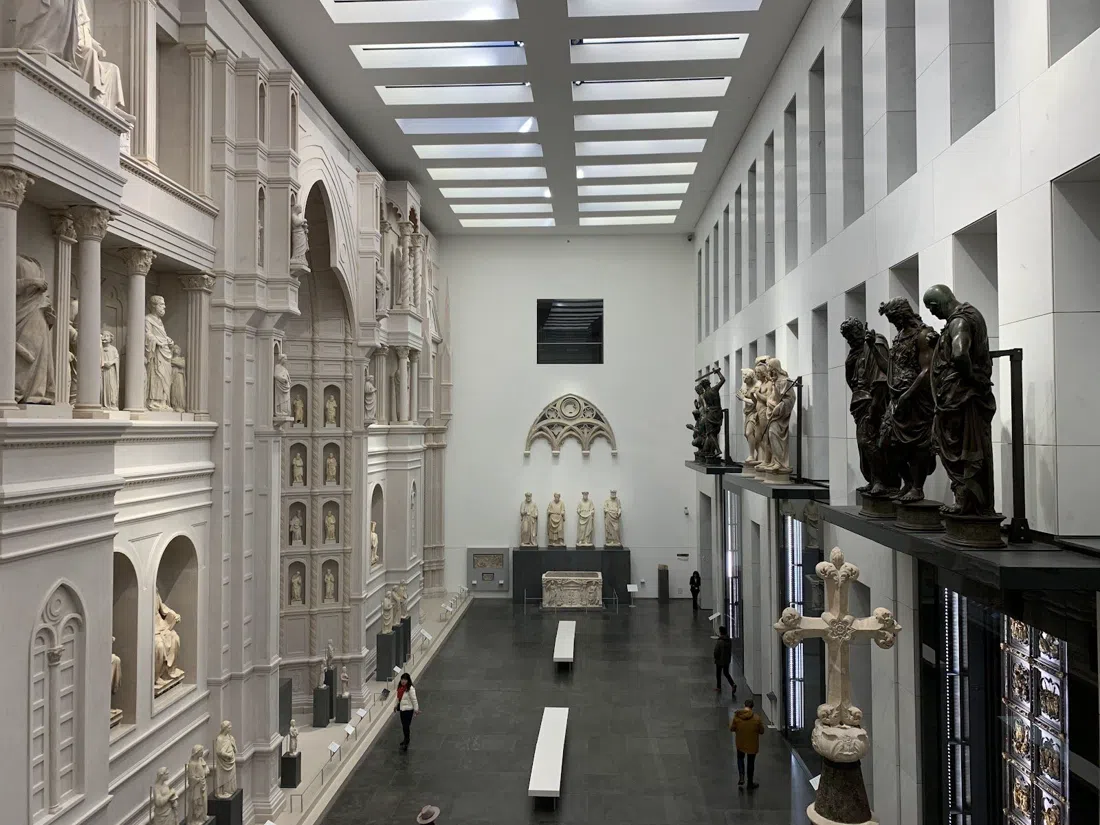
The dome climb shows you the structure; the Museo dell'Opera del Duomo, just behind the cathedral's east end, shows you how it was worked out. This is a spacious, modern museum — genuinely easy for groups of any size, fully step-free — and it holds the surviving wooden construction models and lifting tools that Brunelleschi and the cathedral works committee used to plan and defend the build. It's the one stop on this list that actually explains the engineering rather than just letting you feel it, which makes it worth visiting even if you can't get a dome slot at all. Entry is included in either the Giotto Pass (around €20) or the Brunelleschi Pass (around €30); if your priority is understanding the dome rather than climbing it, the museum alone justifies the cheaper pass.
Two Rehearsals Before the Cathedral
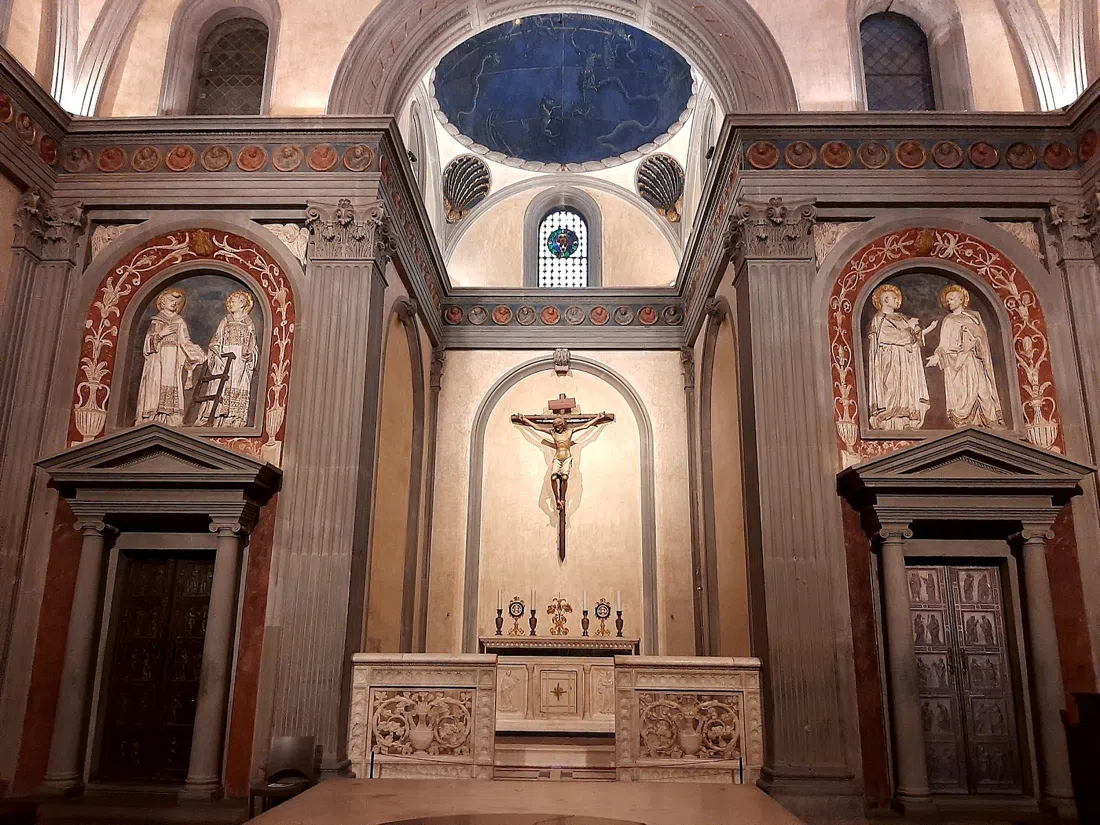
Brunelleschi didn't arrive at the dome commission as a theorist. He arrived having already built, and proved, a smaller version of the same idea. A short walk north of the Duomo, the Basilica di San Lorenzo's Old Sacristy (Sagrestia Vecchia) is a miniature dome he designed and built years before the cathedral committee trusted him with the real thing — the direct engineering precedent for everything that follows. It's a standard church visit, straightforward for groups, and costs around €9-11 as part of basilica entry. Stand under this smaller cupola first, if your itinerary allows it, and the logic of the much larger one starts to make sense before you've even reached the Duomo.
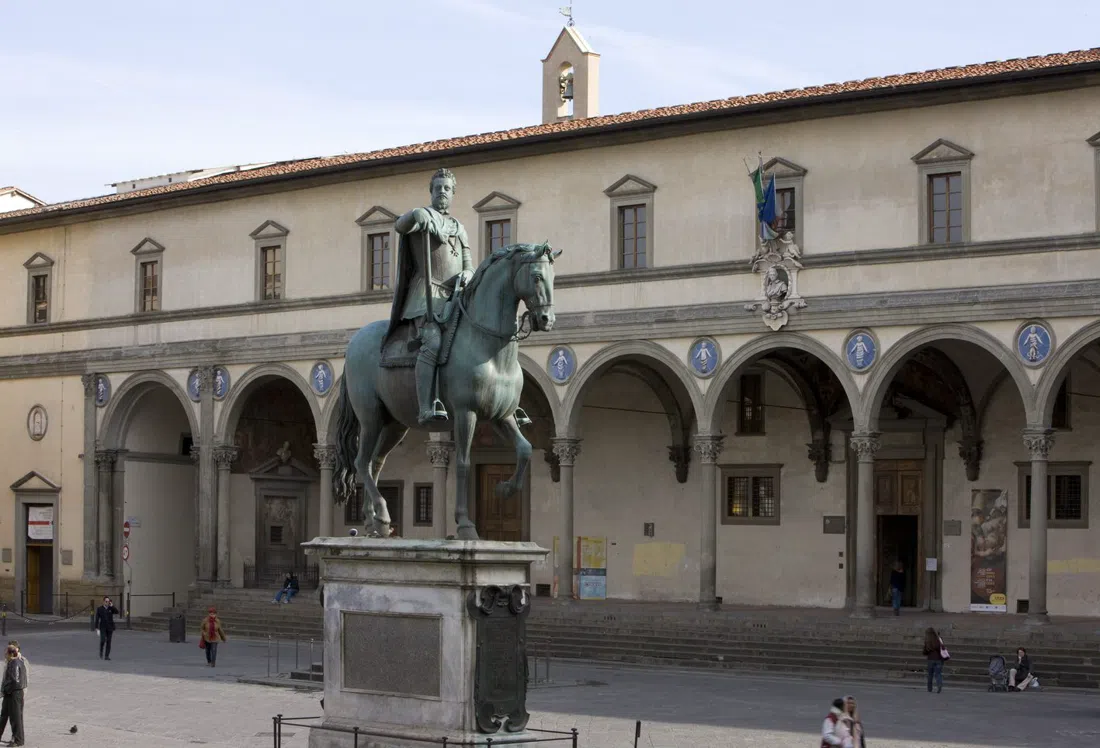
The same year, 1419, Brunelleschi was also working out the proportional system for the Ospedale degli Innocenti (Museo degli Innocenti) on Piazza SS. Annunziata — generally credited as the first true Renaissance building, with a system of measured arches and columns that architectural historians treat as Brunelleschi thinking on paper before he committed to the dome's engineering. It's wheelchair-accessible, comfortable for groups, and entry runs around €10. The rooftop café seats groups and doubles as a genuinely good, uncrowded spot to photograph the dome from a distance — worth the detour on its own terms, not just as a history lesson.
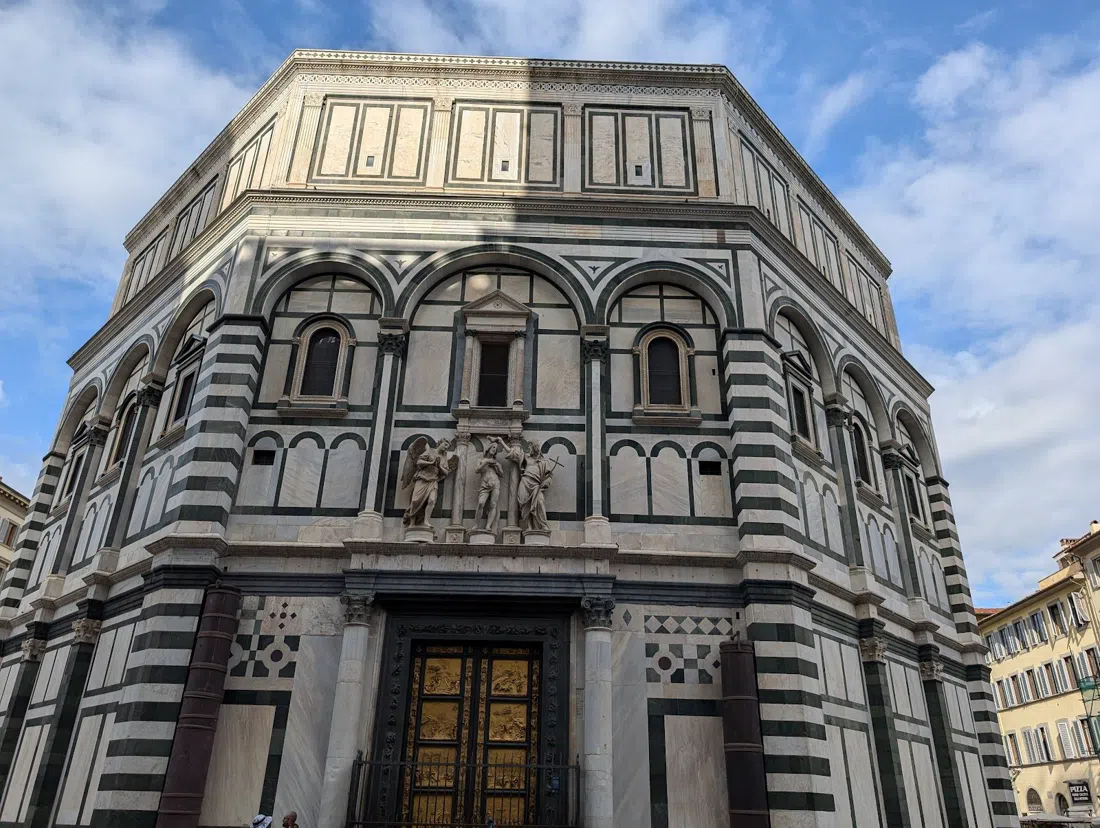
One more origin point belongs in this section, even though it isn't a Brunelleschi building at all. The Florence Baptistery (Battistero di San Giovanni), facing the cathedral's west front, is where the story technically begins: the 1401 competition to design its bronze doors, which Lorenzo Ghiberti won over a young Brunelleschi. Losing that competition is generally understood to be what sent Brunelleschi away to study the engineering of ancient buildings, and indirectly toward the structural thinking that later solved the dome. The Baptistery itself is a quick, step-free visit, comfortable for groups of any size, and there's no standalone ticket — it's folded into every Duomo combined pass. Ten minutes here, framed as the argument that started everything, earns its place before you queue for the dome.
Higher Up: Other Vantage Points
If you can't get a dome slot, or you want the view from outside rather than the climb from within, Florence gives you several other angles on the same structure.
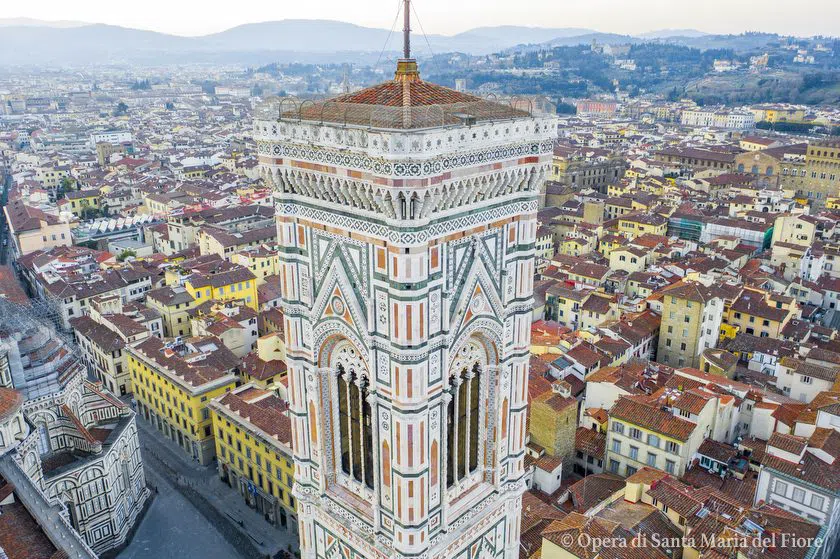
Giotto's Campanile, standing beside the cathedral, is the classic alternative: 414 steps up a narrower stair, with the same timed-slot booking per person as the dome, included in the Giotto Pass at around €20. What you get for the climb is a genuinely different reward — the postcard shot at close to eye level with the dome's exterior brickwork and lantern, which the dome climb itself doesn't offer, since you're inside rather than looking at it.
Across town, the Arnolfo Tower, Palazzo Vecchio, overlooking Piazza della Signoria, gives a third vantage entirely, from the historic seat of Florentine government rather than from the cathedral complex. It's a tighter climb — roughly 233 steps to a small platform — with timed entry, small groups only, and it closes outright in rain. Expect around €12.50 for the tower alone, or about €25 combined with the Palazzo Vecchio museum below it. It's a good closing stop on a self-guided "see the dome from every angle" afternoon, precisely because the context — government palace rather than church complex — changes what the view means.
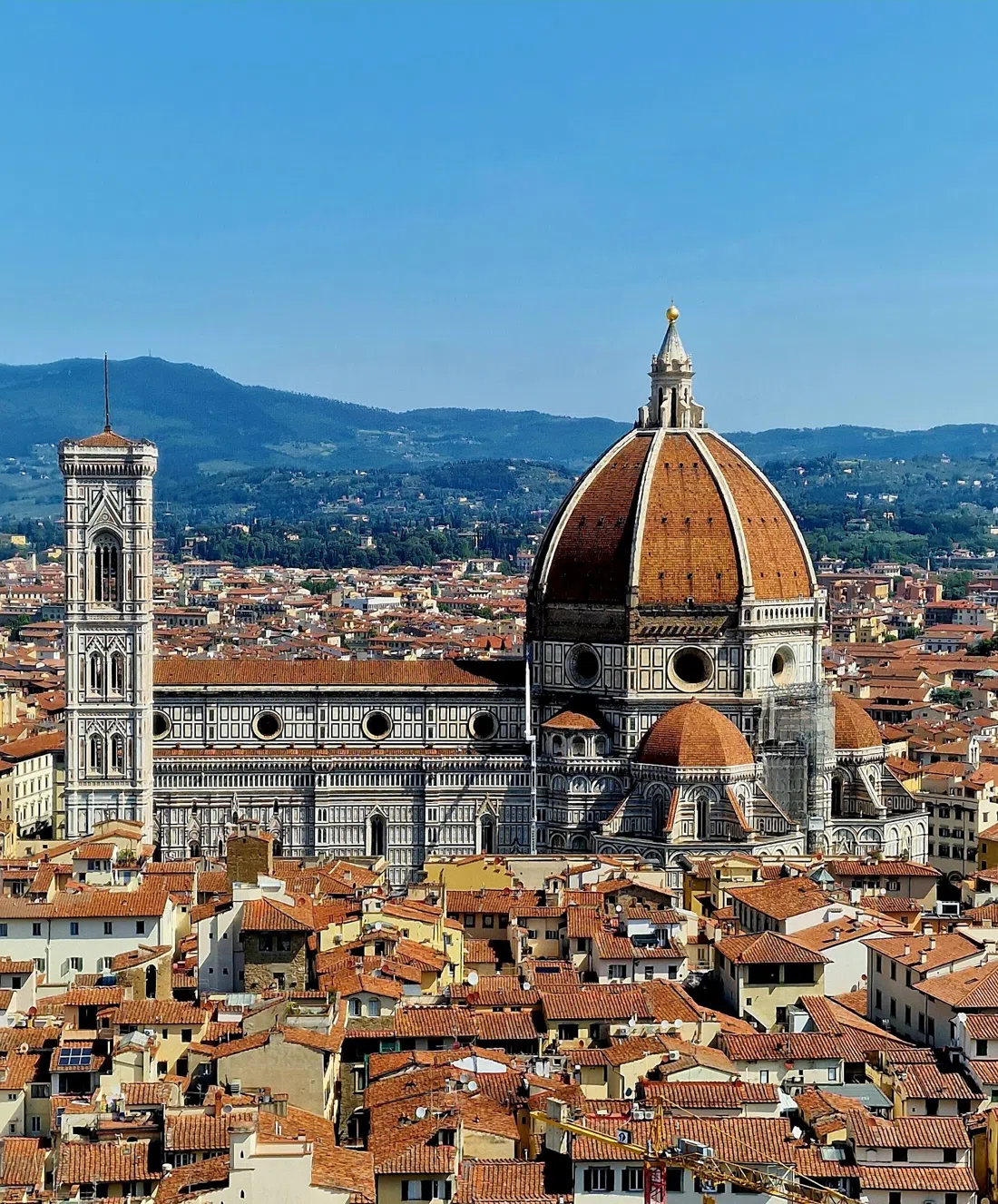
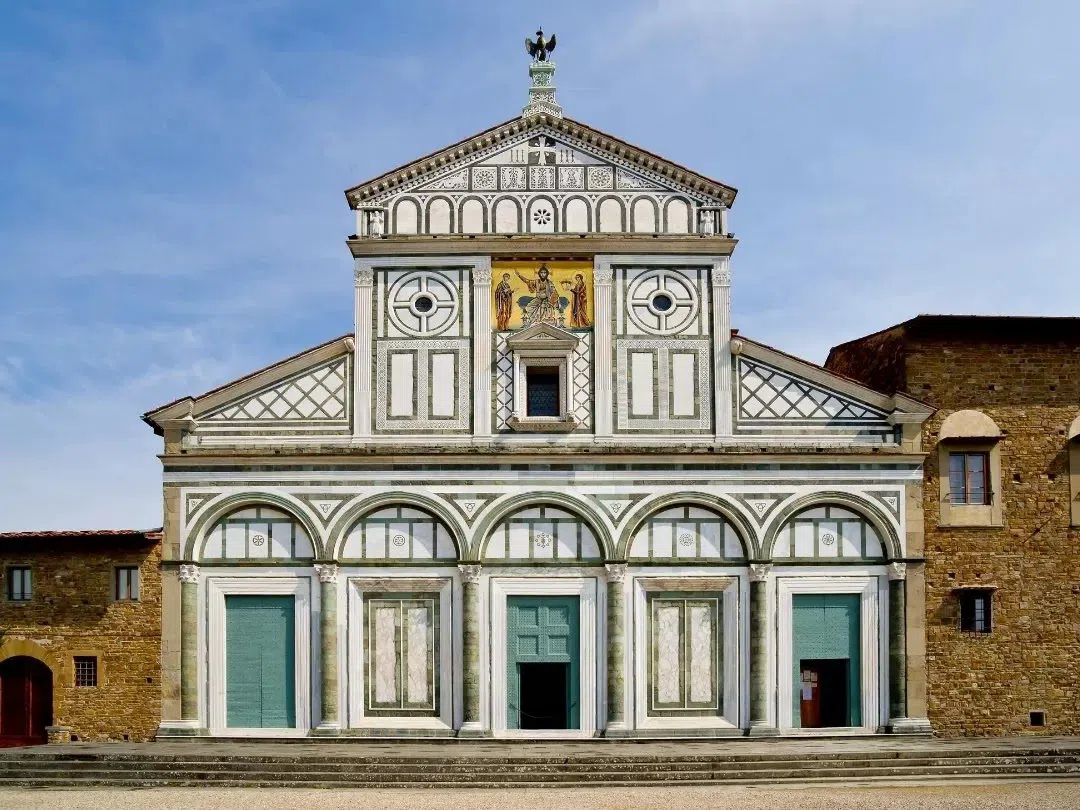
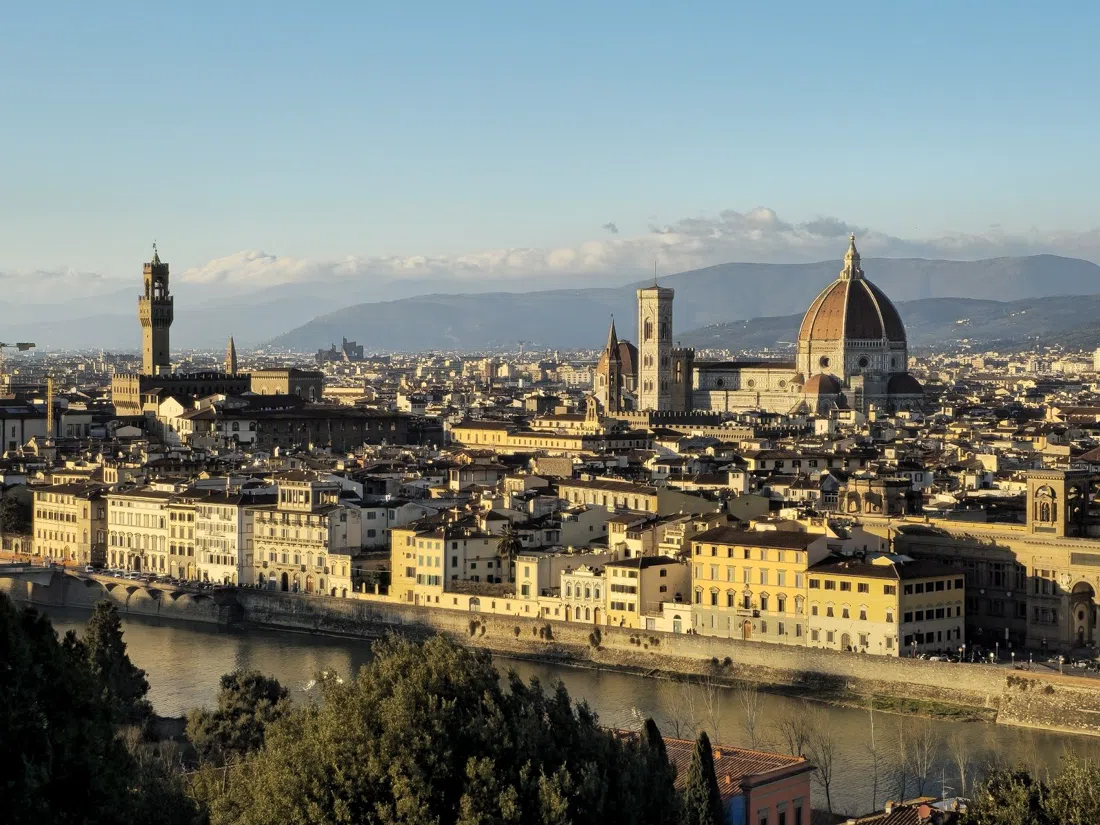
For the view that needs no ticket, no timed slot, and no stairs at all, Piazzale Michelangelo, on the hill south of the river, gives the single clearest full-skyline shot of the dome in its setting, free and open around the clock, with room for any size of group. Aim for a weekday and either the early morning or the hour before sunset, when the tour coaches thin out and the light does more of the work. One terrace further up the same hill, San Miniato al Monte offers a quieter version of the same view, alongside an 11th-century building whose marble geometry scholars connect to the Romanesque-Gothic design language that predates — and arguably shaped — Brunelleschi's own architectural thinking. Entry is free, donations welcome, and the one rule worth respecting is not to wander through during Mass or the daily Gregorian chant services, which the church still holds.
The Brunelleschi Trail: Two Last Stops
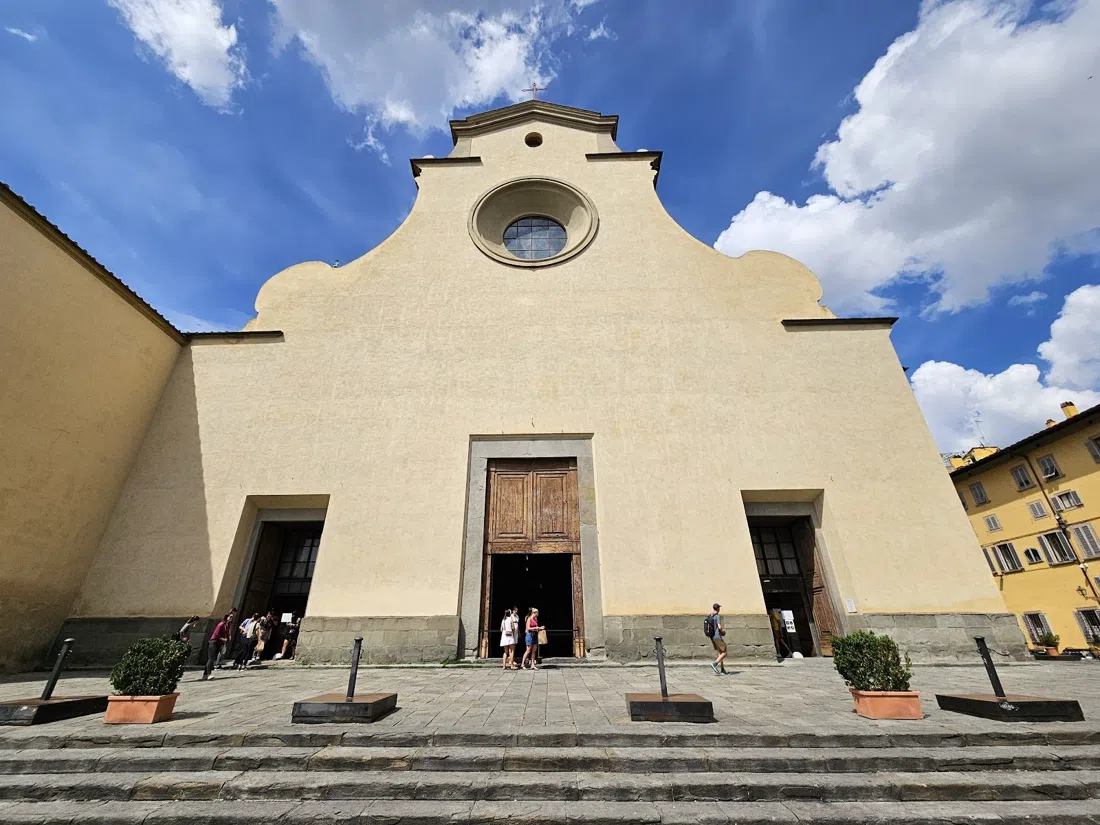
Two further buildings round out a self-guided Brunelleschi itinerary, for readers with a day to spare beyond the cathedral complex. Across the river in the Oltrarno, the Basilica di Santo Spirito is his late masterpiece, left unfinished at his death in 1446 — a fitting bookend to a career that started with a losing doors competition and ended mid-build on a church. It's free to enter, comfortable for groups, and the one scheduling note to remember is that it closes to visitors on Wednesdays.
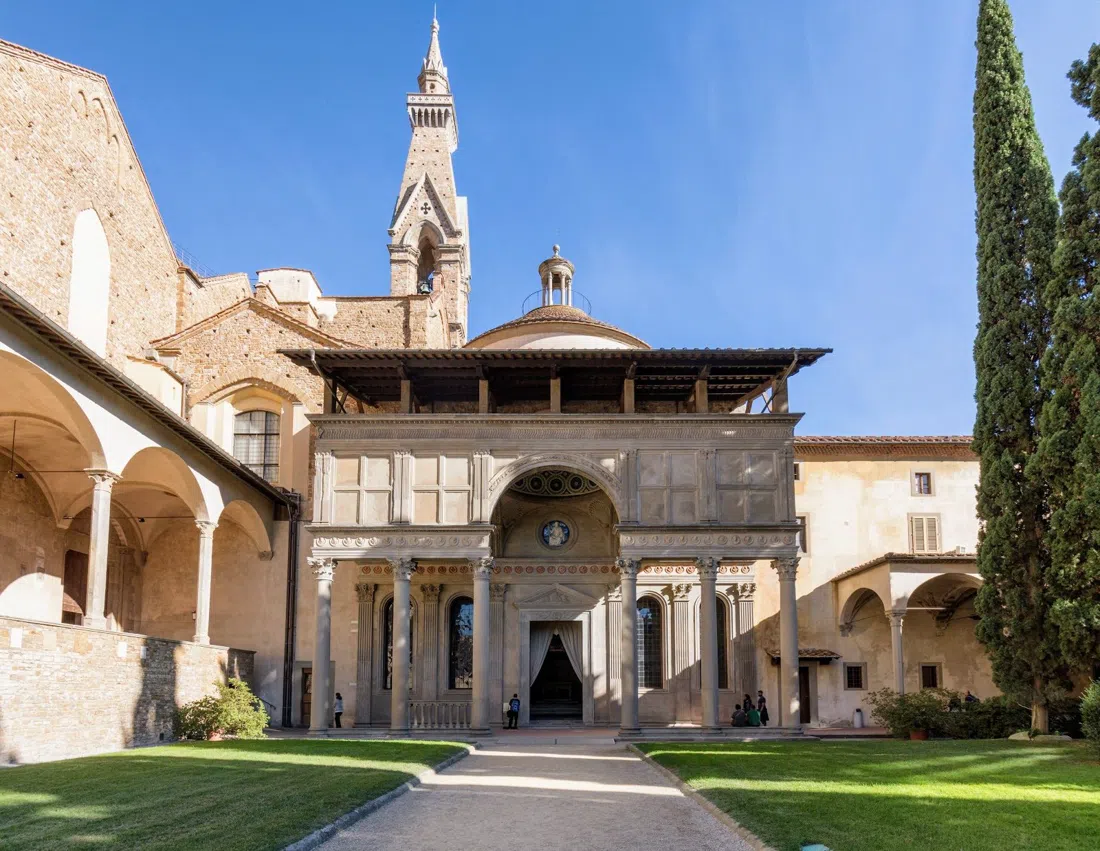
Back near Santa Croce, the Pazzi Chapel, Basilica di Santa Croce, is another small Brunelleschi dome, designed in the years right around the cathedral dome's own completion. It's a compact, easy stop — folded into the roughly 90-minute-to-2-hour Santa Croce complex visit, at around €10 for the whole site — and it's the cleanest place to see, at a domestic scale, the same structural instincts that built the much larger dome across town.
Planning the Visit
Transport. The historic centre is compact and entirely walkable; nothing on this list is more than 25-30 minutes on foot from the Duomo, and a car is a liability rather than a help inside the restricted traffic zone. If you're staying outside the centre, book a base within walking distance — a Florence hotel search is the easiest way to filter for that before you commit to dates.
Timing. Book dome and campanile slots as far ahead as you can manage, especially for spring and summer visits — both climbs sell out days in advance in peak season, and the ID-check-per-person rule means a group can't patch together mismatched bookings on the day. The Brunelleschi Pass and Giotto Pass both run three days of validity from first use, so plan the cathedral complex, the museum, and one or two of the outlying Brunelleschi stops across two mornings rather than trying to compress everything into one exhausting day.
Cash and cards. Cards are accepted everywhere on this list, including ticket counters, but it's worth carrying a little cash for donation boxes at San Miniato al Monte and Santo Spirito, both of which are free to enter and rely on those donations to stay that way.
Budget. A realistic two-day version of this itinerary — Brunelleschi Pass, an evening at Piazzale Michelangelo, and two or three of the outlying churches — runs somewhere around €50-60 per person in entry fees, before food or transport. For the full picture of where to base yourself and what else the city offers beyond this one thread of history, the Florence guide covers the rest of the city in context.