
Behind the ochre facade of Palazzo Pitti, the Boboli Gardens keep their best jokes underground. Somewhere past the box hedges and the gravel avenues, a stalactite ceiling drips over a chamber that once held casts of Michelangelo's unfinished Prigioni, a stone dwarf rides a tortoise with total dignity, and a fountain hides itself so well that most visitors walk past it twice without noticing. This is a garden built to be searched, not just strolled through — and its cast of grottoes, fountains and follies rewards anyone willing to slow down, look sideways, and read the small plaques nobody else bothers with.
Boboli was the Medici family's private theatre of nature for three centuries before it opened to the public, and the grottoes were its special effects: artificial caves engineered to look older and stranger than the Renaissance palace they served. Visiting them in sequence, on foot, with no guide but curiosity, is still the best way to understand what the Medici were actually trying to say about power, water and myth. Here is the route.
Where the Hunt Begins: Buontalenti's Grotto and Its Quiet Sibling
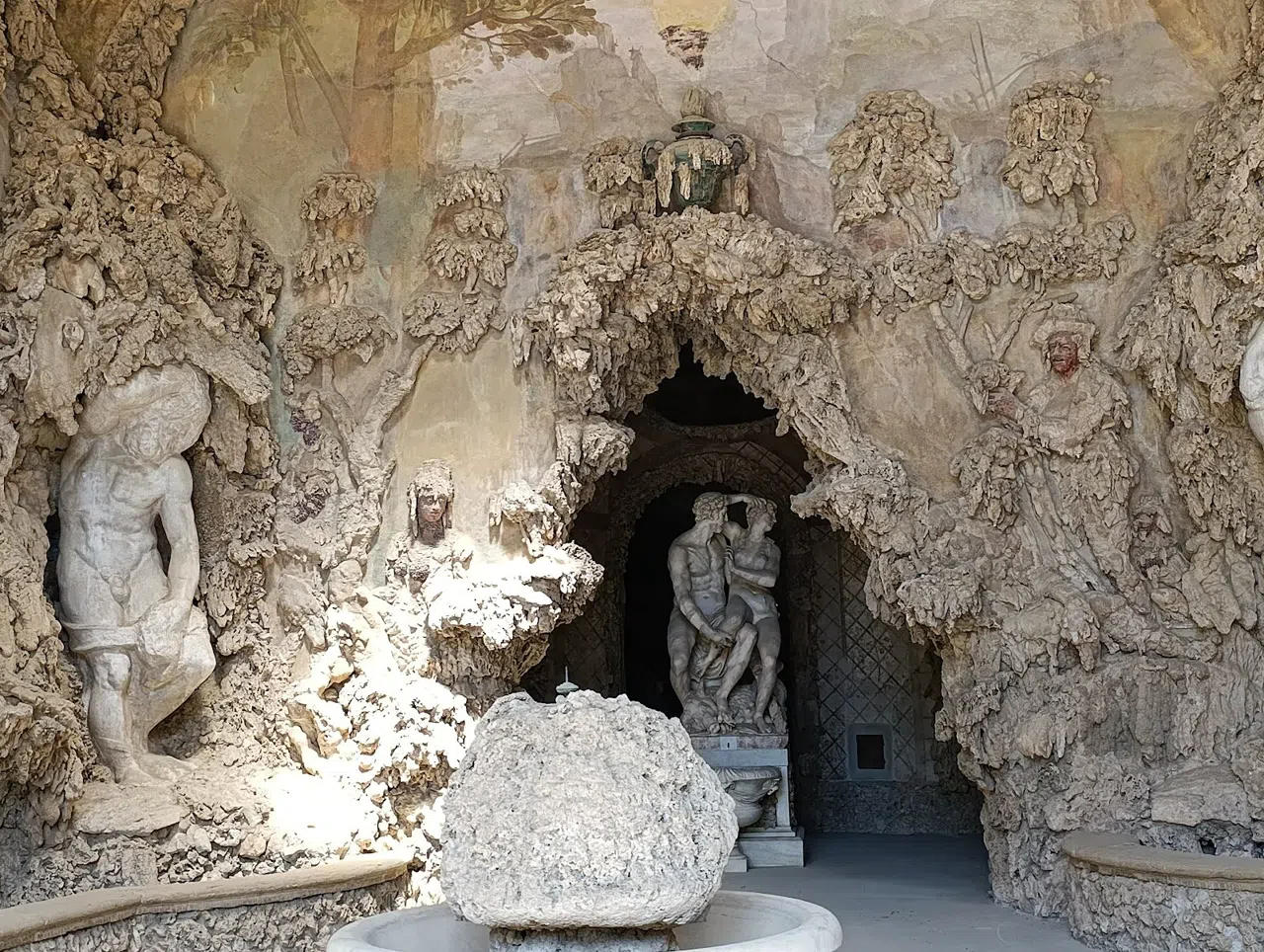
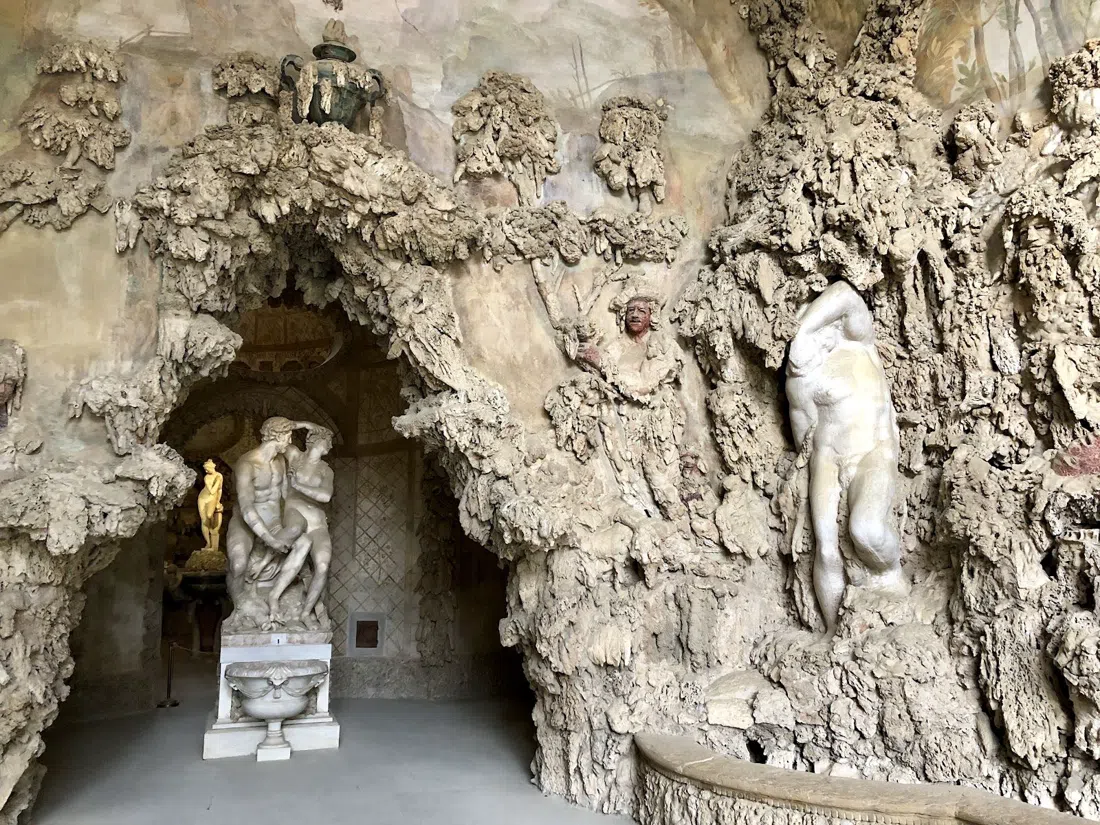
Just inside the gardens from the Palazzo Pitti courtyard sits the Grotta Grande, also known as the Buontalenti Grotto, and it is the reason this treasure hunt exists at all. Bernardo Buontalenti built it between 1583 and 1593 for Francesco I de' Medici, and it remains the single most theatrical Mannerist space in Florence: three chambers of faux stalactites, painted shepherds and animals melting into the walls, and a ceiling that looks like it is still dripping four centuries later. The outer chamber originally displayed casts of Michelangelo's Prigioni (the originals are in the Accademia); the innermost chamber holds Giambologna's Venus Emerging from the Bath, still ringed by satyrs peering in. The grotto has been restored and is fully walk-in — it's included in general Boboli admission, with no separate ticket or timed slot needed, and the small-group skip-the-line guided tours that run through the gardens cover it as a matter of course. Go early, before the tour groups stack up in the first chamber; the frescoes reward a slow look, and there's nowhere to stand back from them once a dozen people arrive.
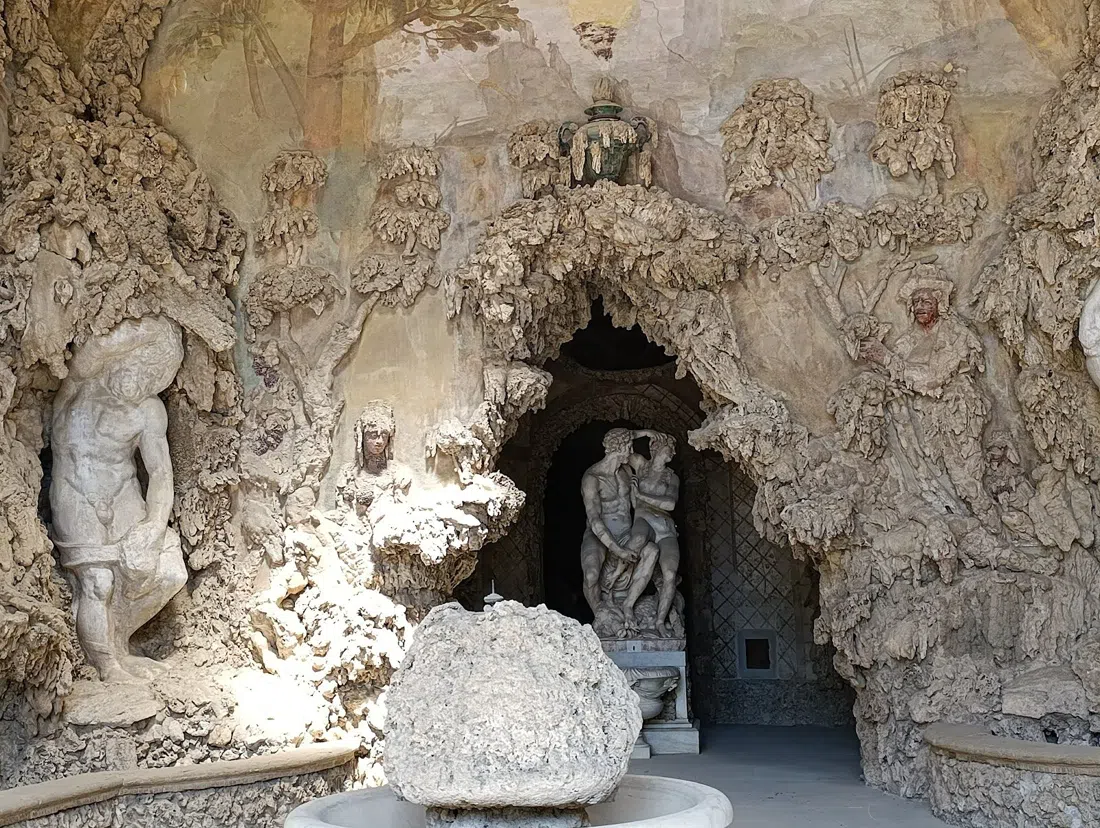
A short walk from the Buontalenti Grotto — tucked near the Annalena side of the palace end of the gardens — is the Grotticina della Madama, also called the Grotta delle Capre ('grotto of the goats'). This is Buontalenti's other grotto, commissioned for Eleonora di Toledo and the Medici duchesses, and it is genuinely the overlooked sibling: smaller in footprint, quieter, and skipped by most visitors who assume they've already seen 'the grotto' up the path. It's included in the same general admission and its small scale means guided groups can pause here without blocking anyone — worth the two extra minutes it takes to find it, if only to see how differently the Medici decorated a private grotto for the women of the family versus the state-occasion one down the path.
The Avenue of Statues: Viottolone and Its Fountains
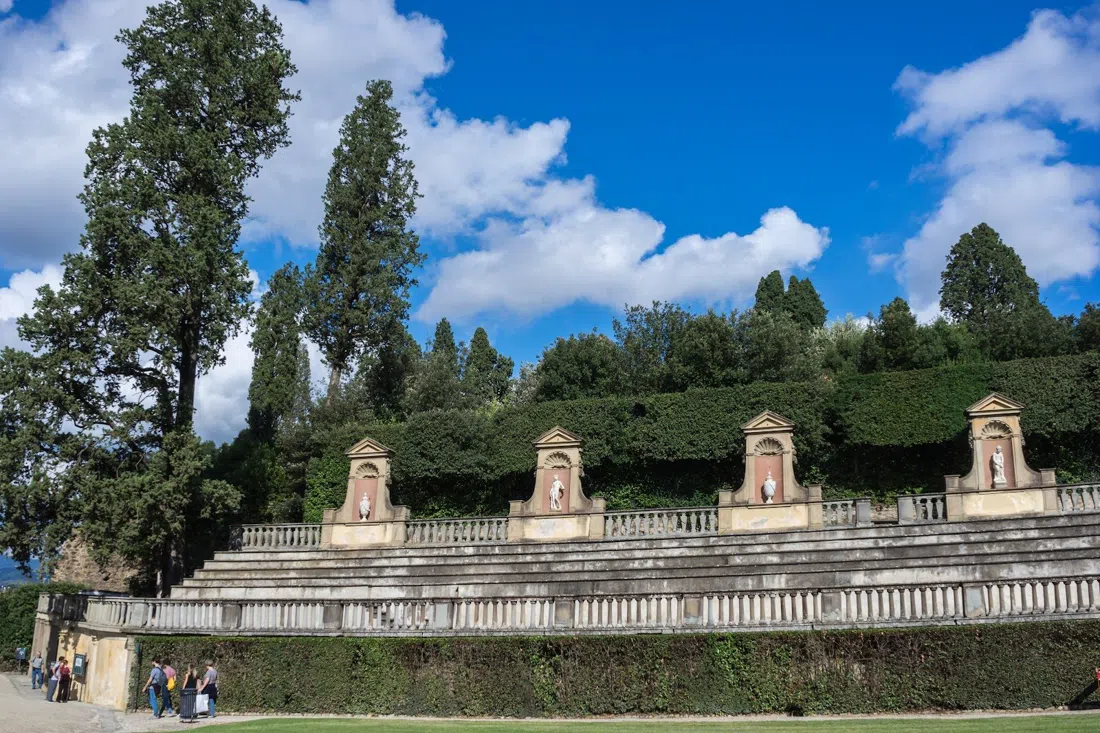
From the upper garden, the Viottolone is the spine that holds the whole hunt together — a long, cypress-lined avenue running downhill, planted with statuary along its length, that connects the grotto cluster near the palace to the water gardens at the far end. It's wide and flat enough for a full guided group to walk comfortably, and it's the connective tissue of the entire visit: nearly every fountain worth finding sits just off it.
One of the best diversions off the Viottolone is the Fontana del Carciofo ('Artichoke Fountain'), a small terrace fountain that guidebooks routinely skip past even though it's one of the garden's funniest pieces of Medici whimsy — a carved stone artichoke standing in for the more solemn allegorical fountains elsewhere in the garden. It's a small stop, best worked in groups of ten or fewer at a time, so if you're travelling with a larger party, expect to take turns at the rail.
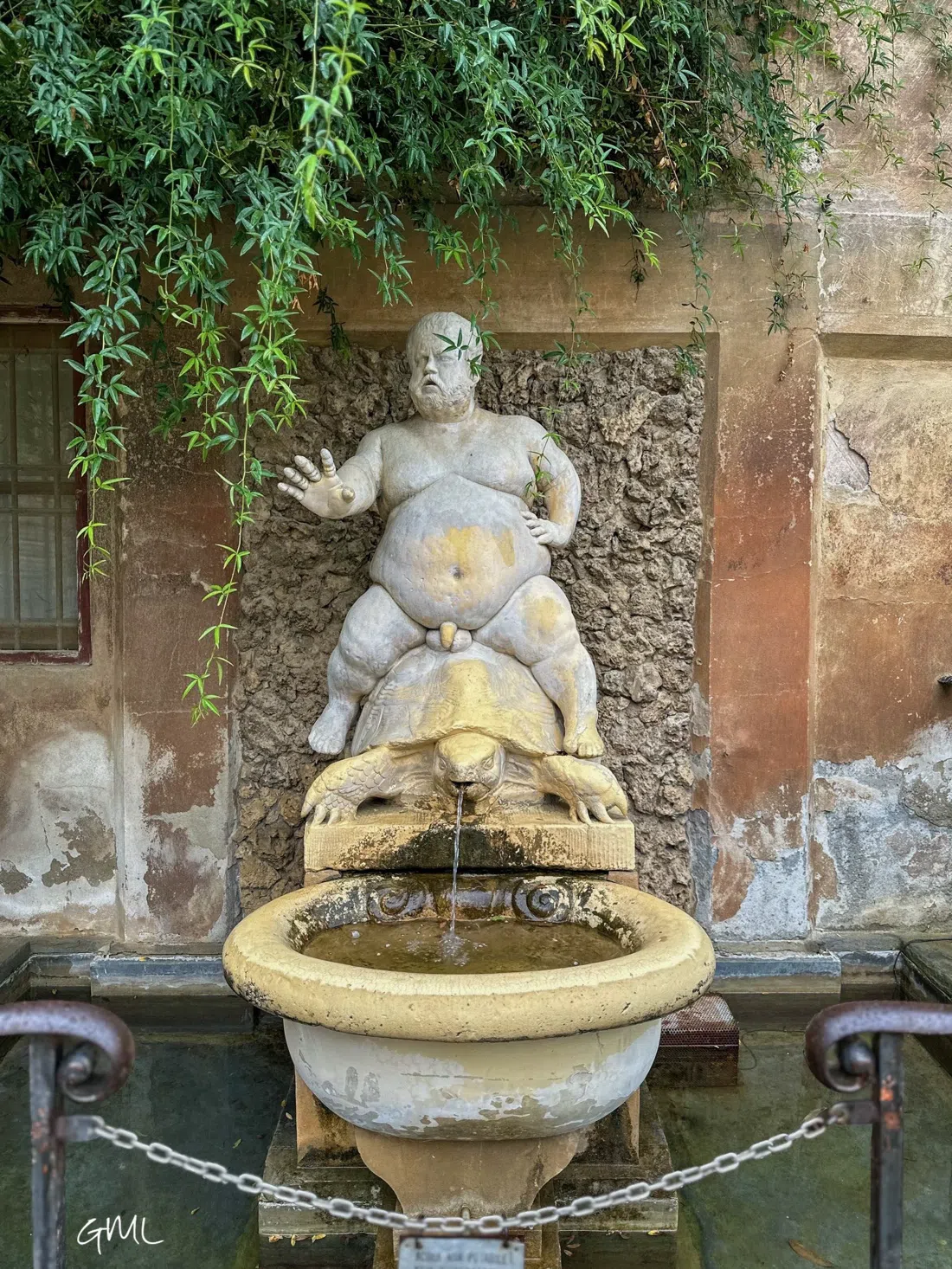
Tucked on a narrower side path is the Fontana di Bacco, more properly the Fontanella del Nano Morgante — Valerio Cioli's 1560 portrait of Cosimo I's court dwarf, Braccio di Bartolo, cast as a drunken Bacchus astride a tortoise. It is the garden's most irreverent sculpture by some distance, and precisely because the path narrows here, it suits couples and small sub-groups far better than a full coach party trying to file past. Budget a genuine pause for this one; it's the kind of detail that makes people laugh out loud in an otherwise very serious garden.
The true hidden find of the avenue is the Fontana dei Mostaccini, a small fountain set off the main path and absent from most tourist maps — the literal definition of a treasure-hunt stop. It's easy to walk past without a specific reason to look for it, so if you're doing this route independently, worth flagging on a map or asking a garden attendant to point the way; if you're on a guided tour, this is exactly the kind of stop a good local guide earns their fee for finding.
Neptune's Terrace and the Kaffeehaus
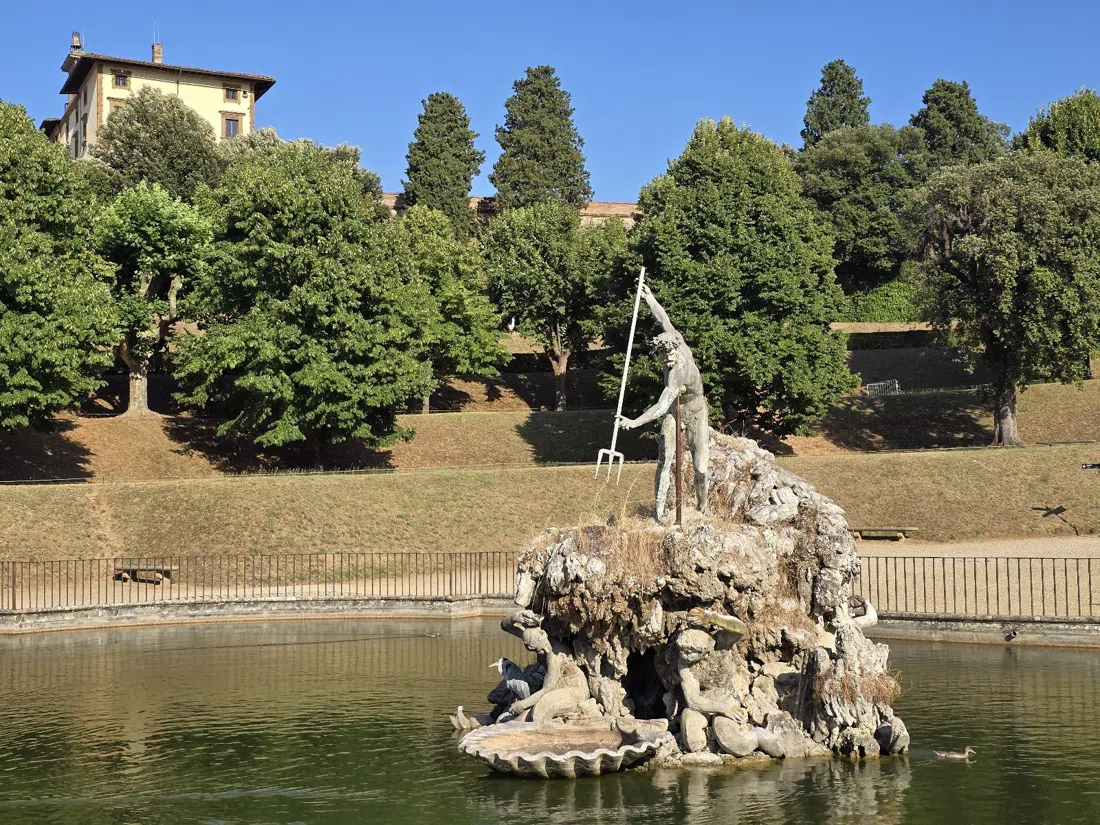
Up from the Viottolone, the garden opens onto a wide terrace built around the Fontana di Nettuno, also known locally as the Fontana del Forcone for the pitchfork-like trident Neptune holds. Stoldo Lorenzi carved the sea god in the 16th century, and the terrace around him is deliberately wide — the garden's most photographed sightline, looking back up toward the Kaffeehaus, and easily the roomiest gathering point on this whole route if you've got a group to regroup.
From Neptune's terrace, the path climbs to the Kaffeehaus, a green-domed pavilion built for Grand Duke Pietro Leopoldo, paired with its own small grotto feature, the Grotticina. It reopened as part of the Uffizi's ongoing Boboli masterplan and is the only grotto in the gardens attached to a genuine viewpoint — the terrace looks straight out over the rooftops of Florence, and it's the natural place to stop, catch your breath, and reorient before the final stretch. It functions as a café terrace as much as a monument, which makes it the obvious regroup point for anyone touring with a party that's spread out along the avenue below.
The Grand Finale: Isolotto and Prato delle Colonne
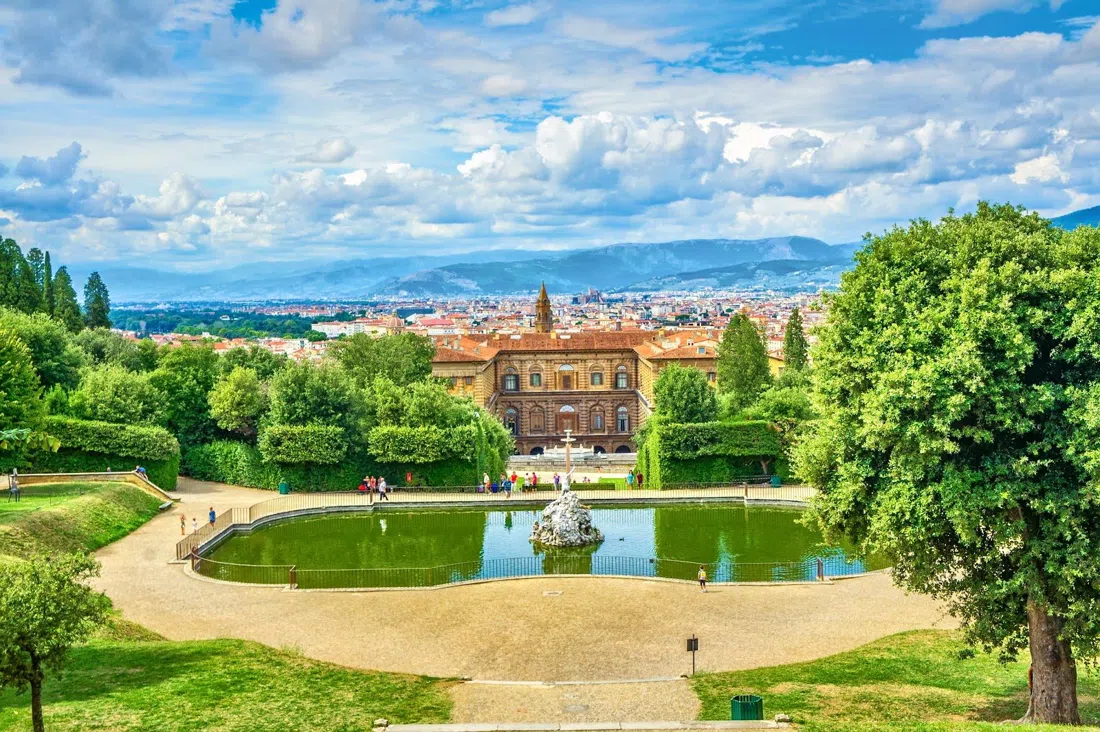
The hunt's grand finale is the Isolotto, centred on the Fontana dell'Oceano — a moated island fountain that is, frankly, less 'hidden' than anything else on this list, but it's essential context for everything that came before it. This is the garden's largest open water feature, ringed by potted citrus and reachable by a small footbridge, and it makes plain exactly what all those grottoes and fountains were building toward: total Medici command over water and myth, staged as a single unified set piece. It's the one stop on this route built to hold a crowd — the open water and wide paths around it comfortably absorb a full tour group without anyone feeling squeezed.
For a quieter close, walk on to the Prato delle Colonne, an open sculpture lawn near the Porta Romana end of the gardens. After the density of grottoes and the spectacle of the Isolotto, it's a deliberately green, uncluttered beat to finish on — proof that Boboli still has surprises even after the headline pieces are behind you, and a good spot to sit on the grass for ten minutes before heading for the exit.
Closing the Loop: Grotta di Adamo ed Eva
Double back — or start here, if you enter from Via Romana rather than the Palazzo Pitti courtyard — for the Grotta di Adamo ed Eva, the youngest of the garden's grottoes, added in 1817. It sits right by the Via Romana entrance, which means it's usually the first thing visitors walk past on the way in and the last thing they'd think to look for on the way out; most miss it entirely. As a closing chapter to a grotto-hunting afternoon, it works well precisely because it's so different in tone from the Buontalenti-era pieces — a 19th-century coda to a 16th-century idea, and a reminder that the Medici obsession with grottoes outlived the Medici themselves.
Planning the Hunt: Tickets, Timing, Transport
Every stop on this route is covered by the standard Boboli Gardens ticket — there's no separate booking for any individual grotto or fountain. Solo admission in low season starts from around €10; a combined ticket bundling Boboli with Palazzo Pitti runs up to roughly €22 in high season, which is worth it if you plan to also see the Palatine Gallery. If you'd rather not navigate the route cold, the small-group skip-the-line guided tours that run through the gardens cover the Buontalenti Grotto and the main fountains as standard — useful in July and August when the entrance queue itself can eat forty minutes.
Go early — the gardens open with the sun and the grottoes are far more atmospheric before 10am, when the light is low and the tour buses haven't arrived. The terrain is gravel paths and real hills with some steps, so trainers or walking shoes beat sandals; this is not a stroller-friendly route in the strictest sense, though it's manageable with patience. Bring cash in small denominations for the Kaffeehaus terrace if you plan to stop for a coffee there, since card machines in garden cafés can be unreliable; nothing inside the gardens themselves requires cash. Budget two to three hours to do the full route at a genuine pace, longer if you're stopping to sketch or photograph at each fountain.
The main Via Romana entrance sits a short walk from the Oltrarno's hotel cluster; if you're staying elsewhere in the centre, it's an easy fifteen-minute walk across the Ponte Vecchio or one of the nearby bridges, and not worth a taxi unless you're combining the visit with luggage. For where to base yourself for a Boboli morning and the rest of an Oltrarno afternoon, the Florence hotel search covers options on both sides of the river; for the wider city beyond the gardens, the Florence guide has the rest of the itinerary.